
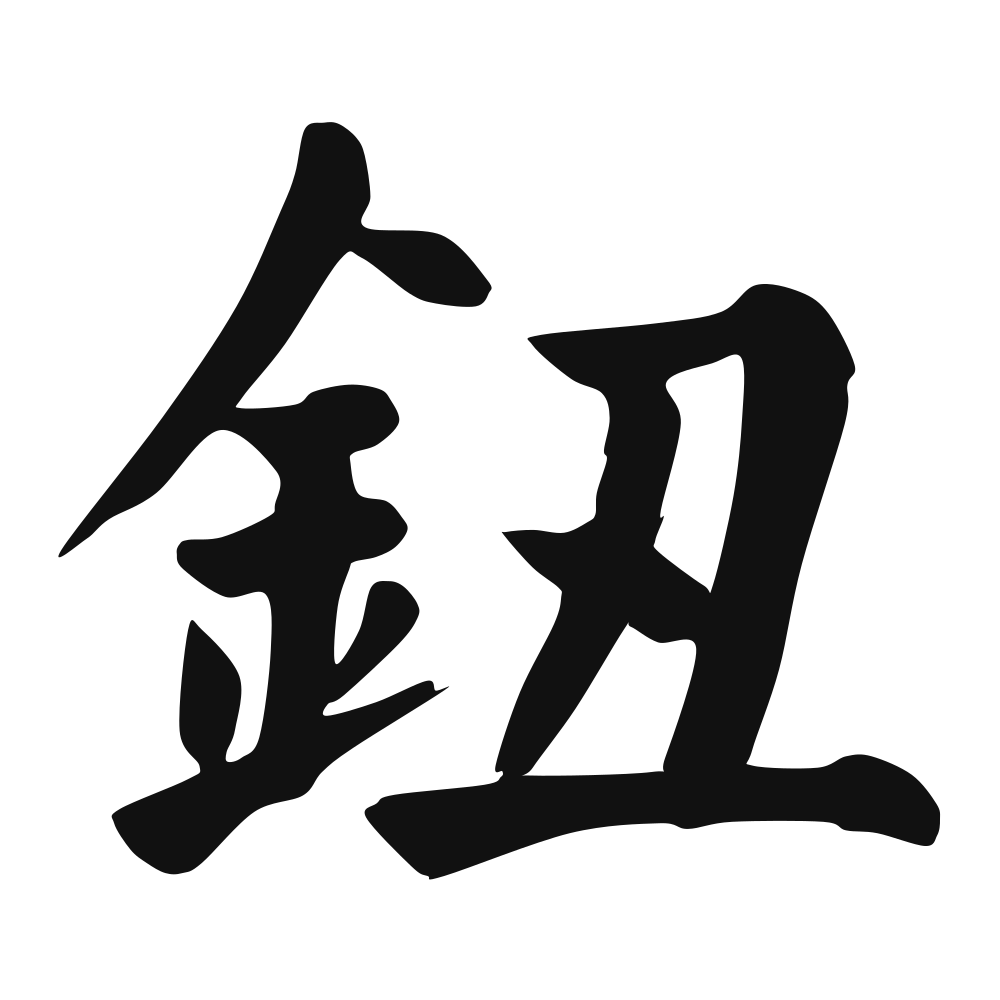
The Calligrapher — Yán Zhēnqīng 颜真卿
Tang master of robust regular script; co-creator of the enduring 'Yan style'.
Tang calligrapher (709–784), master of regular script/running script — the Tang moral paragon whose upright, muscular regular script became the model of Chinese integrity in writing. Tang dynasty
Cultural Story
钮 named the knob and the fastening — the button-like boss on a seal's top, by which it was held, the clasp of a belt, the pivoting catch of a lock. Craftsmen carved seal 钮 into lions and turtles, so the character came to mean that little sculpted handle through which authority could be gripped.
Common words & phrases
- 按钮 button · pushbutton
- 电钮 electric button · switch
- 钮扣 button
Read the story behind the character
Modern life is a field of 钮: press the 按钮 to call the elevator, hit the 电钮 and the assembly line wakes, fumble cold fingers over a 钮扣 in winter. Designers argue over every button's feel, and emperors are gone, but the instinct holds — power still comes down to something small enough to press.
Why this character belongs on skin
Consider the small thing that holds the large thing closed—the button at your throat, the knob that opens the gate, the metal catch that keeps a secret where it belongs. This character pairs the metal radical with the word for a newborn calf, as if the fastening were something tender and new, a small living hinge between open and shut. The Daoists might read it as the pivot of the whole machine, the unremarkable point on which everything turns; the engineer reads it plainly as control, the hand's quiet say over what moves. There is a humility in the button, that the grandest garment is governed by something a child can undo. To carry this mark is to claim the small authority, the right to open and close your own doors. Let it rest where you fasten and unfasten each day, a tiny emblem of command. The ink is the button only you can press.
Own this character
Purchase delivers the original SVG of this glyph, brushed by Yán Zhēnqīng 颜真卿, ready to place on skin, paper, or screen.