
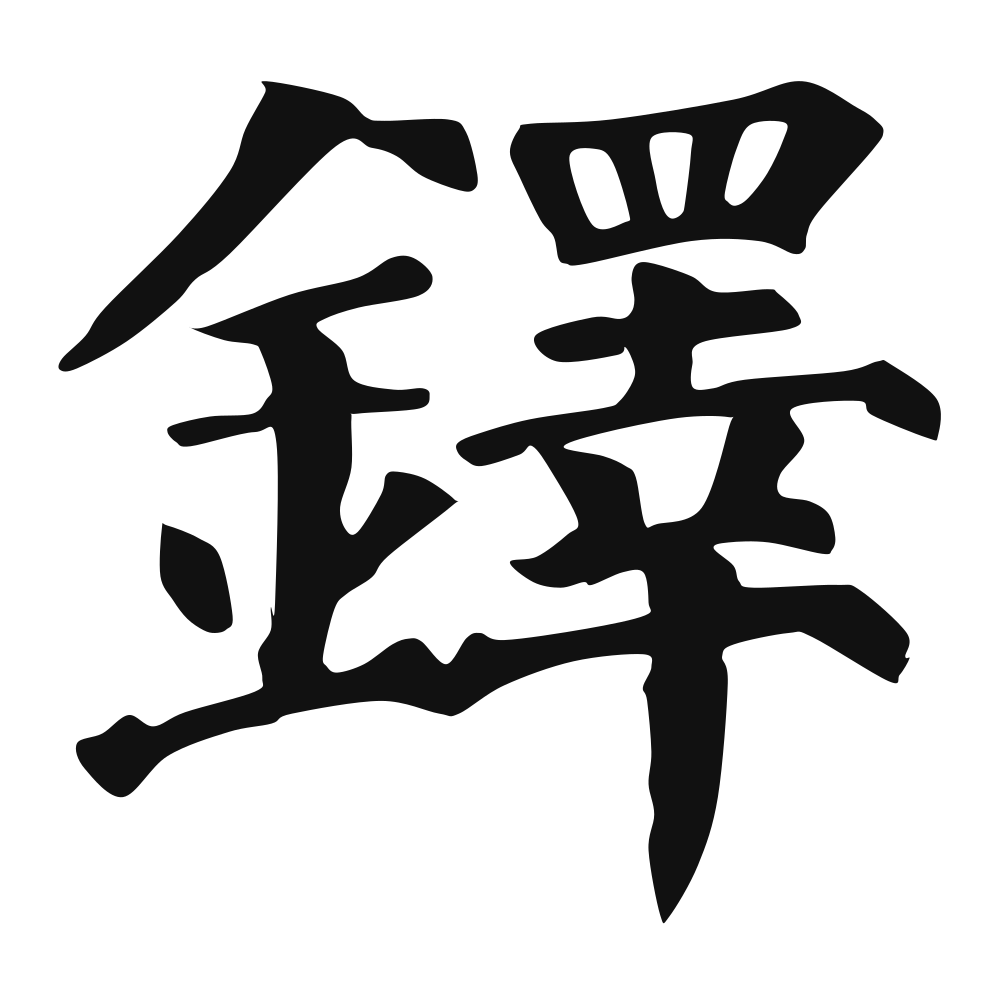
铎
surname Duo; large ancient bell
Closest English meanings
bell·large bell
The Calligrapher — Yán Zhēnqīng 颜真卿
Tang master of robust regular script; co-creator of the enduring 'Yan style'.
Tang calligrapher (709–784), master of regular script/running script — the Tang moral paragon whose upright, muscular regular script became the model of Chinese integrity in writing. Tang dynasty
Cultural Story
The《説文解字》defines 铎 as a great bell (大铃也), rung by heralds to summon the people. Fitted with a wooden tongue it became the 木铎 of the crier who proclaimed the ruler's words; with a metal tongue it mustered troops. To 振铎 was literally to ring out teaching.
Common words & phrases
- 木铎 wooden bell · herald
- 铃铎 small bells
- 振铎 ring the bell · teach
Read the story behind the character
Today 铎 survives chiefly in books and placenames, yet its compounds linger. A 木铎 still stands for the teacher or herald who announces truth, while 铃铎 chime from temple eaves. To 振铎 now means to open a school or spread learning far and wide.
Why this character belongs on skin
The sound arrives first in the chest, not the ears—the great bronze bell of the ancient court, rung by a bellmaster to gather the people, to announce the season, to declare that something true was about to be said. Confucius himself was called the wooden-clapper bell of the age, the one whose voice awakened a world gone deaf. That is the lineage of this character: not ornament, but summons. It rings for beginnings. It rings when wisdom is coming. As a tattoo, it is for those who feel called—not necessarily to preach, but to matter audibly, to be the person whose arrival changes the temperature of a room. Ink it on the shoulder, where the arm lifts, where the striking would begin. Every look at it is a small, resonant question: what am I for, and who is waiting to hear me? Some bells ring for war. This one rings for waking.
Own this character
Purchase delivers the original SVG of this glyph, brushed by Yán Zhēnqīng 颜真卿, ready to place on skin, paper, or screen.