
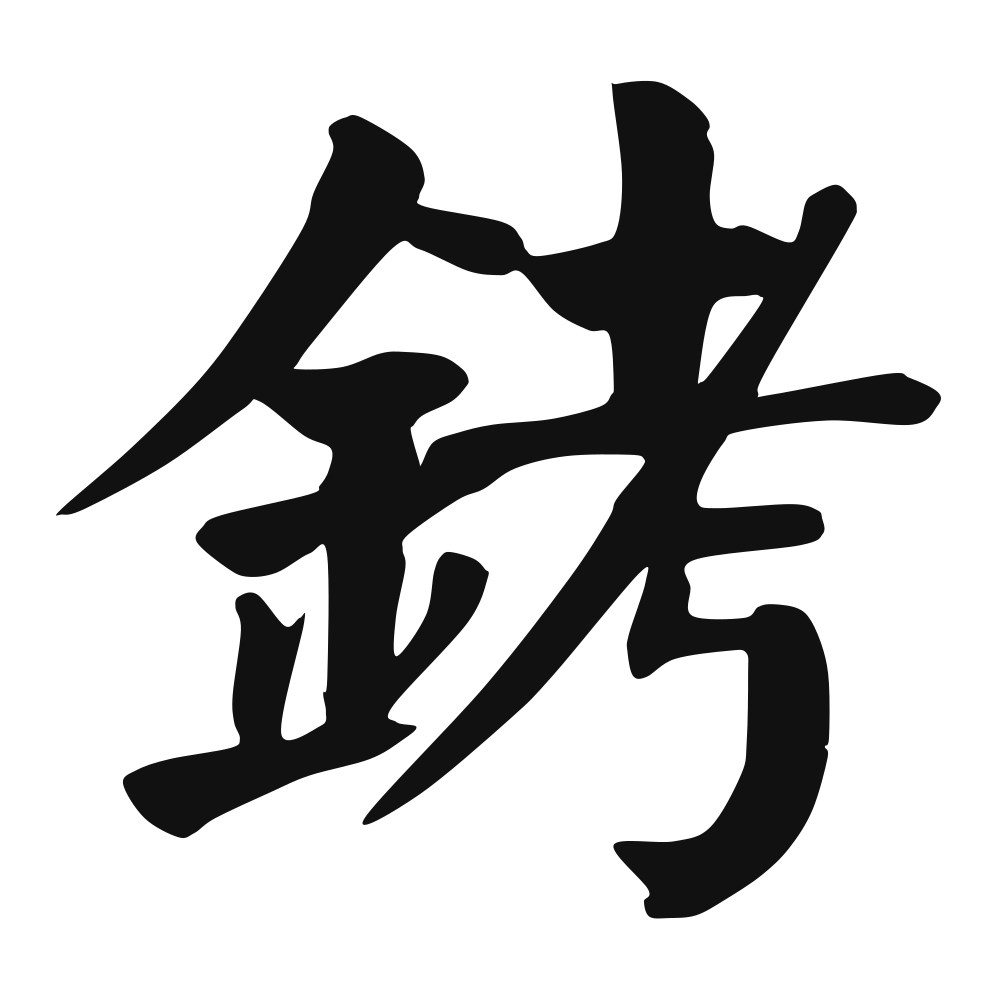
铐
shackles; fetters; manacle
Closest English meanings
handcuffs
The Calligrapher — Yán Zhēnqīng 颜真卿
Tang master of robust regular script; co-creator of the enduring 'Yan style'.
Tang calligrapher (709–784), master of regular script/running script — the Tang moral paragon whose upright, muscular regular script became the model of Chinese integrity in writing. Tang dynasty
Cultural Story
铐 is a late, practical character: the metal radical 钅 paired with 考, 'to examine'. It names the iron rings that bind a suspect's wrists. Born of the modern justice system rather than ancient script, it captures the moment a free person is taken into custody.
Common words & phrases
- 手铐 handcuffs
- 镣铐 shackles · fetters and handcuffs
Read the story behind the character
In daily life 手铐 are the handcuffs wielded by police at an arrest, clicking shut with a fatal finality. The heavier 镣铐—shackles and fetters—bind prisoners in films and court dramas. We meet 铐 most often in crime news, detective stories and courtroom scenes.
Why this character belongs on skin
Cold metal at the wrists is the image every prisoner knows, and yet the word carries a stranger weight. To be bound is to learn, suddenly, the value of the free hand you never noticed. The warrior chooses his chains willingly—vows, disciplines, the oath he will not break even when breaking would be easy. Christians speak of being bondservants of love; the Daoist sage is locked to the present moment and finds, inside that lock, a liberty the restless never taste. This is not an emblem of surrender. It is the honest admission that you are held—by devotion, by consequence, by a person you would not unclasp for the world. Wear it where only you can feel it, a private cuff reminding you that the strongest men are the ones who chose their bindings and never looked for the key.
Own this character
Purchase delivers the original SVG of this glyph, brushed by Yán Zhēnqīng 颜真卿, ready to place on skin, paper, or screen.