
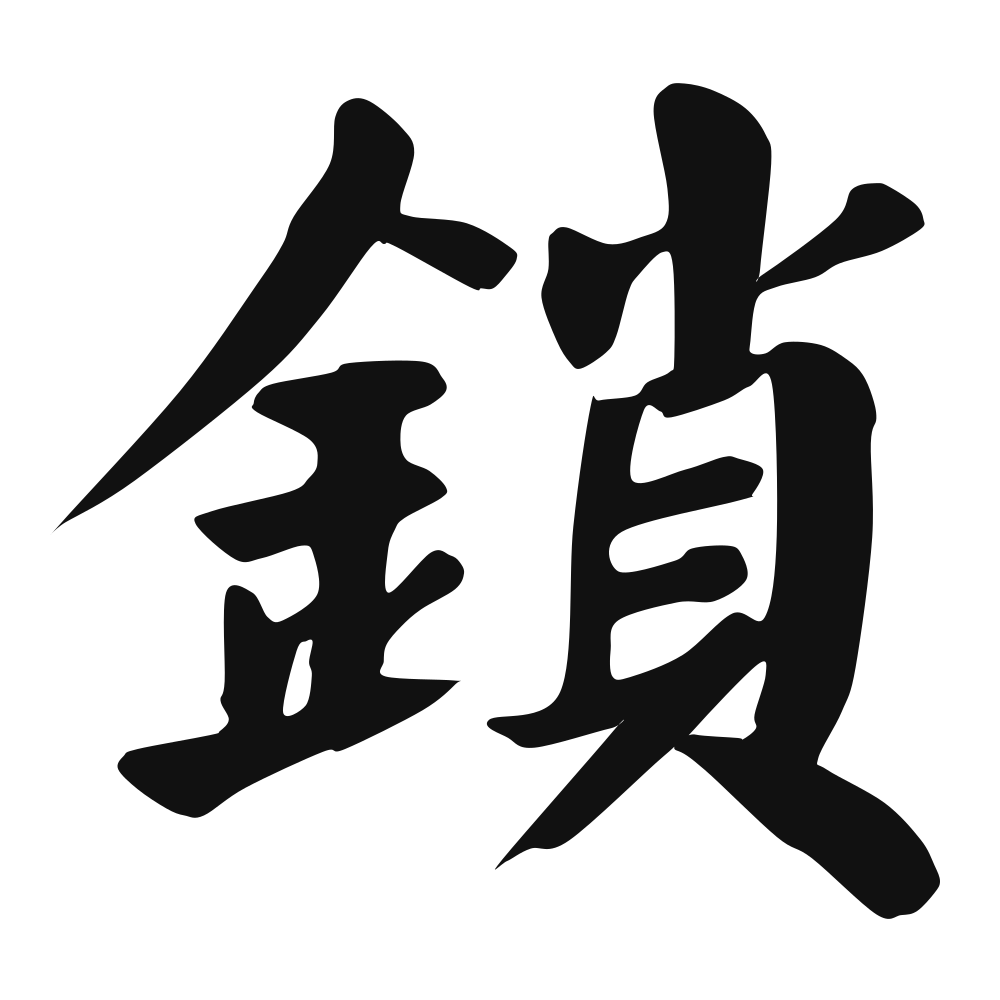
锁
to lock; to lock up; a lock (CL:把[ba3])
Closest English meanings
lock
The Calligrapher — Yán Zhēnqīng 颜真卿
Tang master of robust regular script; co-creator of the enduring 'Yan style'.
Tang calligrapher (709–784), master of regular script/running script — the Tang moral paragon whose upright, muscular regular script became the model of Chinese integrity in writing. Tang dynasty
Cultural Story
锁, the lock, joins metal with a form suggesting the bolt that slides to bar a way. In the《説文》it is the metal fastening of a gate. It is the keeper of the threshold, turning possession into security and absence into peace of mind.
Common words & phrases
- 锁住 lock · lock up
- 锁门 lock the door
- 锁链 chain · shackles
- 封锁 blockade · seal off · block
- 锁骨 collarbone · clavicle
Read the story behind the character
We 锁门 when leaving and 锁住 a bicycle against theft; a 锁链 binds or restrains. The 锁骨 is the collarbone shaped like a small lock, while 封锁 seals off a road or a city in an emergency.
Why this character belongs on skin
A small mechanism of metal that decides who enters: 锁, the lock. Radical 金 beside a form suggesting a small bent key-shape—ancient locks in China were works of art, brass beasts whose secrets lived in hidden pins. But consider what a lock confesses: that there is something inside worth guarding. Every locked door is a love letter to its contents. The heart, the vault, the garden gate at dusk—锁 marks the boundary where the ordinary world ends and the kept thing begins. And locks have keys, which means keeping is never the same as losing; what is locked can be opened, by the right hand, at the right hour. To wear 锁 is to be someone with an interior—guarded, worth the trouble of a key.
Own this character
Purchase delivers the original SVG of this glyph, brushed by Yán Zhēnqīng 颜真卿, ready to place on skin, paper, or screen.