
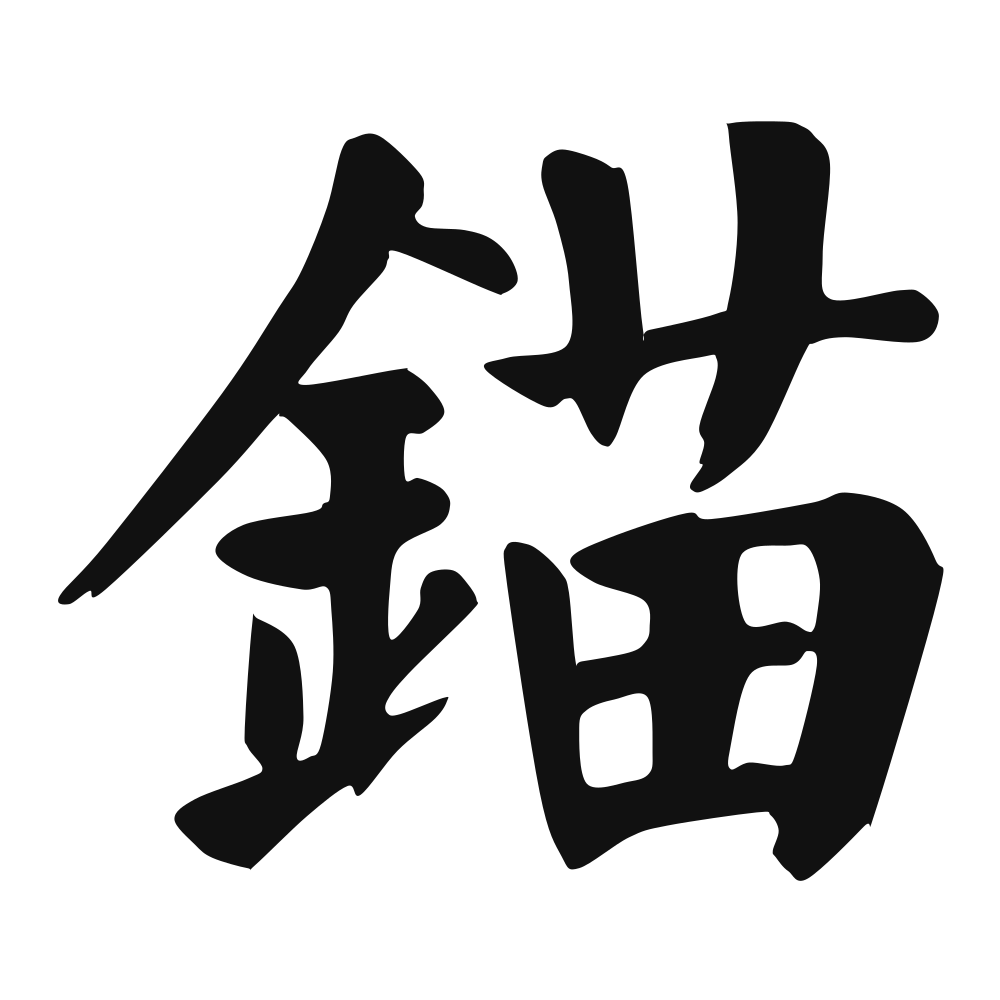
The Calligrapher — Yán Zhēnqīng 颜真卿
Tang master of robust regular script; co-creator of the enduring 'Yan style'.
Tang calligrapher (709–784), master of regular script/running script — the Tang moral paragon whose upright, muscular regular script became the model of Chinese integrity in writing. Tang dynasty
Cultural Story
锚 joins metal with 苗 and names the anchor, the iron claw that bites the seabed and holds a ship against wind and current. It is the sea's stake, the thing that says 'here we stay' upon water that would otherwise carry all away.
Common words & phrases
- 抛锚 drop anchor · break down
- 锚链 anchor chain
- 锚地 anchorage
- 起锚 weigh anchor
Read the story behind the character
A captain 抛锚 to drop anchor, or a car 抛锚 when it breaks down; 起锚 weighs anchor to sail. The 锚链 runs down into the dark. 锚 is the thing that says 'here we stay' upon the restless water.
Why this character belongs on skin
Every long story at sea comes down to this one object. 锚 is metal plus the old catfish radical, but its meaning is universal: the anchor, the iron thing you throw into the dark water so the ship remembers where home is. Sailors understood the theology of it—an anchor is faith made heavy, a promise to the seabed. The early Christians scratched it on catacomb walls as a hidden cross, hope with flukes. And the word still works on land. A person can be your anchor. A ritual can be one—the same coffee, the same song, the same hand on the same shoulder. What it means, always, is that drifting is possible and chosen against. You will move, weather will happen, and still something of you will hold position. This character is that grip, set permanently: not to keep you from sailing, but to keep you from being lost.
Own this character
Purchase delivers the original SVG of this glyph, brushed by Yán Zhēnqīng 颜真卿, ready to place on skin, paper, or screen.