
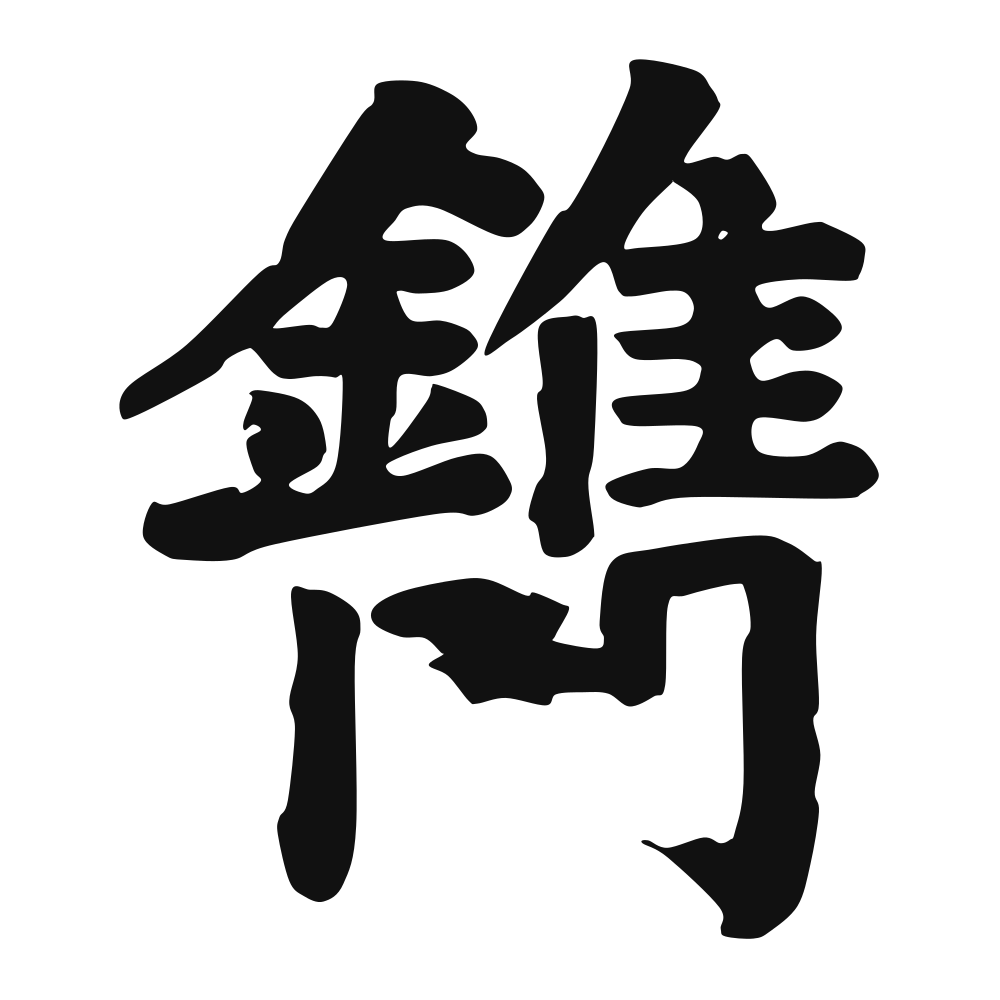
镌
to engrave (on wood or stone); to inscribe
Closest English meanings
engrave·carve
The Calligrapher — Yán Zhēnqīng 颜真卿
Tang master of robust regular script; co-creator of the enduring 'Yan style'.
Tang calligrapher (709–784), master of regular script/running script — the Tang moral paragon whose upright, muscular regular script became the model of Chinese integrity in writing. Tang dynasty
Etymology & Meaning · 字义溯源
### Soundjuān — juān (1st tone). Often a bound morpheme — needs a partner word ### Original meaningJuān (1st tone). The Shuowen Jiezi defines it as 「穿木鐫也。从金雋聲」 and adds a second gloss 「一曰瑑石也」 — 'to bore through wood', and in another reading 'to carve stone'; Duan Yucai's note is blunt: 「謂破木之器曰鐫」 — the implement that breaks wood is called 鐫. 《釋名》 gives the sound-play: 「鐫,鐏也。有所鐏入也」. The classical citations are all about cutting into hard things: 《淮南子·本經訓》「鐫山石」 — he carved the mountain rock; 《漢書·溝洫志》「可鐫廣之」 with the note 鐫,謂琢鑿之. The finest line is Bai Juyi's, from 《新樂府·青石》: 「不願作官家道旁德政碑,不鐫實錄鐫虛辭」 — 'I would not be the virtue-stele by the roadside of the officials; I would not carve true record, I would not carve false words'. From carving, 鐫 came to mean 'to engrave on the heart' (鐫心之感, to keep deeply in mind) and also, abruptly, 'to admonish' (《說苑·反質》「幸有晏子以儉鐫之」) and 'to demote' — 鐫級, the demotion of an official, as in 《宋史》「流貶鐫廢,略無虛日」. Kangxi 21 strokes. 五行 Metal. ### The structure (形聲 · 从金,雋聲 — metal (金) for the chisel, 雋 (juàn) for the sound)①金jīnmetalthe chisel that does the work②雋juànrich / outstandingthe phonetic half, borrowed for sound③石shístone一曰瑑石也 — the other Shuowen gloss: carving stone④碑bēistelewhat 鐫 is for: the inscription meant to outlast ### In use todayItemReading / meaningNoteReadingjuān (1st tone)single syllableCore senseto engrave / to chisel镌刻 · 镌石 · 镌心 (engraved on the heart)Grammarverb, three distinct senses雕刻 · 规劝 (镌谕) · 降职 (镌级)Tattoo fitcaution — a verb, and 镌级 means demotionstrong if read as 'to engrave'; risky if read otherwise ### Closest words in English — and what each misses - Write / Record — 書 / 記 hold writing and recording; 鐫 cuts the surface, it does not move a brush - Memory / Remember — 銘 is the word for inscribing and remembering; 鐫 is the physical act of cutting - Carve (wood), as craft — 雕 / 刻 are the general words; 鐫 is specifically boring and chiselling through - Promotion / Honour — the opposite — 鐫級 means demotion; the character cuts both waysAn honest note on grammar. Verb — 镌刻 to engrave, 镌石 to carve stone, 镌心 to fix in the heart; also 'to admonish' (镌谕) and, in official language, 'to demote' (镌级)Where a Western reader can stand: 镌 (juān) means 'to engrave, to chisel'. The Shuowen's definition is 穿木鐫也, 'to bore through wood', with a second gloss 瑑石也, 'to carve stone'; Duan Yucai calls it the implement that breaks wood. Its best line is Bai Juyi's refusal to carve false words on an official's stele. As a tattoo it has real appeal — permanence, a mark meant to outlast — but be clear: it is a verb, its root is a tool
Cultural Story
镌 (also written 鐫) pairs metal with 隽 and means to engrave or carve deeply, cutting a lasting mark into stone, wood or metal. It is inscription as memorial; we 镌刻 a name on a tablet and 雕镌 a statue from the cliff so memory outlasts the carver.
Where a Western reader can stand: 镌 (juān) means 'to engrave, to chisel' — bore through wood, carve stone. Its best line is Bai Juyi refusing to carve lies on a stele. Yan Zhenqing's stelae and martyrdom are its living proof. Read it honestly: a verb of permanence whose bureaucratic twin, 鐫級, means demotion. For plain 'memory', 銘 is the warmer character.
Common words & phrases
- 鐫刻 engrave · carve
- 雕鐫 carve
- 鐫石 engrave on stone
Read the story behind the character
We 镌刻 a name on a tablet and 雕镌 a statue from the cliff; to 镌石 is to carve words into rock for ages. The character carries the solemn act of fixing memory where time moves slowly.
Why this character belongs on skin
To carve into metal or stone — this character is the act itself, metal radical and the sense of the graver's bite. Seal-cutters press it into hard ends; stonemasons drive it through mountainside, and what they make is the opposite of speech. Words spoken die on the air; words engraved outlive their languages, their dynasties, the weather — the Rosetta stone still talking, the mountain gates still naming their dead. There is a reason vows are cut rather than written: the hand hesitates on soft things and commits on hard ones, and the commitment is the point. That is also the exact description of tattooing — a burin of light, engraving the most personal stone you own, one line that will not be revised. Every engraved thing says two sentences: its text, and I meant this. You are already, in some sense, a monument. Decide what it says.
Own this character
Purchase delivers the original SVG of this glyph, brushed by Yán Zhēnqīng 颜真卿, ready to place on skin, paper, or screen.