
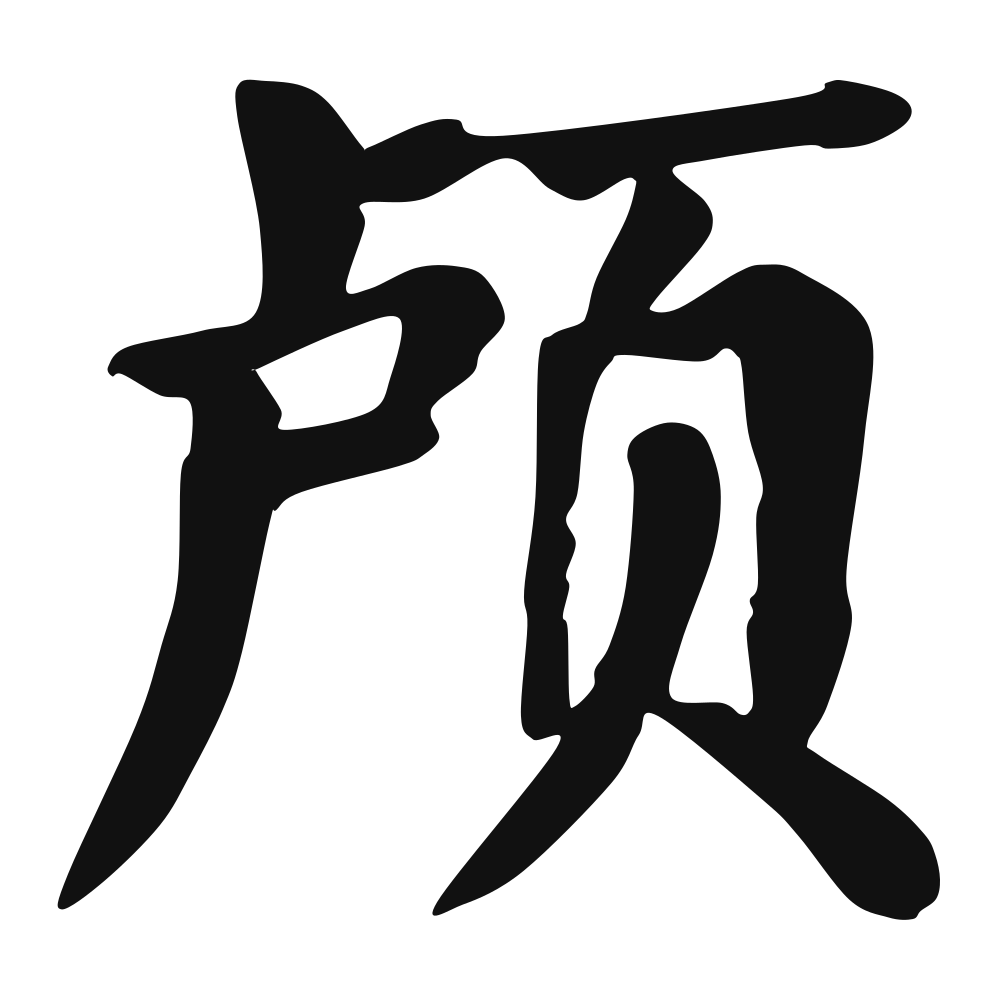
The Calligrapher — Yán Zhēnqīng 颜真卿
Tang master of robust regular script; co-creator of the enduring 'Yan style'.
Tang calligrapher (709–784), master of regular script/running script — the Tang moral paragon whose upright, muscular regular script became the model of Chinese integrity in writing. Tang dynasty
Cultural Story
颅 joins 頁 'head' with 盧 as sound, naming the bony case that holds the brain. 《說文》新附 gives 顱 as the skull. It is the head in its hardest form, what remains when all else is gone—the vessel of thought and of the face we knew.
Common words & phrases
- 头颅 head · skull
- 颅骨 skull bone · cranium
- 脑颅 braincase
Read the story behind the character
颅 is the skull: 头颅 the head, 颅骨 the skull bone, 脑颅 the braincase. A helmet guards the 颅 in a fall; a doctor studies the 颅骨 in anatomy class. The soldier removed his hat, bowing his 头颅 to the fallen comrade.
Why this character belongs on skin
Beneath the face we perform for others lies the bowl that holds the thinking, the clean curve of bone the Buddhists tap when they speak of emptiness wearing a handsome mask. Memento mori, the West called it, and the Daoists agreed: the skull laughs at our ambitions, reminders that the vessel outlasts the wine. To carry this character is not morbidity but honesty, a recognition that the head which plots and loves will one day be only a smooth shell. Warriors rubbed their foreheads before battle; lovers trace it on a sleeping brow. Let it rest where thought begins, a quiet memento that you lived inside a mortal house and lit it well, that the skull is not the end of the person but the bowl that proves there was one.
Own this character
Purchase delivers the original SVG of this glyph, brushed by Yán Zhēnqīng 颜真卿, ready to place on skin, paper, or screen.