
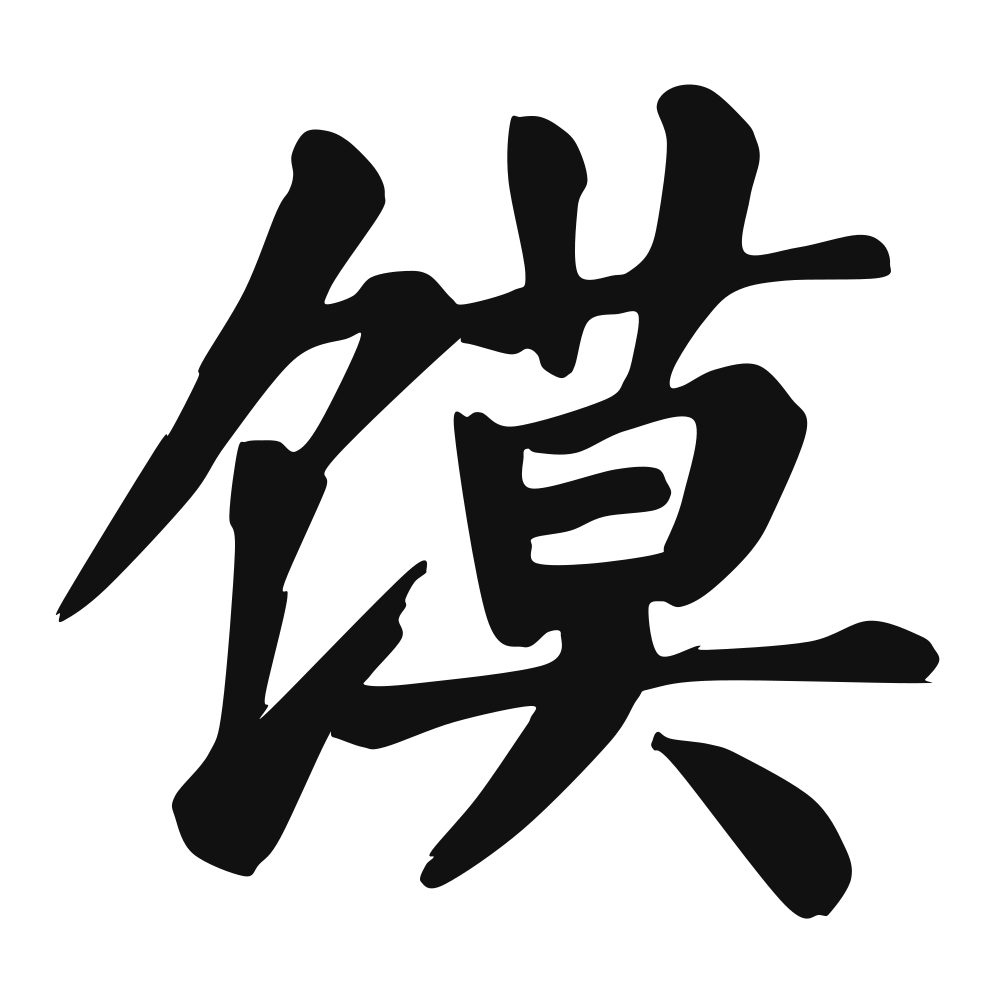
馍
small loaf of steamed bread
Closest English meanings
steamed bun·bread
The Calligrapher — Yán Zhēnqīng 颜真卿
Tang master of robust regular script; co-creator of the enduring 'Yan style'.
Tang calligrapher (709–784), master of regular script/running script — the Tang moral paragon whose upright, muscular regular script became the model of Chinese integrity in writing. Tang dynasty
Cultural Story
馍 (mó) pairs 食 with the phonetic 莫, a later northern character for steamed bread. In the dialect of the Yellow River plains it names the round, filling staple that replaces rice for millions of people.
Common words & phrases
- 馍馍 steamed bun · bread
- 蒸馍 steamed bun
- 烧馍 baked bun · roasted bun
Read the story behind the character
馍 is northern bread. Families steam 馍馍 (steamed buns), eat 蒸馍 (steamed buns) with stew, and bake 烧馍 (baked buns) over coals. In Shaanxi a 馍 with meat is a whole quick meal.
Why this character belongs on skin
馍 is steamed bread — the plain white roundness that feeds half of northern China through every winter. The character's food radical sets it beside a sound-word for kneaded dough: nothing in it is show. A 馍 is flour and water and the steam of a family's stove, pinched into rounds, set in the bamboo basket, carried to the table with pickle and porridge and no ceremony at all. Yet the north dignified it endlessly — wedding 馍s stamped red with luck, towering funeral 馍s, 馍s stuffed with dates for the New Year, the humble loaf promoted at every threshold of a life. This is Confucian sacrament in miniature: the ordinary meal treated as the altar it secretly is. Travelers swear the taste of a true 馍 is the taste of being fed by someone's mother. To wear 馍 is to honor the unglamorous staple of your own survival — the daily bread, risen by patience, broken among your people.
Own this character
Purchase delivers the original SVG of this glyph, brushed by Yán Zhēnqīng 颜真卿, ready to place on skin, paper, or screen.