
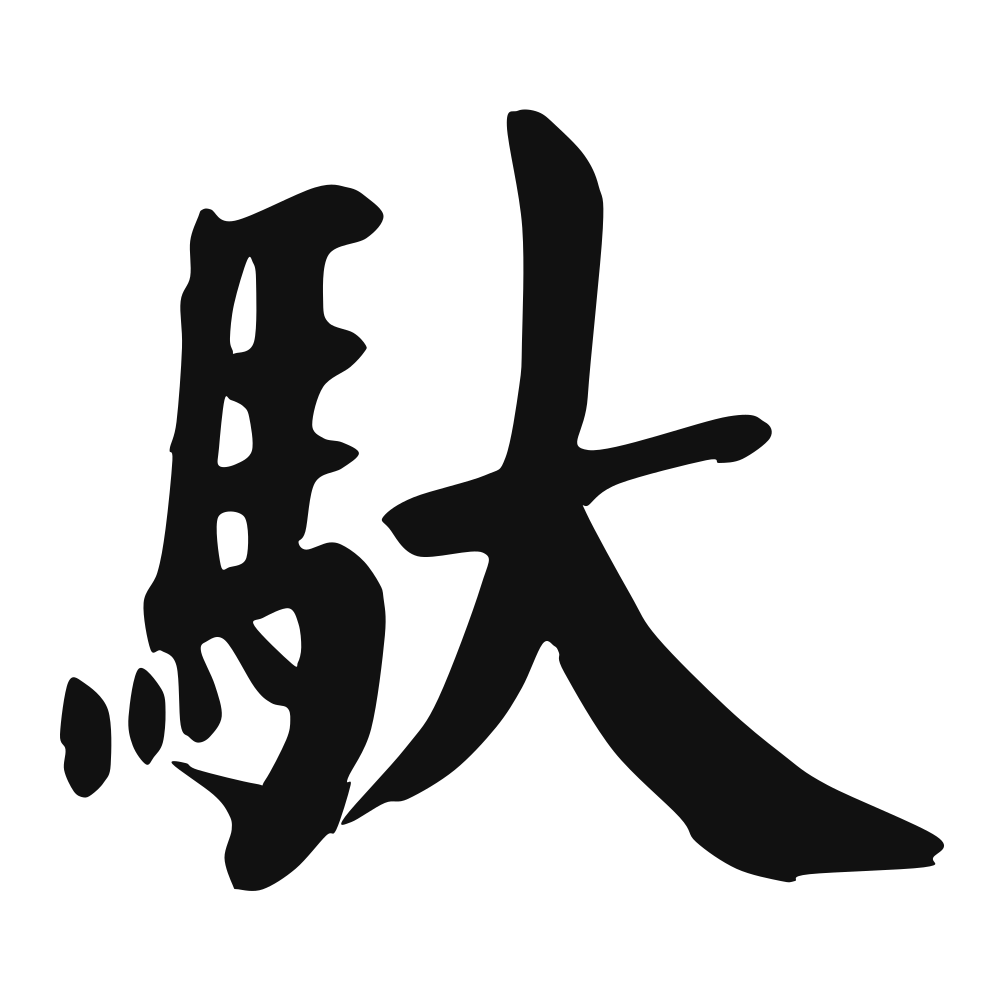
驮
load carried by a pack animal; to carry on one's back
Closest English meanings
to carry on back·to pack
The Calligrapher — Yán Zhēnqīng 颜真卿
Tang master of robust regular script; co-creator of the enduring 'Yan style'.
Tang calligrapher (709–784), master of regular script/running script — the Tang moral paragon whose upright, muscular regular script became the model of Chinese integrity in writing. Tang dynasty
Cultural Story
驮 (tuó) pairs 馬, “horse,” with the phonetic 大, meaning to load burdens on an animal’s back. Long before trucks, pack animals carried grain and goods across the mountains on their patient backs.
Common words & phrases
- 驮运 to transport by pack animal
- 驮马 packhorse
Read the story behind the character
驮 is beast-of-burden transport. Merchants 驮运 (transport by pack animal) goods on trails, and a 驮马 (packhorse) climbs with sacks. The character pictures the patient animal bearing weight where wheels cannot go.
Why this character belongs on skin
The horse bears the load without complaint — that is 驮, the beast taking the world onto its back so someone else can ride. It is the oldest deal of domestication: I carry, you arrive. We know this posture in our bones, the friend who holds the group together, the one who carries the silence of a family. To wear 驮 is to honor the carrier in yourself — not the rider, not the praised, but the steady one who makes arrival possible. It is a quiet pride, almost a grief, and wholly honest. Put it where your own back curves, a tribute to everything you've borne without being asked. The mark doesn't ask for thanks. It only names what you've carried, and lets you set down, at least on skin, the weight you've been pretending wasn't there.
Own this character
Purchase delivers the original SVG of this glyph, brushed by Yán Zhēnqīng 颜真卿, ready to place on skin, paper, or screen.