
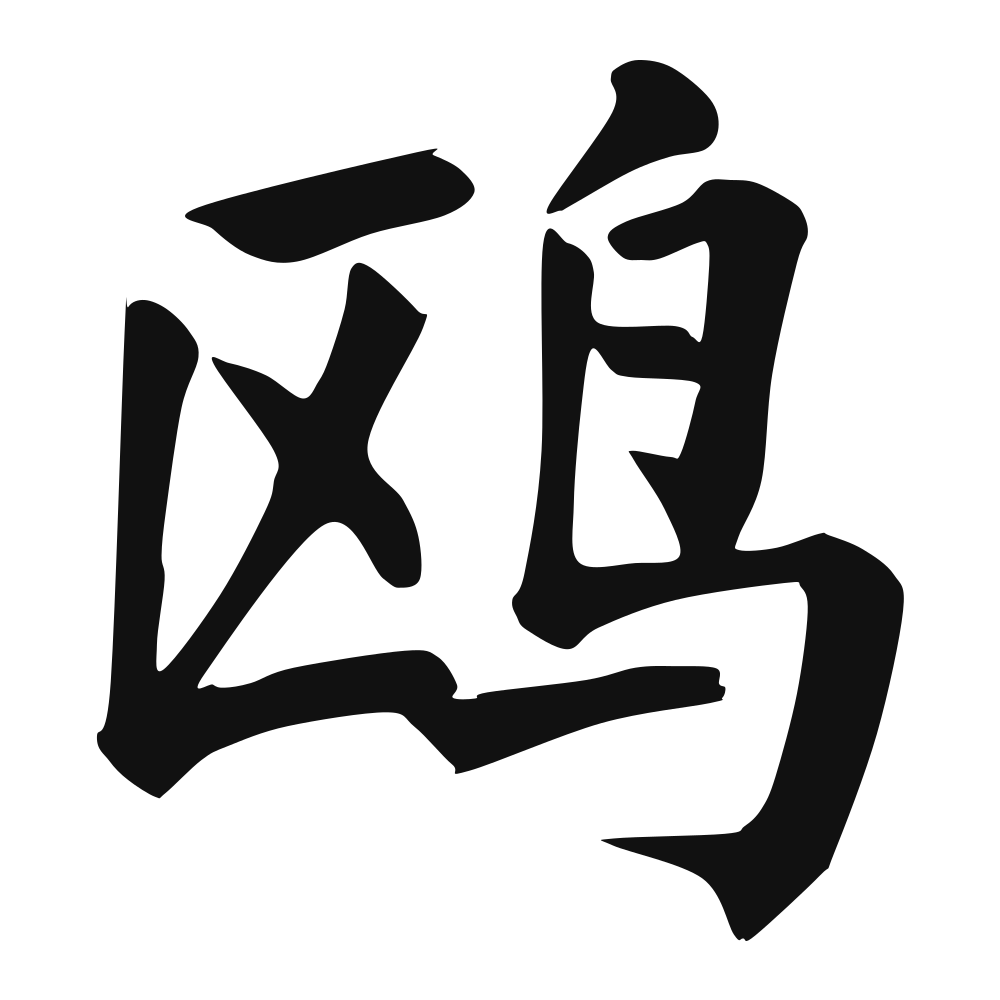
The Calligrapher — Yán Zhēnqīng 颜真卿
Tang master of robust regular script; co-creator of the enduring 'Yan style'.
Tang calligrapher (709–784), master of regular script/running script — the Tang moral paragon whose upright, muscular regular script became the model of Chinese integrity in writing. Tang dynasty
Cultural Story
《説文解字》gives 鸥 as “水鴞也,” a water bird, formed from the bird radical with the sound 區. The gull rides coastal winds and shallow lakes, a constant of river mouths and seashores. Tang poets loved the 鸥 as an emblem of unfettered wandering, the free companion of hermits who asked nothing of office or rank.
Common words & phrases
- 海鸥 gull · seagull
- 沙鸥 sand gull
- 鸥鸟 gull
Read the story behind the character
The 海鸥 (seagull) screams above ferries, the 沙鸥 (sand gull) scans tidal flats, and any 鸥鸟 (gull) signals the nearness of water. Today coastal cities brand themselves with wheeling gulls, and birdwatchers travel to estuaries just to watch flocks lift off the waves at sunrise.
Why this character belongs on skin
The gull rides the wind with no effort, belonging to no shore, owned by the sky it crosses. 鸥 is the gull, the companion of poets who stood at the river's edge and felt the loneliness lift. Li Bai drank with gulls; the wanderer saw in them his own free passage over waters he would never settle. To carry this character is to claim the untethered course, the life lived on the current rather than the map. Let it rest on your skin like a wing-print, a quiet vow to movement without apology. The West builds the harbor; 鸥 knows the open. Wear it and you declare yourself a creature of passage, faithful to the wind, refusing the anchored life—yet always returning, because even the freest bird remembers the one shore that watched it learn to fly.
Own this character
Purchase delivers the original SVG of this glyph, brushed by Yán Zhēnqīng 颜真卿, ready to place on skin, paper, or screen.