
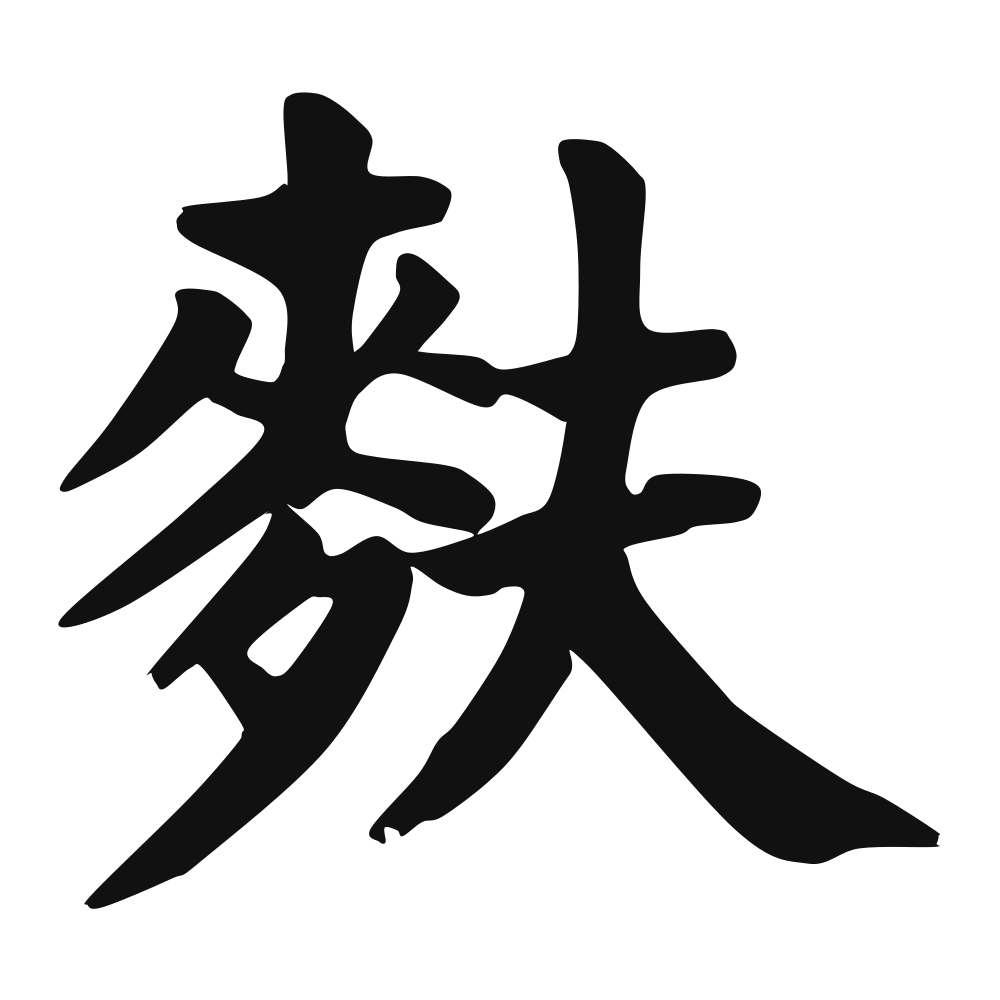
The Calligrapher — Yán Zhēnqīng 颜真卿
Tang master of robust regular script; co-creator of the enduring 'Yan style'.
Tang calligrapher (709–784), master of regular script/running script — the Tang moral paragon whose upright, muscular regular script became the model of Chinese integrity in writing. Tang dynasty
Cultural Story
《説文解字》gives 麸 as “小麥屑皮也” (the sifted skin of wheat), a phono-semantic compound from the wheat radical with the sound 夫. It is the outer husk left when grain is milled—coarse, brown, and humble. Once fodder and peasant food, bran is now prized as rough fiber.
Common words & phrases
- 麸皮 wheat bran
- 麦麸 wheat bran
Read the story behind the character
麸皮 (wheat bran) and 麦麸 (wheat bran) line bakery aisles as health fiber, fed to livestock, and pressed into bran cakes. Bakers mix it into rustic loaves for texture, and diet books praise its roughage, turning the mill's discarded skin into a modern wellness staple.
Why this character belongs on skin
麸 is the bran — the outer husk of the wheat grain, stripped away in milling, usually dismissed as chaff. But the humble word carries a quiet Buddhist punch: what looks like waste, the tradition insists, is often where the nourishment actually lives. Bran holds the fiber, the minerals, the part of the grain that keeps the body honest; white flour is the indulgence, bran the substance. Monks knew it, farmers knew it, and anyone who has lived through lean seasons knows that the outer skin of things — of people too — is often tougher and more sustaining than the polished interior we advertise. There is also the old saw the millers lived by: you cannot judge the kernel by the husk. A tattoo of 麸 is a small, wry emblem for someone unafraid of being underestimated — coarse outside, complete inside. Put it somewhere you'd never expect to see ink, because that, exactly, is the point.
Own this character
Purchase delivers the original SVG of this glyph, brushed by Yán Zhēnqīng 颜真卿, ready to place on skin, paper, or screen.