
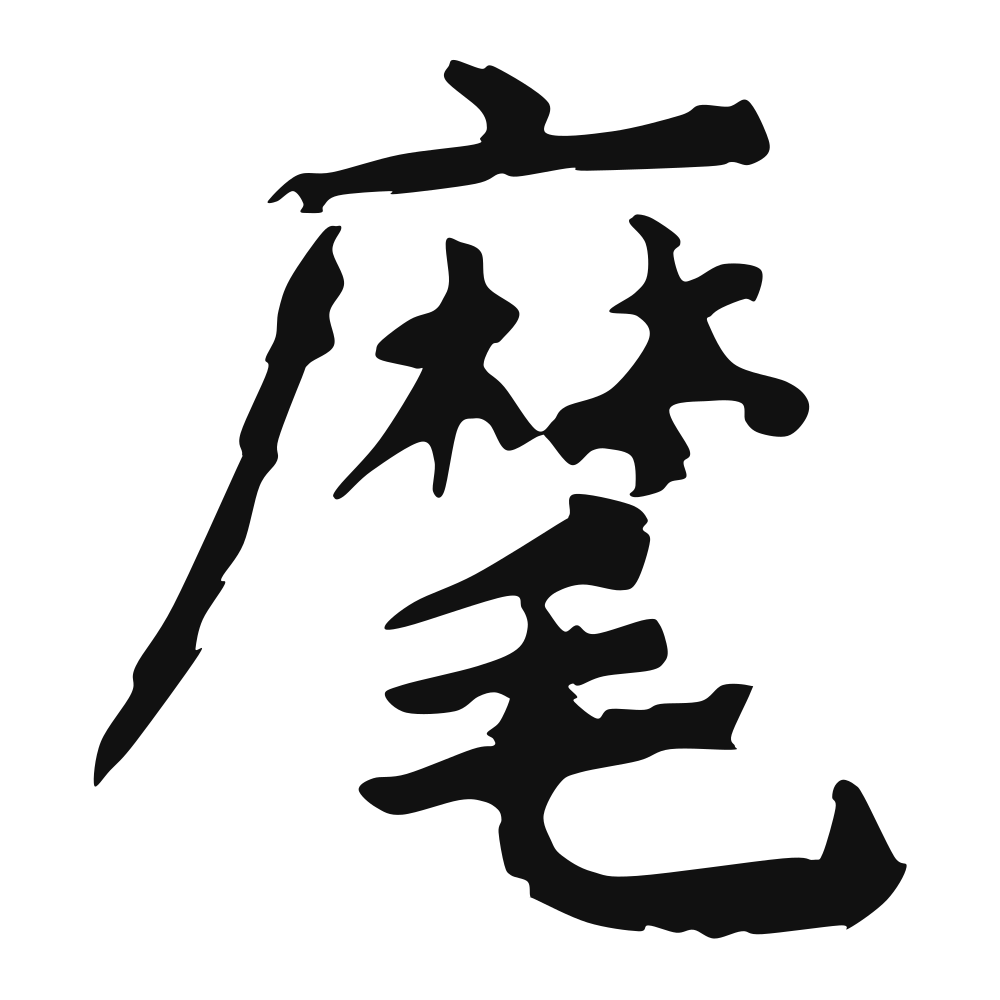
麾
signal flag; to signal
Closest English meanings
flag·command·banner
The Calligrapher — Yán Zhēnqīng 颜真卿
Tang master of robust regular script; co-creator of the enduring 'Yan style'.
Tang calligrapher (709–784), master of regular script/running script — the Tang moral paragon whose upright, muscular regular script became the model of Chinese integrity in writing. Tang dynasty
Cultural Story
《説文解字》gives 麾 as “旌旗,所以指麾也” (a banner used to command), a phono-semantic compound from the hemp radical. The general waved his 麾 to direct troops on the field; by extension the word meant to command and to lead an army's movement in battle.
Common words & phrases
- 麾下 under one's command · general's quarters
- 麾军 command troops
Read the story behind the character
A general's 麾下 (under one's command) are his soldiers, and to 麾军 (command troops) is to direct them in battle. Modern writing still uses 麾下 for a leader's staff or followers, and 麾 appears in historical dramas and military memoirs describing command from the field tent.
Why this character belongs on skin
Every army once moved behind a handful of silk. Huī is the commander's standard—the yak-tail banner raised above the field, dipped and swept to send a thousand horses left or right. Su Shi, wine-drunk at the Red Cliff, remembered himself as a young general 'with feather fan and silk headband, laughing while masts and oars turned to flying ash,' and the word for his command in that poem is this one. There is authority, and then there is ease wearing authority like a scarf. The banner does not shout; it gestures, and history rearranges itself. To wear huī is to claim that composure—not power clenched, but power held lightly, decision made beautiful. Whatever battlefronts your life includes, this is the posture for them. Lift the standard. The field answers.
Own this character
Purchase delivers the original SVG of this glyph, brushed by Yán Zhēnqīng 颜真卿, ready to place on skin, paper, or screen.