
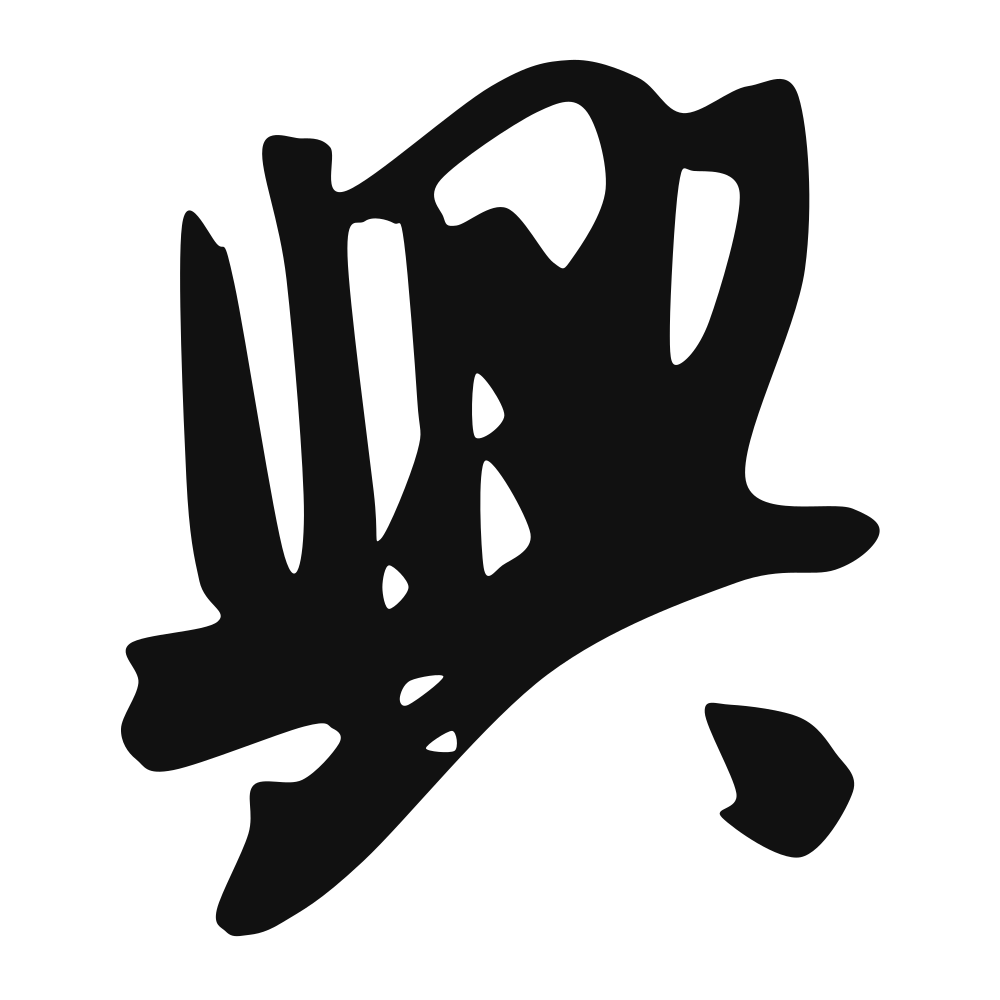
兴
兴 (xīng) — rise, prosper, begin. Pictograph of hands raising a vessel — to lift up. Classical life: 兴旺 — flourish; 兴 is the upward push. Grammar: free morpheme — also: surname Xing; to rise; to flourish; to become popular; to start; to encourage; to get up; (often used in the negative) to permit or allow (dialect); maybe (dialect); feeling or desire to do sth; interest in sth; excitement
Closest English meanings
prosper·rise·excite·flourish·interest
The Calligrapher — Yáng Shìqí 杨士奇
Ming statesman renowned for his regular script and the Taige (court) style.
Ming calligrapher (), master of regular script — known for 台阁体. Ming dynasty
Etymology & Meaning · 字义溯源
2 · The Character: 兴 兴 (xīng, 1st tone; also read xìng, 4th) is the simplified form of 興, the sixteen-stroke graph every pre-modern hand — Zhong Yao's included — actually wrote. The Shuowen Jiezi, scroll three, radical 舁: 興,起也。从舁从同。同力也 — 'to rise; from 舁 and 同, because they lift with one strength.' Oracle-bone and bronze forms show four hands (舁) under a frame (凡), so the graph is literally a communal lift; Xu Shen's 同 is a later misreading of 凡 plus 口. The Erya repeats 興,起也, and the Shijing gives the household line 夙興夜寐, rise at dawn and sleep late (《詩·小雅》). Confucius: 興於詩,立於禮,成於樂 (《論語·泰伯》). 興 is also the third of the Shijing's six modes, the evocative opening image. Free morpheme: yes, as a verb — to rise, to raise, to flourish. Honest flags: it is a polyphone, and Zhang Taiyan held that the xìng 'zest' sense should properly be written 嬹; 興 also heads hostile compounds (興師問罪, 興風作浪).
Cultural Story
The form showed four hands lifting a tray, 興, a rising together — a feast raised, a mood stirred. The odes sing of 中兴, a house restored after decline. Zhou kings 兴起 from the west. To be 兴 was to be carried up by others, not to climb alone.
Where a Western reader can stand: 興 is the communal lift — four hands under one frame, rising together. Yang Shiqi was one of the 'Three Yangs' who steered the early-Ming renaissance and, as chief grand secretary, embodied courtly order; his regular script is the handwriting of government itself, neat and authoritative. A 興 in his hand reads like a clause in a constitution: the rising is framed, balanced, institutional. Think of the upright Roman capitals on a civic founding document — the energy is civic discipline, the flourishing understood as something a well-run polity produces. Honest caveat: 兴 is a 20th-century simplification; Yang Shiqi and every classical hand wrote 興.
Energy Reading
Water (水)
Comparative symbology, not fortune-telling.
Common words & phrases
- 高兴 happy · glad · pleased · delighted
- 兴趣 interest · fancy · taste
- 兴起 rise · emerge · spring up · arise
- 复兴 revive · renaissance · restore · rejuvenate
- 兴旺 prosperous · flourishing · thriving
- 兴奋 excited · exhilarated · agitated
Read the story behind the character
A child is 高兴 at the ice cream stand; a reader loses 兴趣 by page three. A craft 兴起 in the lanes, then fades. The city plans a 复兴 of the old quarter, scaffolding on every wall. The fans are 兴奋 at the last goal, and the 兴旺 market spills onto the road.
Why this character belongs on skin
A chorus of hands lifts something into the air—that is the old picture inside 兴, the rising, the prospering, the moment a thing that was low is raised up by many. It means to excite, to begin, to flourish after the long flat stretch. We know the feeling: the project that suddenly catches fire, the love that lifts you out of yourself, the morning the heavy year finally breaks. The character insists joy is active, a lifting rather than a falling. To wear 兴 is to pledge yourself to the upward motion, the refusal to stay sunk. Let it mark you as one who rises—not once, but again and again, as many times as the world requires. The ink is a small ascending flame, a vow that whatever fell, you will raise it, and raise it gladly, for the sheer rising of it.
Own this character
Purchase delivers the original SVG of this glyph, brushed by Yáng Shìqí 杨士奇, ready to place on skin, paper, or screen.