
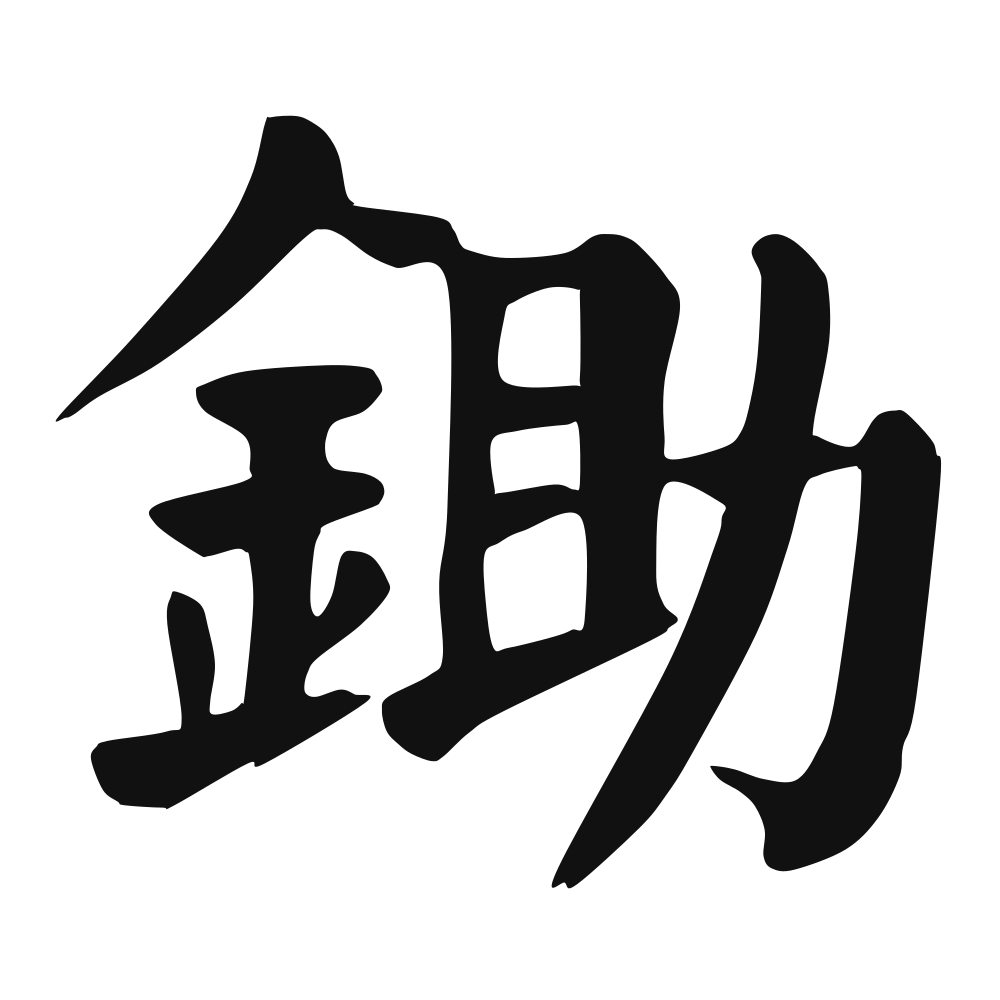
锄
a hoe; to hoe or dig; to weed; to get rid of
Closest English meanings
hoe·weed
The Calligrapher — Yáng Xīn 羊欣
Liu Song calligrapher, student of Wang Xianzhi; famed in the saying 'buy Wang, get Yang'
南朝宋 calligrapher (), master of running script — known for 《采古来能书人名》. Liu Song dynasty (Southern Dynasties)
Cultural Story
锄 joins metal with 助 and names the hoe that breaks the earth and cuts the weed. Older than the plough in many fields, it is the farmer's daily companion, its blade biting the soil in the slow, bending rhythm that keeps a crop alive.
Common words & phrases
- 锄头 hoe
- 锄草 weed
- 锄地 hoe the field
Read the story behind the character
A 锄头 turns the soil; we 锄草 to clear weeds and 锄地 to ready the crop. The motion is slow and bending, the rhythm of the smallholder. 锄 is the quiet labour that keeps a garden or a life from being overrun.
Why this character belongs on skin
Metal bent to the earth's service: 锄, the hoe—金, metal, joined to 助, 'to help.' A tool, then, that helps by striking; a blade that gardens. There is no more honest verb in any language. The poet Tao Yuanming left his post rather than bow for a pittance, and went home to hoe beans through the morning mists—his lines about it are still read thirteen centuries on. Weeding is philosophy with a handle: what you cut back is what you've chosen, and the row you tend becomes the life you have. 锄 is patience with an edge, the daily decision of what to grow and what to clear away. Some tattoos are declarations of war. This one is a declaration of work—the good kind, the kind that feeds you.
Own this character
Purchase delivers the original SVG of this glyph, brushed by Yáng Xīn 羊欣, ready to place on skin, paper, or screen.