
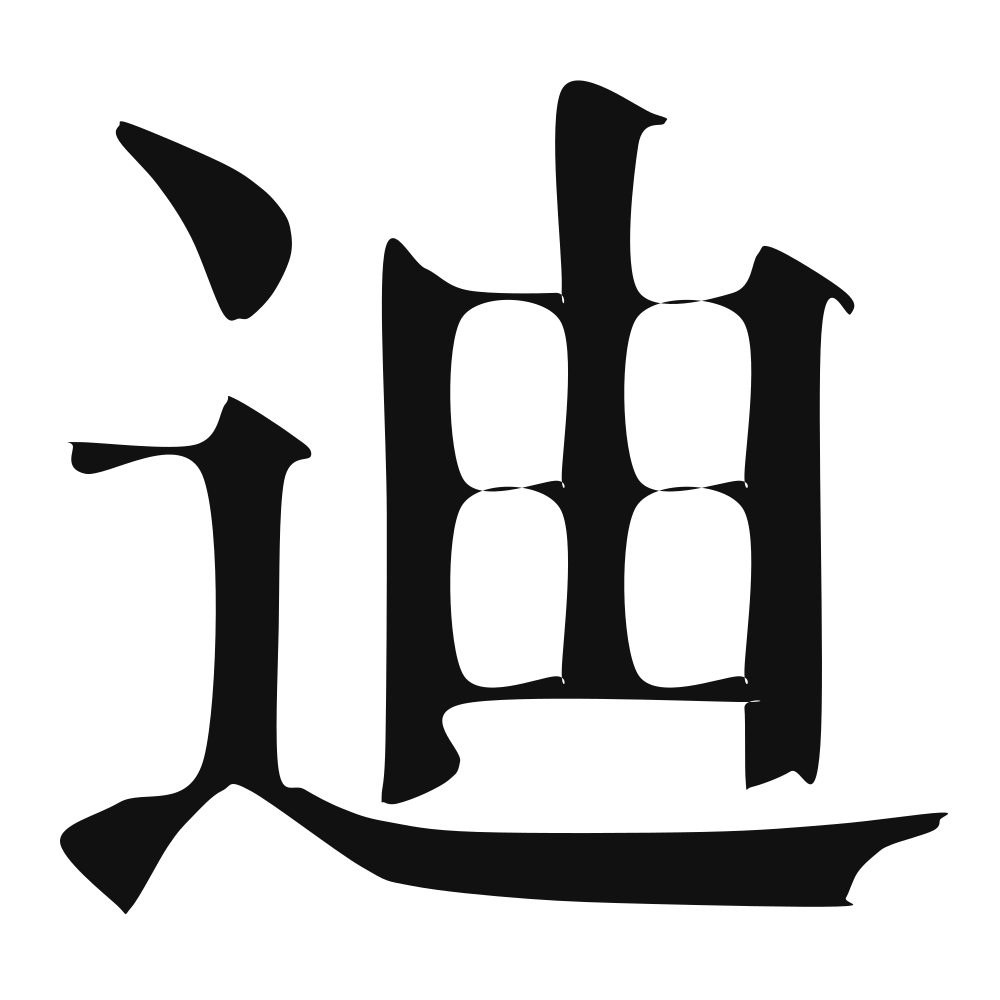
The Calligrapher — Bó Shàozhī 薄绍之
Liu Song calligrapher paired with Yang Xin as 'Yang-Bo', famed for running and cursive script
南朝宋 calligrapher (), master of running script — known for 与羊欣并称. Liu Song dynasty (Southern Dynasties)
Cultural Story
Di means to lead someone along the right path — early Zhou documents use it for kings guiding the people, and qidi, to open up and enlighten, became the classic word for a teacher's true work: not filling a bucket but lighting a road.
Common words & phrases
- 启迪 enlighten · inspire
- 迪厅 disco
Read the story behind the character
Qidi (enlighten) still names the book that changed your thinking or the professor's one good sentence. And then the character took a sharp modern turn: diting (disco hall), borrowed from English, lit up 1990s cities with mirror balls — the road-radical guide suddenly leading China's youth onto the dance floor.
Why this character belongs on skin
There is a road that does not end at the map's edge—it proceeds, and in proceeding, it enlightens. 迪 is that onward movement, the leading forward, the slow opening of the mind that 启迪 describes. The sages used it for the moment understanding arrives not as a shout but as a path clearing ahead. A good teacher does not give you the answer; he 迪 you to it, walking beside. Christian scripture speaks of being led beside still waters; the Daoist speaks of the way that leads itself. To carry this character is to admit you are still being led, still becoming, and to honor the hand—seen or not—that guides your foot. Let it run along the instep or the spine, the places that move and hold, a quiet oath: I am in motion toward light, and I will follow the road that opens.
Own this character
Purchase delivers the original SVG of this glyph, brushed by Bó Shàozhī 薄绍之, ready to place on skin, paper, or screen.