
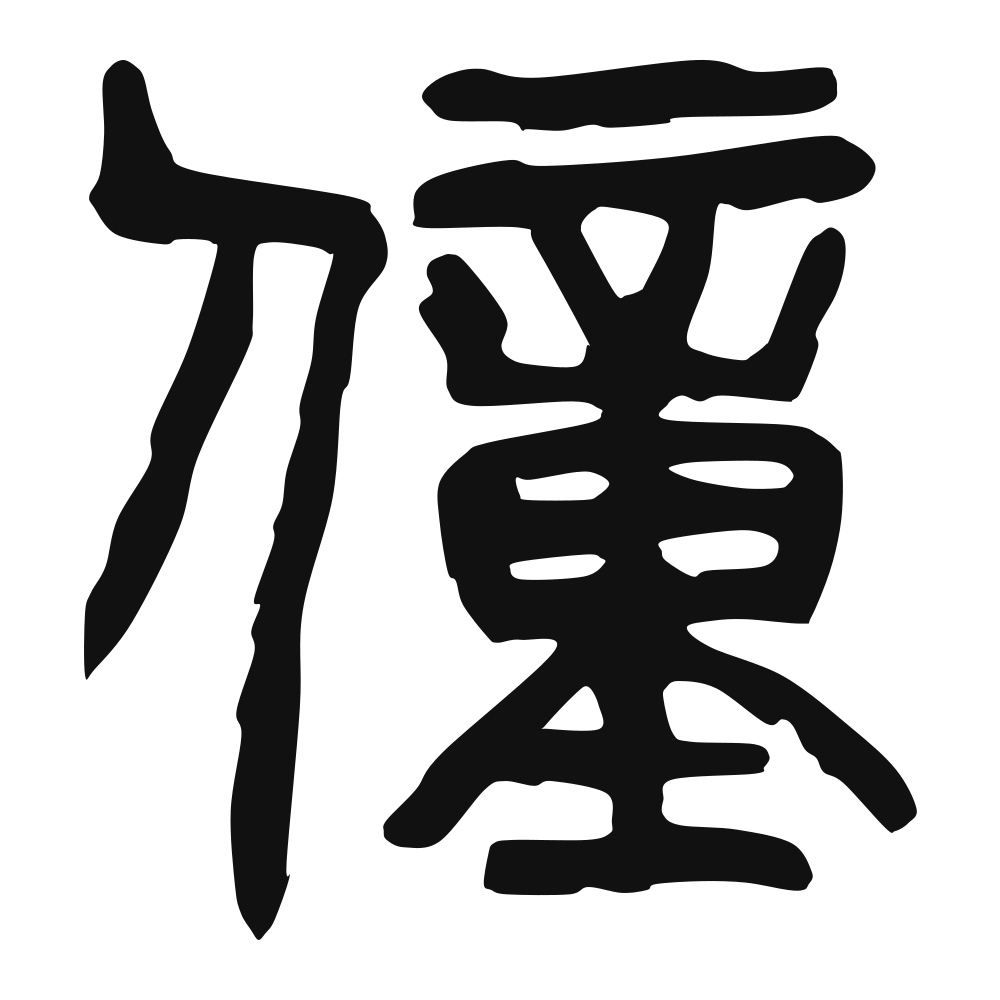
僮
servant boy
Closest English meanings
boy servant·page·Zhuang
The Calligrapher — Yáng Yīsūn 杨沂孙
Qing seal-script master famed for blending bronze and small seal scripts.
Qing calligrapher (), master of seal script — known for 《文字蒙求》. Qing dynasty
Cultural Story
The 书僮 was the boy who carried the books and ran the errands of his young master — a fixture of the Ming and Qing novel, from the pages of the "Dream of the Red Chamber," where the lads at the gate are 僮仆 of the house. The Han histories use 僮 for the household servant bound to the estate.
Common words & phrases
- 书僮 page boy · servant
- 僮仆 servants · attendants
- 僮族 Zhuang ethnic group
Read the story behind the character
A period drama casts the 书僮 at his master's shoulder; the 僮仆 in the scene pour the wine. The word now mostly lives in costume film and the name of the 僮族, the Zhuang, on a map. It names the boy servant of the old house, a role retired to the page, yet still spoken when the past is staged for a screen.
Why this character belongs on skin
A boy with a lantern, waiting up. 僮 is the classical word for a young servant—the child who carried the scholar's books, swept the temple courtyard, held the warrior's horse. Behind every famous life stood one of these: unnamed, watchful, learning everything by lamplight while the masters slept. There is devotion in this character, but also quiet ambition—the servant who reads by the fire's end, who absorbs the art while tending it. Chinese literature loved this figure: the page boy in the snow, the attendant who knew the secret before anyone guessed. The ink carries his posture—bowed, but not broken; patient, but not asleep. Wear it and you carry the wisdom of beginnings: every mastery starts in service, every throne in a boy holding someone else's horse. It is tender and unashamed. A reminder that humility is not the opposite of greatness but its first classroom, and the lantern was always yours to carry.
Own this character
Purchase delivers the original SVG of this glyph, brushed by Yáng Yīsūn 杨沂孙, ready to place on skin, paper, or screen.