
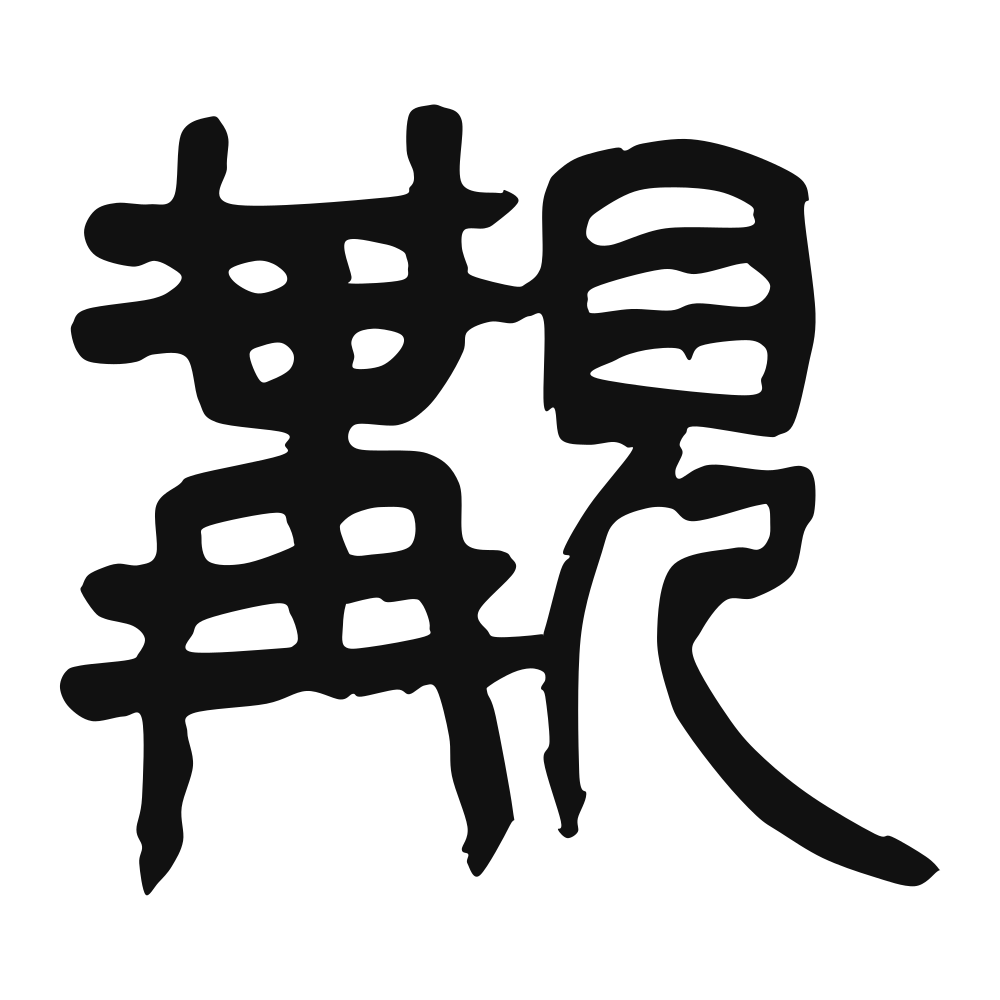
觏
complete; meet unexpectedly; see
Closest English meanings
to meet·to see
The Calligrapher — Yáng Yīsūn 杨沂孙
Qing seal-script master famed for blending bronze and small seal scripts.
Qing calligrapher (), master of seal script — known for 《文字蒙求》. Qing dynasty
Cultural Story
The Book of Songs sings of a woman waiting on the hillside: 'At last I have met him, and my heart settles down.' The line, yi ji gou zhi, wo xin ze jiang, from the Insects poem, uses gou for that decisive meeting of lovers long parted. Rare in daily speech, the character kept its solemn weight, a seeing that is also a finding, the moment two lives that were separate stand at last in the same light. To gou was to arrive at presence.
Common words & phrases
- 觏面 meet face to face
- 罕觏 rarely seen · uncommon
- 觏止 meet · encounter
Read the story behind the character
Two negotiators finally gou mian, meet face to face, after months of email; a curator labels a han gou, a rarely seen, Ming bowl in the vault. The character survives in formal or literary corners, the overdue meeting, the once-in-a-lifetime exhibit. gou zhi names an encounter you mark in memory. It reminds us that some seeings are ordinary glances, while others, the rare, the awaited, deserve their own ancient and weighty word.
Why this character belongs on skin
The Book of Songs uses it in the tenderest places — 觏, to meet, to encounter, especially the meeting that changes the weather of a life. 未觏君子: not yet having met the noble one, the beloved, the true. Chinese poetry's ache has always lived in that character — the waiting for an encounter that may never come, or the memory of one that did. Every myth is built on it: Eros and Psyche's lamp-lit meeting, the stranger at the well, the moment eyes find each other across a crowded courtyard and the future quietly reorganizes itself. To wear 觏 is to admit you are still out here, doorway to doorway, soft-eyed and fatalistic, half in love with whoever is about to walk in.
Own this character
Purchase delivers the original SVG of this glyph, brushed by Yáng Yīsūn 杨沂孙, ready to place on skin, paper, or screen.