
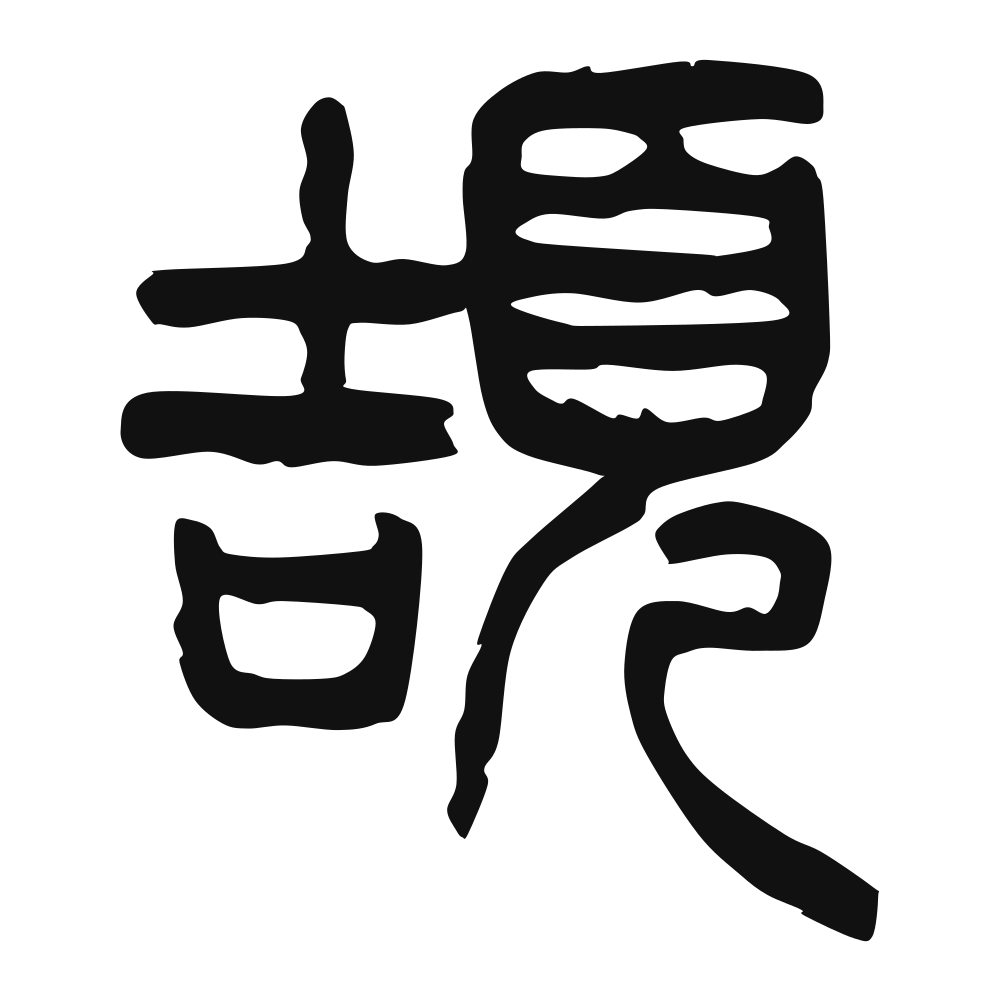
颉
surname Xie; (of a bird) to fly upwards; (of the neck) stiff
Closest English meanings
fly upward·contrary·surname
The Calligrapher — Yáng Yīsūn 杨沂孙
Qing seal-script master famed for blending bronze and small seal scripts.
Qing calligrapher (), master of seal script — known for 《文字蒙求》. Qing dynasty
Cultural Story
颉 builds on 頁 'head' with 吉 as sound, meaning a bird beating upward, or things in contrary motion. 《說文》 gives 頡 as 直項也, 'stiff neck,' to hold the head up. The legendary 仓颉 is credited with inventing Chinese writing, giving the character a founding glow.
Common words & phrases
- 颉颃 rise and fall · contend
- 仓颉 Cangjie · inventor of writing
Read the story behind the character
颉 means to soar or contend: 颉颃 is the rise and fall of two rivals, like birds in flight. The sage 仓颉, said to have created writing, lends the name weight. A scholar named 颉 publishes a book that 颉颃 with the old masters' views.
Why this character belongs on skin
颉颃 is the paired flight of birds—two wings, up and down, rise and answer, a love duet performed in air. Alone, 颉 is the upward stroke: the moment of lifting. The ancients watched wild geese cross the autumn sky in couples, one dipping as the other climbed, neither ahead for long, and gave this dance a character of its own. There is a whole philosophy of ambition hidden in it. True flight, like true partnership, is not one endless ascent; it is rhythm—the upstroke that costs everything, the downstroke that rests and steers. Icarus had only the upstroke. The geese survive the season by taking turns. 颉 is ink for the climber learning the second half of the art: that descending is not defeat but the other wing, and that the sky keeps those who keep rhythm. Above the wheat fields, rising—next to someone, or on the promise of it.
Own this character
Purchase delivers the original SVG of this glyph, brushed by Yáng Yīsūn 杨沂孙, ready to place on skin, paper, or screen.