
The Calligrapher — Yǒng Xīng 永瑆
Qing prince famed for elegant regular script in the Zhao-Ouyang manner.
Qing calligrapher (), master of regular script — known for 成亲王. Qing dynasty
Cultural Story
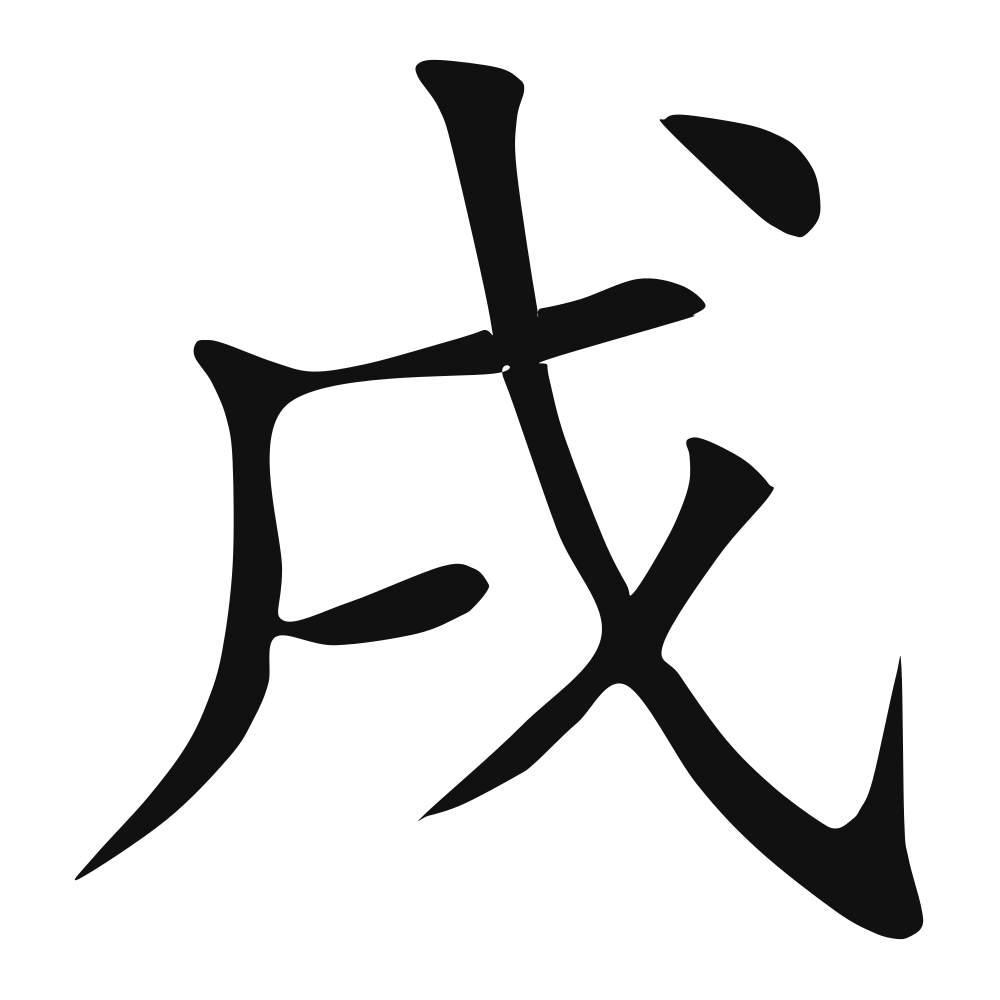
戍 is the man with a weapon on the frontier — the stroke that dots the inside is the halberd, the outside is the settlement. The 詩經 sends conscripts 戍边 against the northern tribes, and 卫戍 became the standing word for guarding the capital. It is the verb of the soldier posted far from home.
Common words & phrases
- 戍边 garrison the border
- 戍守 garrison · defend
- 卫戍 garrison · defend
Read the story behind the character
戍 survives in 戍边 the border garrison, 戍守 the post, 卫戍 the command that guards a city. It names the duty of the distant posted man, the service that removes you from the household. A character that still carries the cold of the wall and the lamp left burning at home.
Why this character belongs on skin
Long before this character, a man stands on a wall at dusk. 戍 is frontier garrison duty — a soldier posted where the empire frays into steppe, watching the beacon towers for the smoke that means riders. Tang poetry owns this word. The border bards wrote of men garrisoned through years of frost, of wives at home gazing down the same moon, of the qiang flute at night on a wall so lonely it seemed the edge of the world. A soldier under 戍 carries two lives: the blade in his hand and the village in his chest, and the poems never forget the second one. There is something sacred in it — the oldest vocation: someone stands watch so the many can sleep. Guard duty as love, endurance as devotion, the long cold shift as a form of prayer. To wear shù is to claim that vigil for yourself: to be the one who holds the line for others — through addiction, through duty, through every dark watch of the years. The beacon may never come. You stand anyway.
Own this character
Purchase delivers the original SVG of this glyph, brushed by Yǒng Xīng 永瑆, ready to place on skin, paper, or screen.