
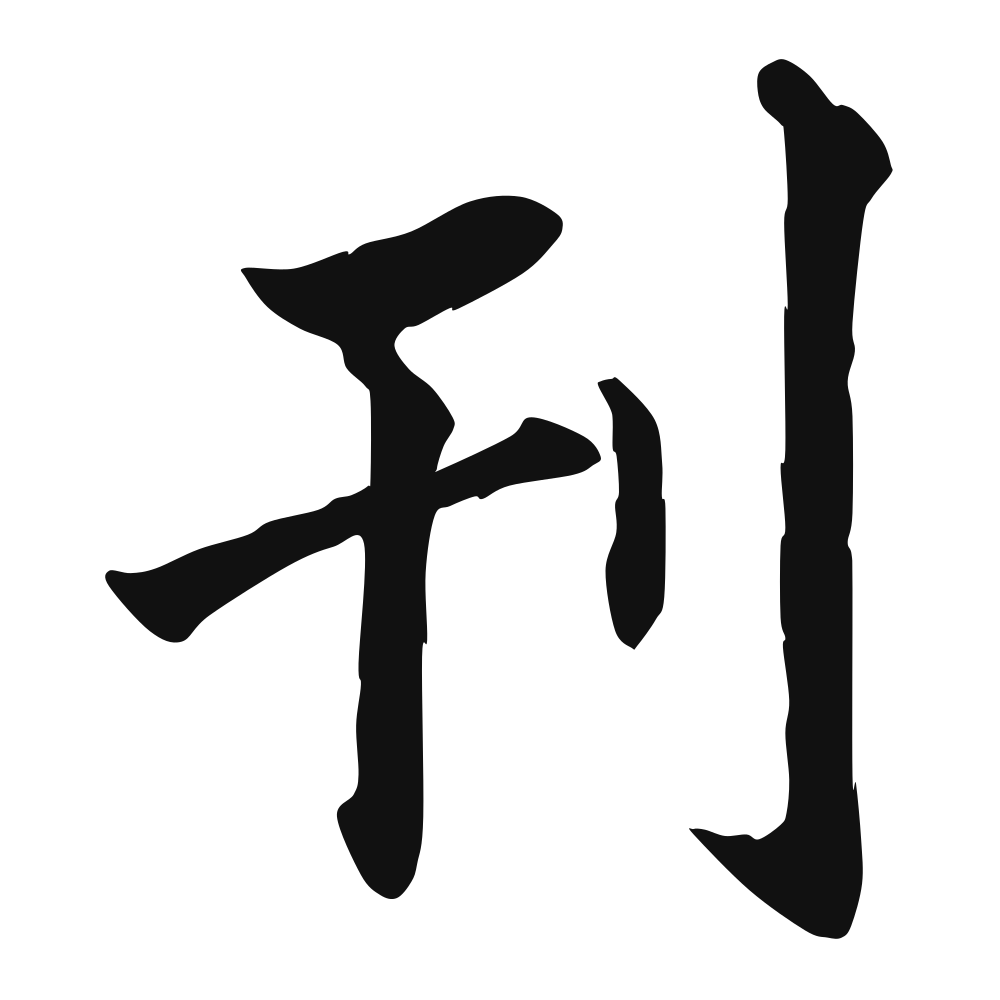
刊
to print; to publish; publication; periodical; to peel with a knife; to carve; to amend
Closest English meanings
publish·periodical
The Calligrapher — Yǔ Jiānwú 庾肩吾
Liang scholar-critic who authored Shupin, the first systematic graded ranking of calligraphers.
南朝梁 calligrapher (), master of regular script — known for 《书品》. Liang dynasty (Southern Dynasties)
Cultural Story
刊 once meant to cut wood, for scribes 刊刻 blocks for printing; a Song-dynasty workshop set type by carving characters backwards into pear wood. The same stroke that cut the board later cut the page, and so 刊 came to mean what is printed. The 宋版 book, clean and square, is the heir of that chisel.
Common words & phrases
- 刊物 publication
- 期刊 periodical
- 刊登 publish · carry
- 报刊 newspapers and periodicals
- 周刊 weekly
Read the story behind the character
(The newsstand sells 报刊 by the bundle, and a 周刊 lands every Friday. The journal 刊登 her paper after two revisions. A society 刊物 prints the members' essays. The word now marks anything set in print or posted online, from a magazine to a notice board.
Why this character belongs on skin
刊 began with the knife — to carve, to cut a text into wood or bone so it would outlast the hand that wrote it. Only later did it become "to publish," to send a thought into the world beyond your own breath. There is something almost violent in the root, a willingness to wound the surface so meaning can survive. To wear 刊 is to declare that your story deserves to be cut deep, set in print, made public against the tide of forgetting. It is the mark of the one who refuses to be erased. Think of it as the editorial line drawn through a life — not to delete, but to make legible. Some keep diaries. You chose to be read. Let it sit where the eye lands first, a small confession: I was here, and I meant to be.
Own this character
Purchase delivers the original SVG of this glyph, brushed by Yǔ Jiānwú 庾肩吾, ready to place on skin, paper, or screen.