
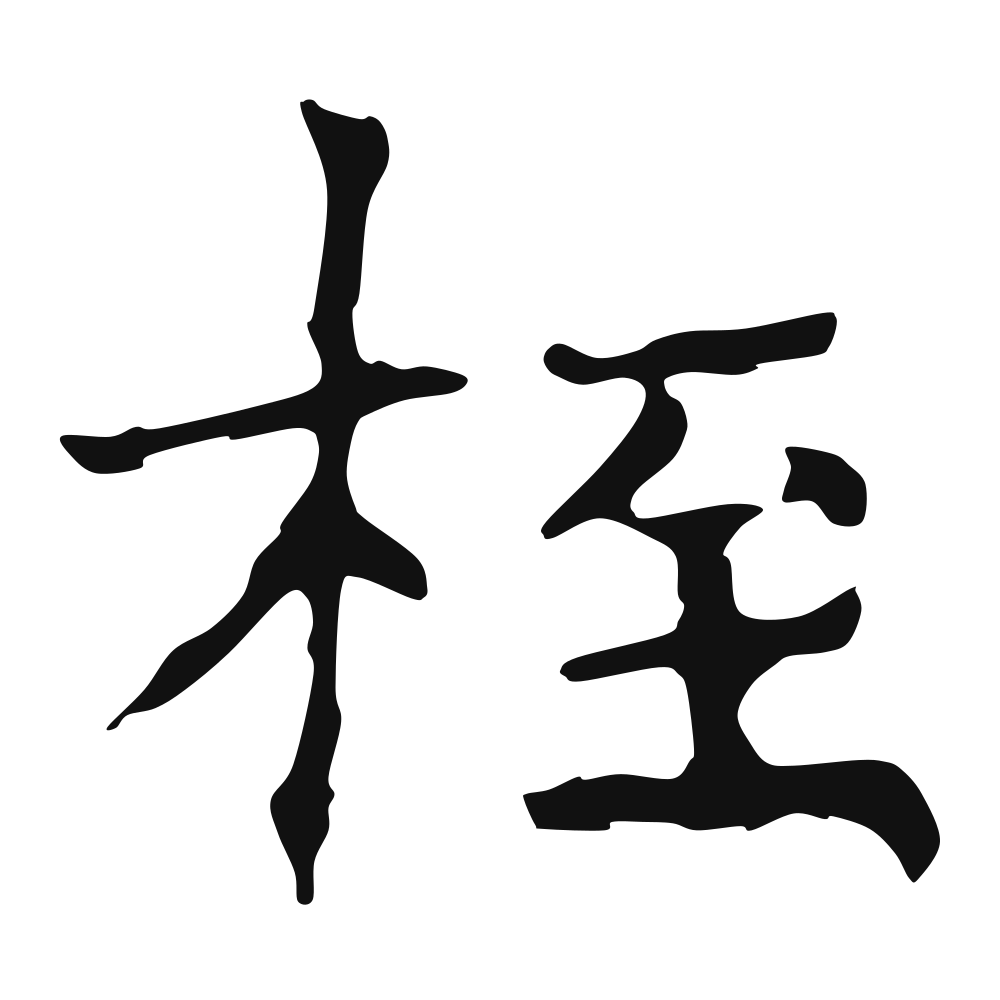
The Calligrapher — Chǔ Suíliáng 褚遂良
Tang chancellor and regular-script master of elegant, balanced strokes.
Tang calligrapher (596–658), master of regular script — Tang master of graceful, tensile regular script favored by the imperial court. Tang dynasty
Cultural Story
桎 is the foot-fetter, the wooden lock that pinned a prisoner's ankles in ancient law — paired with 梏 on the wrists as 桎梏, the whole rig of restraint. The 莊子 rails against it as the image of any confinement of the free mind. The character is the ankle's wooden cage, the lowest of the old constraints.
Common words & phrases
- 桎梏 fetters and handcuffs · shackles · bondage
Read the story behind the character
桎 survives almost only in 桎梏, the literary word for shackles — used now for addiction, debt, or dogma that fetters a person. You will not see the object; the term is metaphor, the speechwriter's bondage. The character is a restraint demoted to image, the wooden clamp that now chains only ideas and habits.
Why this character belongs on skin
This is the character for the wooden fetter that held a prisoner's ankle—the restraint, the lock, the thing that turned a person into a bound one. It survives in a two-character word meaning shackles, used mostly now as metaphor: the habit, the debt, the story you keep telling about yourself that keeps you where you are. Why wear such a mark? Because liberation has a signature, and it is written by the one who was bound. Every testimony worth hearing—twelve-step, gospel, prison memoir, the Buddha under the tree—runs through this character first. You cannot speak honestly of freedom if you never felt the iron. The tattoos that mean the most are often the scars upgraded into emblems. This one says: I wore the fetter. I know its exact weight and where it rubbed. And I am the one still standing here, while the shackle lies empty on the floor behind me.
Own this character
Purchase delivers the original SVG of this glyph, brushed by Chǔ Suíliáng 褚遂良, ready to place on skin, paper, or screen.