
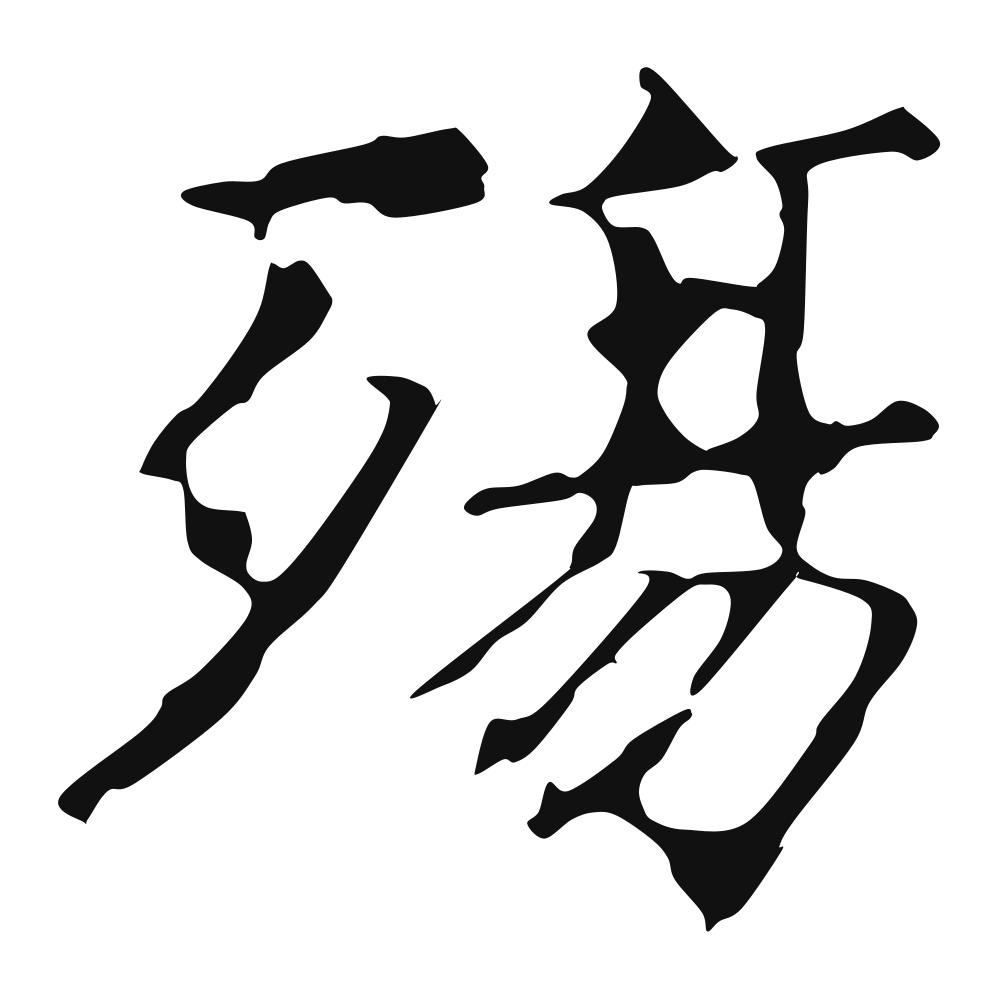
殇
殇 (shāng) — to die young; to mourn the young dead. Death 歹 + 伤 (wound): death of the young. Classical life: 国殇 — mourning soldiers who died young (Qu Yuan); 殇 is early death. Grammar: free morpheme — also: to die in childhood; war dead
Closest English meanings
die young·premature death
The Calligrapher — Chǔ Suíliáng 褚遂良
Tang chancellor and regular-script master of elegant, balanced strokes.
Tang calligrapher (596–658), master of regular script — Tang master of graceful, tensile regular script favored by the imperial court. Tang dynasty
Cultural Story
殇 meant to die young, a death before one's time. The Shuowen reads it as the early loss of the unmarried, and Qu Yuan's Songs of Chu gave it glory in the 国殇, hymns to the nation's young martyrs who fell in battle. To 殇 was tragedy sharpened by promise unkept — a life cut at the root yet honoured in song.
Energy Reading
Metal (金)
Comparative symbology, not fortune-telling.
Common words & phrases
- 国殇 martyrs of the nation
- 夭殇 die young
- 殇逝 pass away young
- 殇折 die young
Read the story behind the character
Modern Chinese keep 殇 for premature loss: we mourn a child who 夭殇 died young, speak of 殇逝 passing away too soon, and remember the 国殇 martyrs of the nation on memorial days. Though everyday talk prefers 早逝, the character appears in elegies, war films, and tomb inscriptions, the sorrowful word for a bright life ended before its time, honoured rather than forgotten.
Why this character belongs on skin
殇 is the saddest word in the language: death before its time—the child who never reached twenty, the soldier who never came home, any blossom taken before it could ripen. The death radical over a phonetic of wounds makes the etymology visible: killed in the flowering. Classical law distinguished it precisely, 殇 for the young, and the poet Qu Yuan wrote 国殇, the hymn for warriors who fell for their country, still recited two thousand years later—bodies left on the field, swords broken, drums silent, and the poem refusing to let them go unrecorded. Modern Chinese found the word again for love that ends too soon: 情殇. That is why the tattooed choose it—not for gloom but for the vow it implies: what was lost young will be remembered permanently. Carried on the collarbone or the inner wrist, 殇 is a small gravestone you consent to carry, so that something or someone unfinished stays lit inside you. Grief, made of ink, becomes devotion.
Own this character
Purchase delivers the original SVG of this glyph, brushed by Chǔ Suíliáng 褚遂良, ready to place on skin, paper, or screen.