
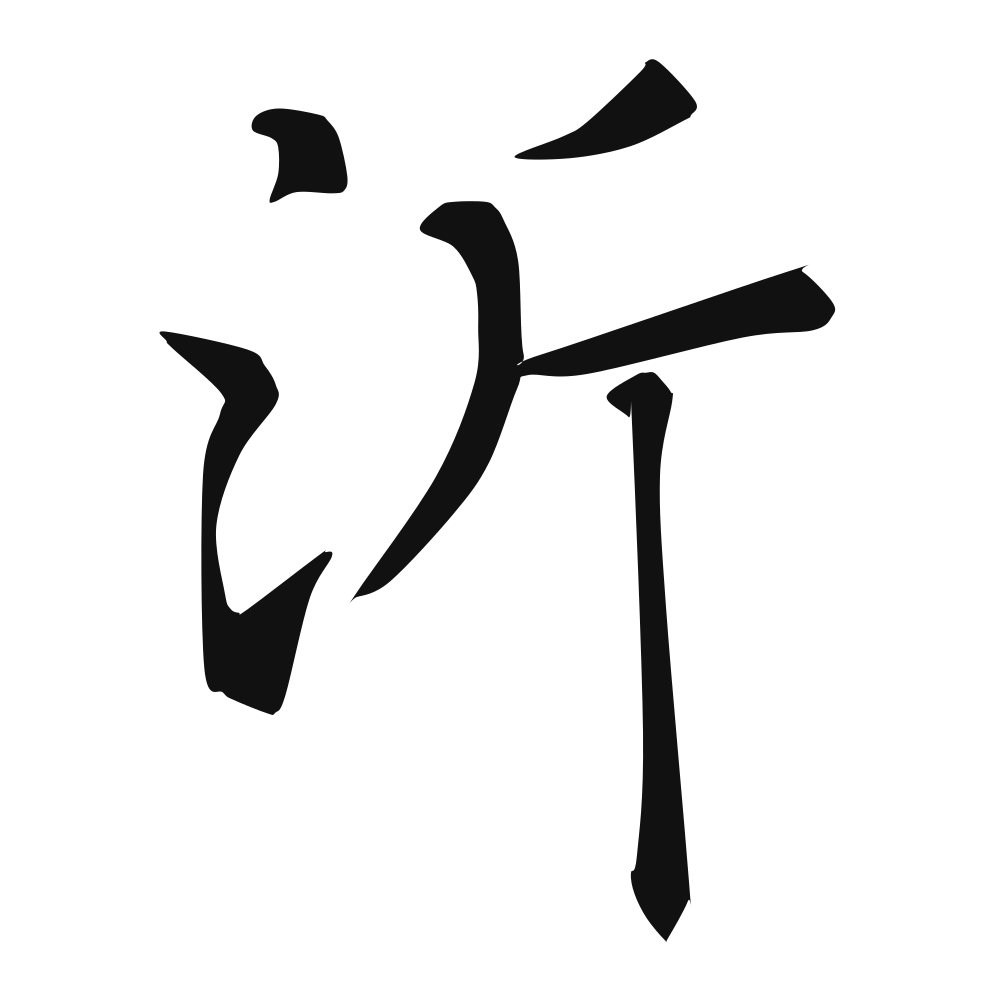
The Calligrapher — Chǔ Suíliáng 褚遂良
Tang chancellor and regular-script master of elegant, balanced strokes.
Tang calligrapher (596–658), master of regular script — Tang master of graceful, tensile regular script favored by the imperial court. Tang dynasty
Cultural Story
沂 is the 沂河 (Yi River) of Shandong, named in the 說文解字 as a river in the east and praised in the 論語, where 孔子's students dream of bathing in the 沂 and enjoying the spring breeze. It became a symbol of simple, carefree contentment by clear, running water in the warm season.
Common words & phrases
- 沂河 Yi River
- 沂蒙 Yimeng (region)
Read the story behind the character
沂 is a place and a mood: the 沂河 (Yi River) flows through Shandong, and the 沂蒙 (Yimeng) region is famed for its red revolutionary history and rugged hills. The character carries 孔子's old image of bathing in the 沂 on a spring day — clear water and easy contentment by the stream.
Why this character belongs on skin
The Yi is a river of the old Confucian heartland, and it earned its place in the classics with one scene: Confucius asking his disciples what they would do with their lives, and the youngest answering, not with offices or conquests, but — in late spring, with the new robes on — to bathe in the Yi with some friends, dry in the breeze, and come home singing. And Confucius sighed and said: I am with him. So this character holds the rarest permission in all the austere teaching — that joy is not a detour from the good life but its evidence. The river itself is modest, running through Shandong hills, cold enough in spring to make you laugh when you go in. That's the point. Wear the Yi and you wear a saint's approval of your happiness. Small at the ankle or the inner wrist, it works like a signpost only you can read: bathe, dry in the wind, sing on the way home. The masters argued about heaven for centuries. One river, one afternoon, settled it.
Own this character
Purchase delivers the original SVG of this glyph, brushed by Chǔ Suíliáng 褚遂良, ready to place on skin, paper, or screen.