
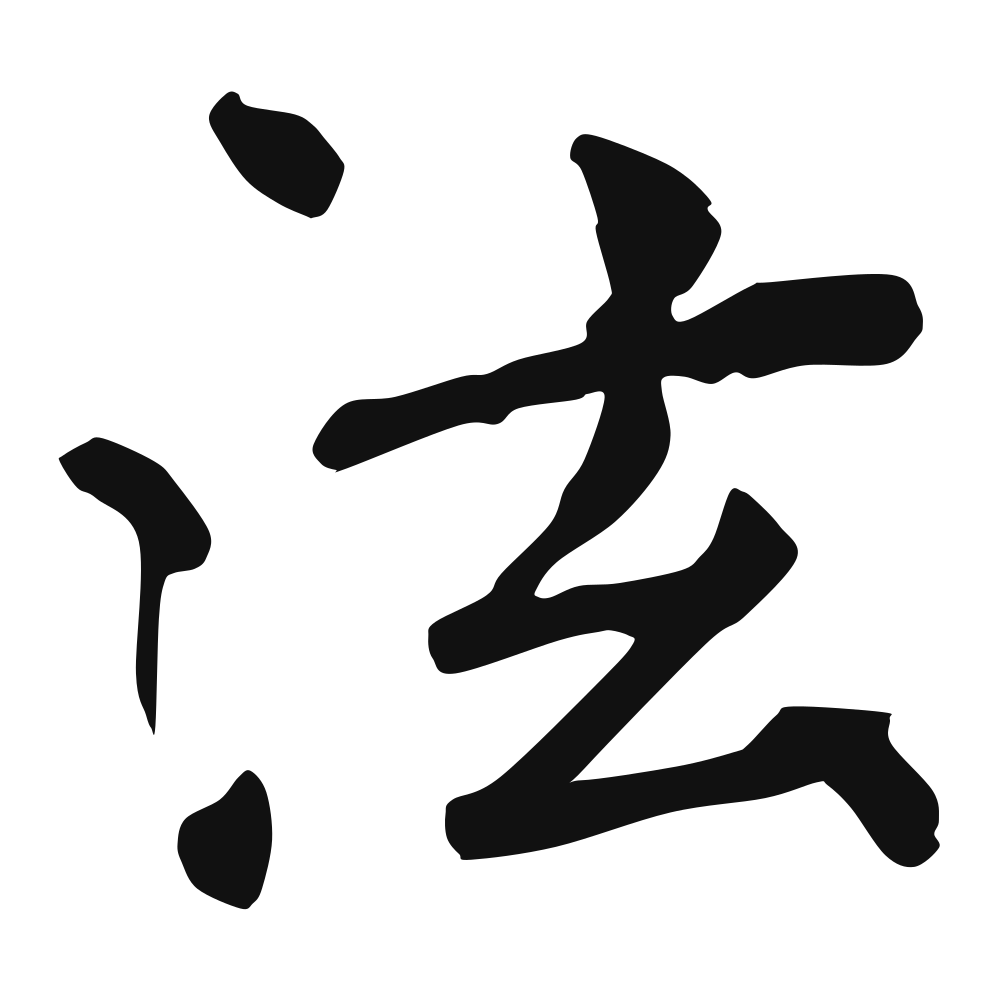
The Calligrapher — Chǔ Suíliáng 褚遂良
Tang chancellor and regular-script master of elegant, balanced strokes.
Tang calligrapher (596–658), master of regular script — Tang master of graceful, tensile regular script favored by the imperial court. Tang dynasty
Cultural Story
泫 means tears about to fall, or dew glistening; the 說文 says to weep, to glisten. The 楚辭 has a lover 泫然 at parting. A leaf hangs 泫露 at dawn. The word holds that bright, trembling moment before sorrow spills or the sun drinks the drop.
Common words & phrases
- 泫然 tearfully · with tears
- 泫泣 weep · cry
- 泫露 dewy · glossy
Read the story behind the character
She turned 泫然 (tearfully) away from the camera. The child 泫泣 (wept) softly in the corner. Morning leaves are 泫露 (dewy, glossy) in the garden. He spoke 泫然 (with tears) of his late teacher. A single 泫 (glistening) tear slid down her smiling face.
Why this character belongs on skin
Water beside a phonetic of returning: 泫, the glisten — eyes at the exact frontier of weeping, bright with what they have not yet released. 泫然, the poets wrote, the look of a person moved past the reach of composure but not past dignity. The character knows that tears are a language before they are a loss; the glisten is the moment of translation, feeling become visible but not yet fallen. Every culture distrusts this instant and every art depends on it. The Tang poets made it high technique — a friend at the ferry crossing, lights lowered, eyes 泫, and no one ashamed, because to be that reachable was proof the friendship was real. The unweeping eye that shines is the most honest face water makes. Ink this where you keep your composure — the temple, the outer eye, the wrist. Strength was never dryness. It's the shine that holds.
Own this character
Purchase delivers the original SVG of this glyph, brushed by Chǔ Suíliáng 褚遂良, ready to place on skin, paper, or screen.