
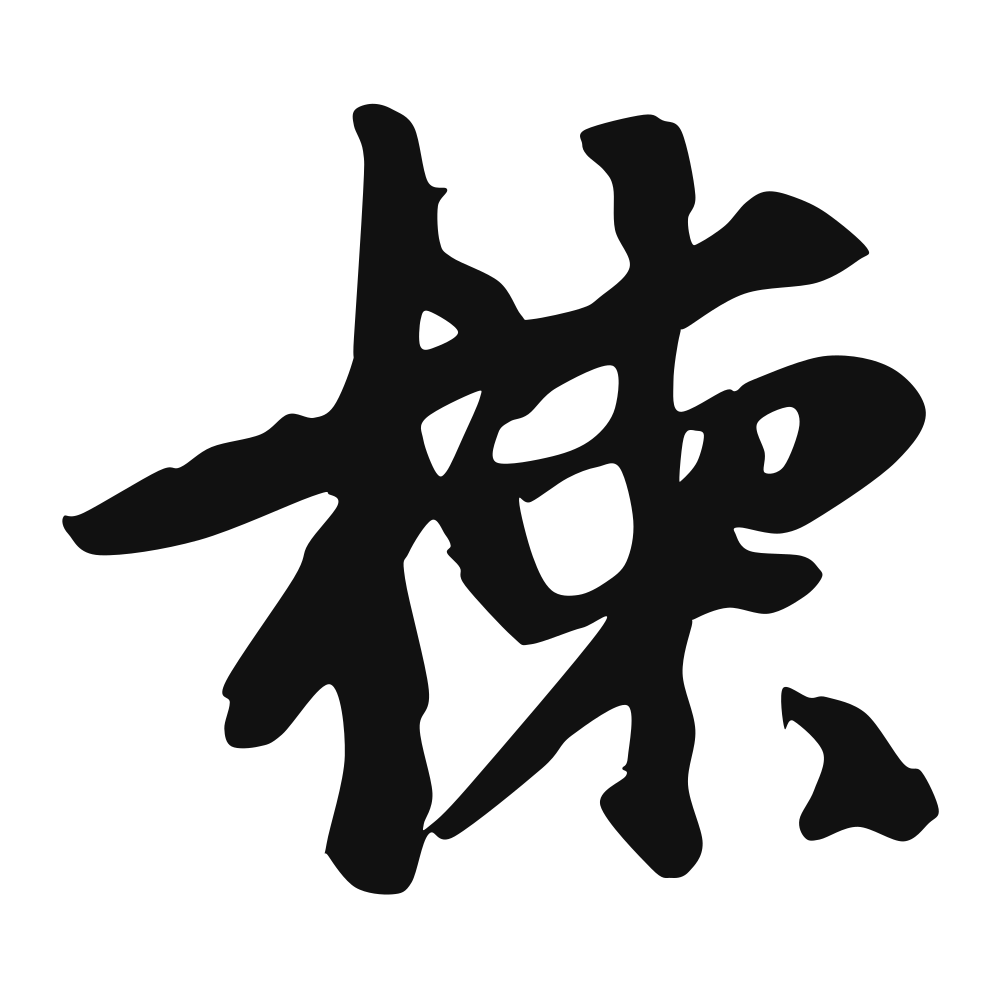
The Calligrapher — Zhāng Yǔ 张雨
Yuan Taoist calligrapher who studied under Zhao Mengfu; known for regular and running script.
Yuan calligrapher (), master of regular script/running script — known for 《题画诗》. Yuan dynasty
Cultural Story
楝 is the chinaberry tree (Melia), and the Erya and materia medica list it as a tree whose bitter bark and seeds were used as medicine and insecticide. In the south it lined village paths, fragrant with small lilac flowers in spring and heavy with yellow beads in autumn. Though plain in the classics, the 楝 was a working tree - shade in summer, remedy in winter - the quiet neighbour of the farmhouse.
Common words & phrases
- 楝树 chinaberry tree · Persian lilac
Read the story behind the character
A village still has an old 楝树, a chinaberry tree, by the well, its bitter berries keeping bugs away. Botany guides name the 楝 among useful southern trees, and gardeners plant it for shade and its lilac bloom. Though city kids seldom climb one now, the 楝 remains the country tree of scent and medicine - the unpretentious giant that cooled the courtyard and cured the itch.
Why this character belongs on skin
Every region has its melancholy tree, and south of the Yangtze it is the kǔliàn—the chinaberry, whose name begins with the word for bitter. It stands in courtyard corners through the last cold rains of spring, and poets watched its purple blossoms fall and knew the season of parting had arrived. Yet the very bitterness in its name, kǔ, echoes kǔjìn gānlái—when the bitter is exhausted, the sweet comes. Chinese proverbs refuse to let suffering have the last word. The tree herself is generous under the sadness: her bark and fruit were medicine, her wood carved into furniture and beads, her shade the coolest in the lane. Liàn is for those who carry a gentle sorrow the way others carry perfume—who have metabolized loss into depth, sweetness out of something tough. The blossoms fell; the tree kept standing. That's the whole tattoo: grief and grace in the same fourteen strokes, worn over the place that remembers.
Own this character
Purchase delivers the original SVG of this glyph, brushed by Zhāng Yǔ 张雨, ready to place on skin, paper, or screen.