
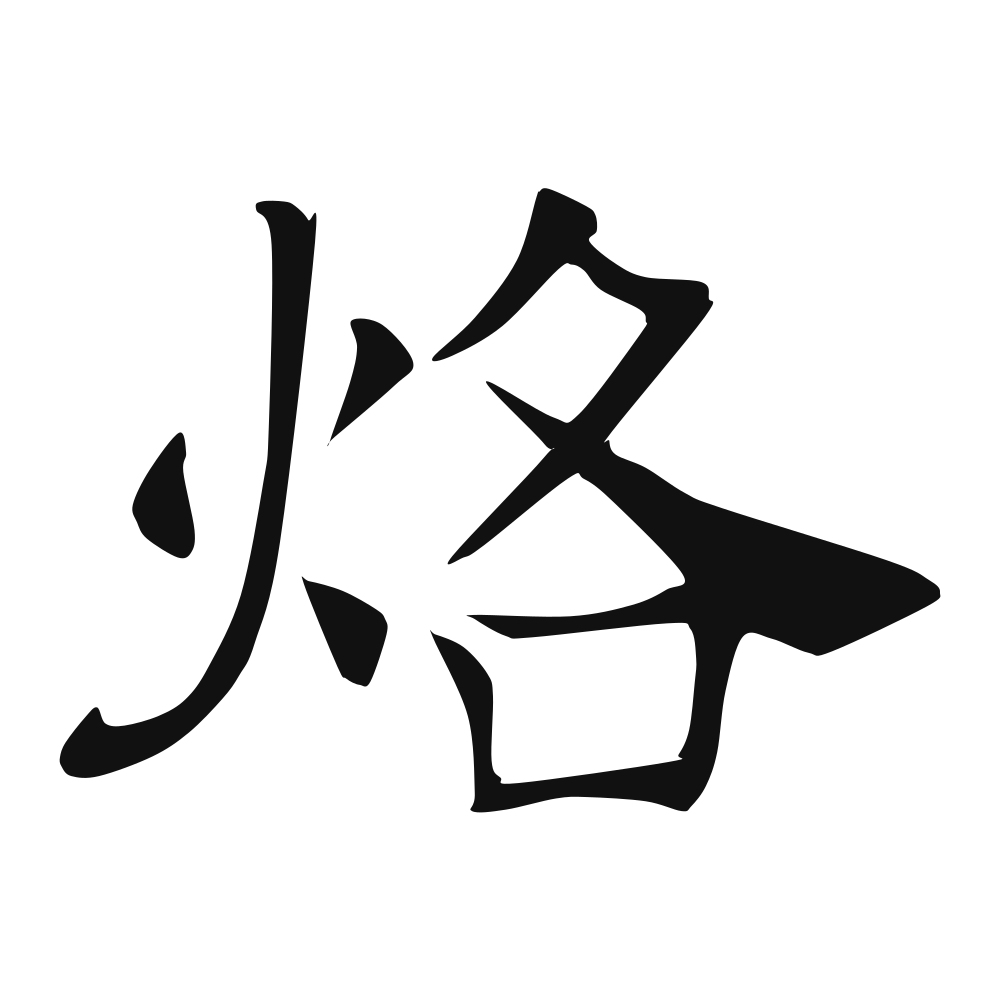
烙
to brand; to iron; to bake (in a pan)
Closest English meanings
brand·iron·bake
The Calligrapher — Chǔ Suíliáng 褚遂良
Tang chancellor and regular-script master of elegant, balanced strokes.
Tang calligrapher (596–658), master of regular script — Tang master of graceful, tensile regular script favored by the imperial court. Tang dynasty
Cultural Story
烙 is to brand with a hot iron, leaving a permanent mark. Ancient households 烙 a mark on tools and cattle, and judicial 烙刑 scarred the convicted. The word passed into memory as 烙印, an indelible imprint on the heart. Yet it also meant the hearth's gift — flatbread pressed on a griddle, fire shaping both punishment and daily bread.
Common words & phrases
- 烙印 brand · stamp
- 烙饼 baked flatbread
- 烙铁 soldering iron · branding iron
Read the story behind the character
A 烙印 of childhood stays with you, and a 烙铁 burns your logo into crafts at the maker space. At breakfast, 烙饼 sizzles on the griddle — the same iron that brands also feeds. From a tattooed memory to a street vendor's pancake, the hot mark is wherever fire meets skin, wood, or dough.
Why this character belongs on skin
A hot iron pressed to hide or flesh leaves a mark that outlives the pain that made it. 烙 is that searing, the brand of ownership, of belonging, of a truth burned past the skin and into the bone. The herder marks his cattle; the soldier his regiment; the lover, in older stories, his name upon the shoulder of the one who would not forget. There is a violence to being known this completely, and a strange comfort. To choose your own brand is to take the iron from another's hand. Let this mark be exactly that—the thing you burned in yourself on purpose, the scar you selected. The ink is the coldest iron of all, the one that never cools, the one that says you were claimed by your own decision. Wear it where only the brave will find it.
Own this character
Purchase delivers the original SVG of this glyph, brushed by Chǔ Suíliáng 褚遂良, ready to place on skin, paper, or screen.