
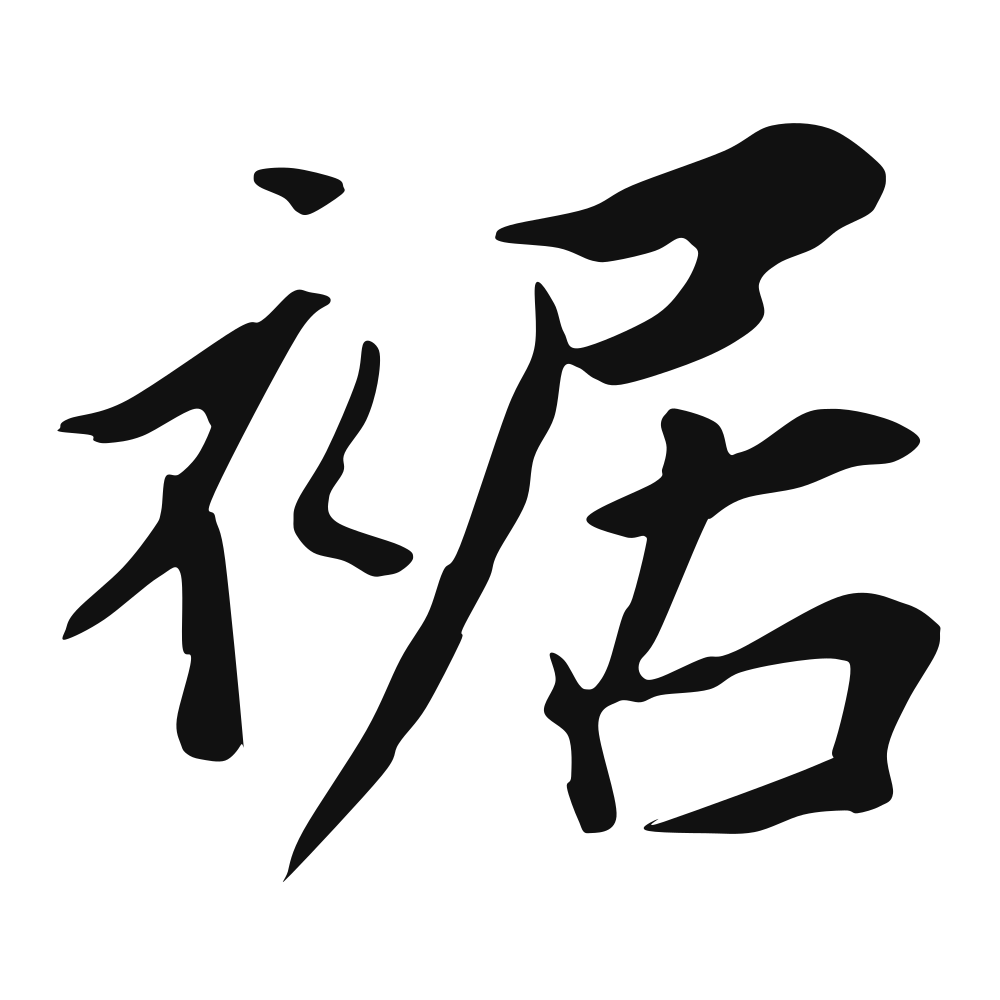
The Calligrapher — Zhāng Yǔ 张雨
Yuan Taoist calligrapher who studied under Zhao Mengfu; known for regular and running script.
Yuan calligrapher (), master of regular script/running script — known for 《题画诗》. Yuan dynasty
Cultural Story
Zou Yang's letter from prison asks what prince's gate he might not drag his long hem at, ye ju, the ju the sweeping skirt of the courtier that marked his dependence on favour. The hanging edge of the robe became the image of a man's whole posture before power. To drag the ju was to plead for place.
Common words & phrases
- 衣裾 hem of a robe
- 裾袂 sleeves and hems
Read the story behind the character
A period drama trails a long yi ju, the hem of a robe, across the dais, and a dance pairs ju mei, hems and sleeves, in a slow turning. The character names the lower edge of a garment, the cloth that sweeps the floor and once swept the threshold of every gate a supplicant entered.
Why this character belongs on skin
Follow the silk down. Collar, shoulder, sleeve — and at the very end, where the robe finally meets the floor, the 裾: the hem, the last inch of cloth that sweeps the dust and carries the whole garment's dignity. Old poems loved this character because the hem is where elegance becomes visible in motion — a woman climbing temple steps with the train of her sleeve gathering light, a scholar's robe trailing the autumn wind through the gate. The hem does no work and yet without it the robe is merely covered; with it, the robe has a finish, a falling note, a way of leaving a room. There is a truth about endings hidden in that cloth: how you trail off matters as much as how you begin. Ink 裾 along the outer edge of your body — the side seam, the long line of the thigh — where a hem would fall. Let it stand for the art of the exit: leaving slowly, leaving beautifully, letting the last thing people feel of you be grace instead of noise. The hem is the poem's final line. Make it linger.
Own this character
Purchase delivers the original SVG of this glyph, brushed by Zhāng Yǔ 张雨, ready to place on skin, paper, or screen.