
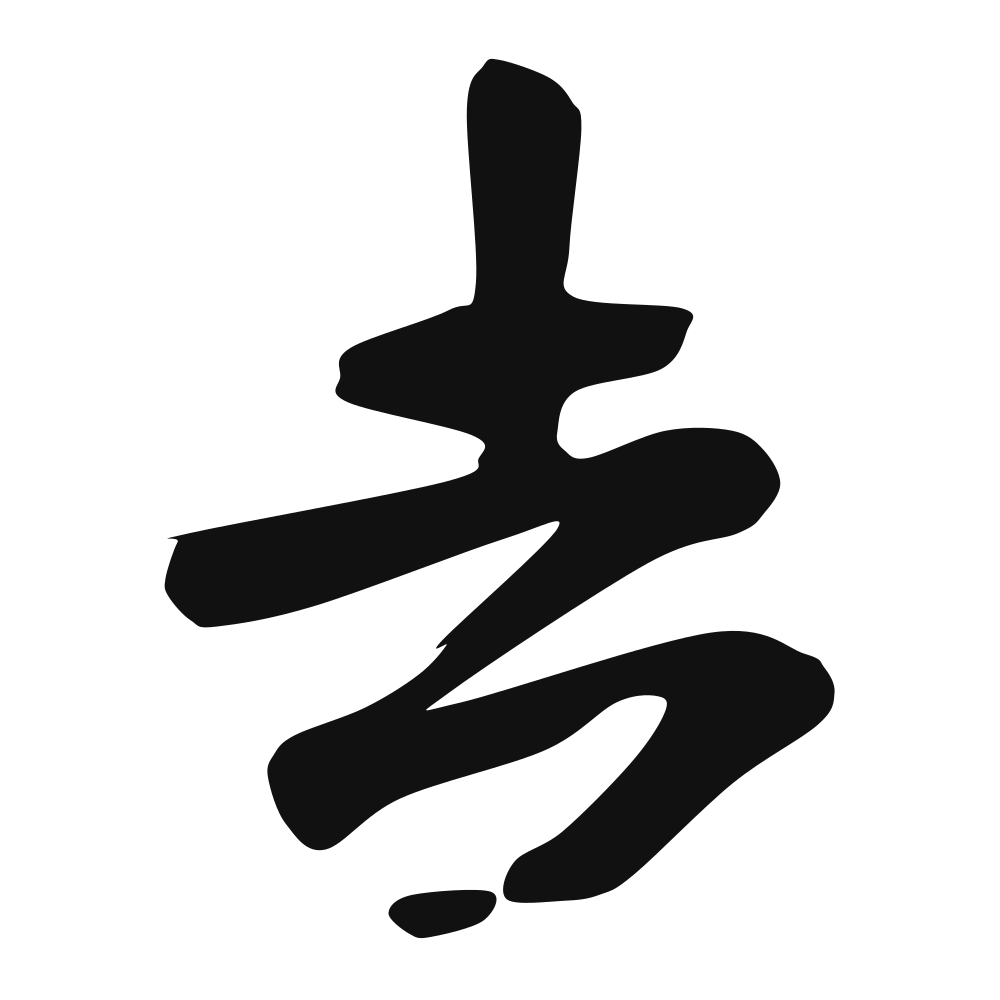
去
to go; to go to (a place); (of a time etc) last; just passed; to send; to remove; to get rid of; to reduce; to be apart from in space or time; to die (euphemism); to play (a part); (when used either before or after a verb) to go in order to do sth; (after a verb of motion indicates movement away from the speaker); (used after certain verbs to indicate detachment or separation)
Closest English meanings
go·leave·remove·past
The Calligrapher — Zhāng Yùzhào 张裕钊
Qing calligrapher who created the square-within-round Nangong script.
Qing calligrapher (), master of regular script — known for 南宫体. Qing dynasty
Etymology & Meaning · 字义溯源
2 · The Character: 去 Qù (4th tone). The Shuowen: 「去,人相違也。从大,凵聲」 — people parting, going opposite ways; the root image is a person leaving a pit or dwelling. The Songs sing 「逝將去女,適彼樂土」 (《詩·魏風·碩鼠》) — 'I shall leave you for that happy land.' History uses it plainly: 麾之不去 (《史記》) — wave him off and he will not go; 去就 (to leave or stay). So 去 is departure and letting-go. As a tattoo it can mean 'moving on,' but alone it risks reading as simply 'leave / lose' (失去). If used, pair with a destination — 去塵 (leave the dust) or 歸 (return) — so it reads as release, not loss. Element tables assign Wood (木).
Cultural Story
去 once meant to leave rather than to go toward. Tao Yuanming wrote "return, for the fields grow wild" -- 归去来兮. The general Huo Qubing took his name from "remove illness", 去病, a wish cast at a child. The word carried departure and cleansing both: a place left behind, a trouble taken away. Its direction has since reversed in speech.
Where a Western reader can stand: Zhang Yuzhao invented the 南宫体, a stele-derived regular script of sharply squared, inward-turning corners and a taut backbone — clean, geometric, highly legible. His 去 is a built, architectural 'leaving': give it a destination (去塵, 歸) and the squared form reads as a deliberate, structured letting-go.
Common words & phrases
- 去年 last year
- 去掉 remove · get rid of
- 出去 go out
- 过去 past · go by
- 失去 lose
- 回去 return · go back
Read the story behind the character
Someone notes the trip was 去年; a stain is 去掉 with a damp cloth. A phone is 失去 on the subway and the account is frozen. Friends 出去 for noodles; the meeting 过去 without a decision. The word now points ahead as often as back -- to a year gone, a thing removed, a place left, a loss endured. It measures both departure and disappearance in daily speech.
Why this character belongs on skin
去 is to go, to leave, to depart — the foot lifting, the distance opening between you and what was. Its old form showed a person leaving a place, and the character has always carried both loss and liberation: you cannot depart without leaving something behind. The Daoist walks on; the exile walks away; the lover closes the door. To wear 去 is to honor movement itself, the courage to become absent, to trust there is somewhere else worth arriving at. It is a mark for the restless, the ones who know stillness can be a cage. Place it where you would leave from — the ankle, the small of the back, the place that turns toward the road. Let it say you are not finished where you stand. You are only passing through, and the leaving is its own kind of arriving.
Own this character
Purchase delivers the original SVG of this glyph, brushed by Zhāng Yùzhào 张裕钊, ready to place on skin, paper, or screen.