
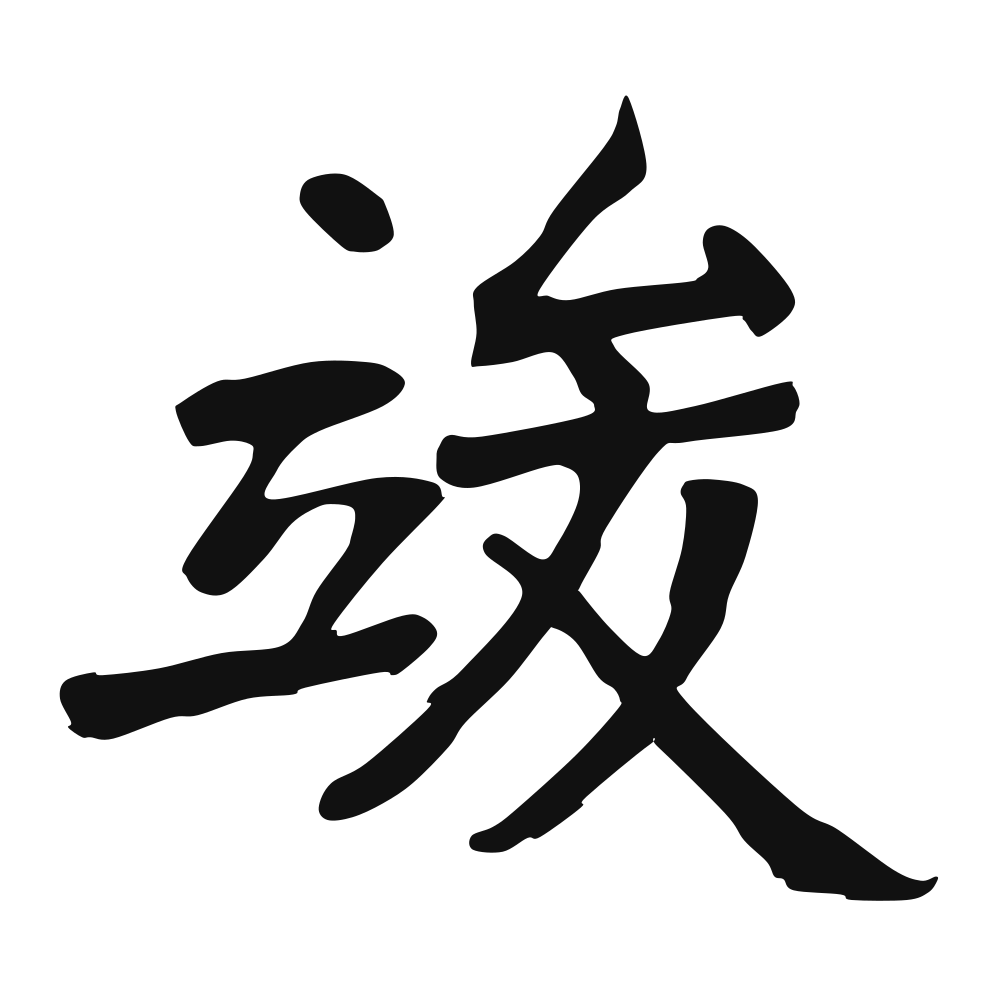
The Calligrapher — Zhāng Yùzhào 张裕钊
Qing calligrapher who created the square-within-round Nangong script.
Qing calligrapher (), master of regular script — known for 南宫体. Qing dynasty
Cultural Story
Built on 立, 竣 carried the sense of standing finished. Official histories used 竣事 for wrapping up state business — a campaign concluded, a survey completed. In imperial construction, when a palace or city wall was done, the record declared the work 竣, complete and formally delivered.
Common words & phrases
- 竣工 complete · be finished
- 竣事 finish business
Read the story behind the character
Construction sites fly a red banner the day a tower 竣工 (is completed and handed over). Newspapers report highways 竣工 months ahead of schedule; formal documents still use 竣事 (finish business) for concluded proceedings. Few characters are so tightly tied to hard hats and ribbon-cutting.
Why this character belongs on skin
The character stands with the sign for standing beside a word of finality — a structure standing complete, scaffolding struck, the last stone set, the cranes gone home. It is the architect's word, the builder's exhale. How rare it is, in a culture of infinite revisions, to finish anything at all. Cathedrals took centuries; their masons died knowing they would never see the spire, and laid the stones anyway, which is completion as a form of faith kept — the work finished by hands that trusted hands not yet born. When you close the final page, sign the last paper, walk out of the chapter you thought would never end, this is the feeling, translated into one glyph. Wear it when a long work is done, or when you finally forgive yourself for the ones that were not. Somewhere, a building stands. You put it there. It holds.
Own this character
Purchase delivers the original SVG of this glyph, brushed by Zhāng Yùzhào 张裕钊, ready to place on skin, paper, or screen.