
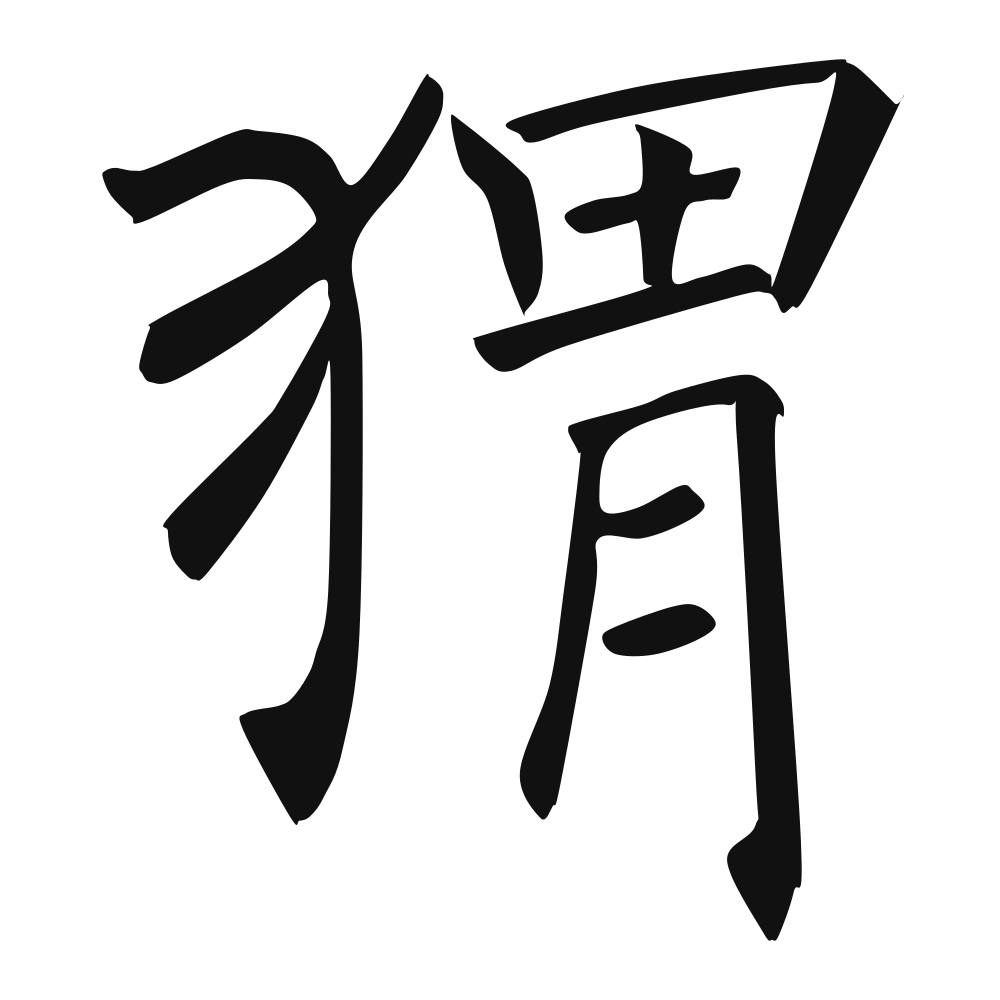
The Calligrapher — Chǔ Suíliáng 褚遂良
Tang chancellor and regular-script master of elegant, balanced strokes.
Tang calligrapher (596–658), master of regular script — Tang master of graceful, tensile regular script favored by the imperial court. Tang dynasty
Cultural Story
猬 names the hedgehog, a small beast armored in spines; the 說文 notes it curls into a ball. Ancient farmers knew the 刺猬 ate pests in the fields, and it symbolized self-defense, harmless unless provoked, then a ball of quills no predator could ever swallow whole.
Common words & phrases
- 刺猬 hedgehog
- 猬集 crowd together · numerous
Read the story behind the character
Children giggle at a 刺猬 (hedgehog) at the pet fair, all spines and tiny nose. We say troubles 猬集 (crowd together, numerous) when bills, deadlines, and calls all arrive at once, like quills packed tight. The word turns a spiny little animal into a picture of life's clustered pressures.
Why this character belongs on skin
The hedgehog has one trick, and it is enough. 猬 is the hedgehog — the animal radical with a character for sturdiness beside it: the small, round philosopher of the undergrowth, who answers every threat in creation with a single, perfect gesture. The Greek poet Archilochus split the world this way: the fox knows many things, the hedgehog knows one big thing. Isaiah Berlin built a philosophy on that line; armies have lived and died by it. There is a quiet dignity in this creature — unglamorous, unimpressed, walking its own tempo through the night grass, bristles rising only when the world insists. To wear 猬 is to side with the one great truth you'll defend against all comers, to keep a soft belly for friends and a spine for the rest. Ink it small, somewhere close. Not every soul needs to be a lion. Some of us survive by curling around what matters and holding the line.
Own this character
Purchase delivers the original SVG of this glyph, brushed by Chǔ Suíliáng 褚遂良, ready to place on skin, paper, or screen.