
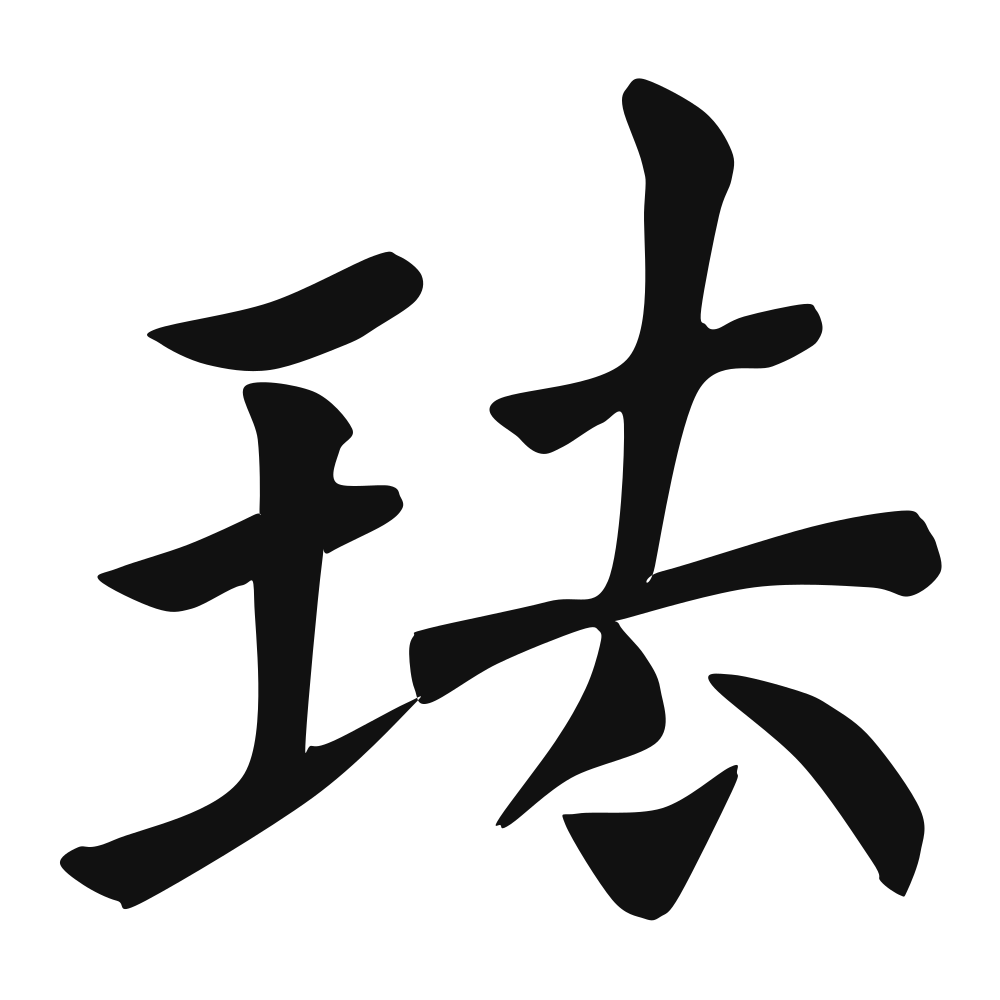
珐
usually seen in: enamel; enamelware (珐琅); (old) tooth enamel (still in use in Taiwan) (珐琅质)
Closest English meanings
enamel
The Calligrapher — Chǔ Suíliáng 褚遂良
Tang chancellor and regular-script master of elegant, balanced strokes.
Tang calligrapher (596–658), master of regular script — Tang master of graceful, tensile regular script favored by the imperial court. Tang dynasty
Cultural Story
珐 is the half of 珐琅, enamel, a glassy coating fused to metal, perfected in 景泰蓝 cloisonné from the Yuan and Ming courts. The 說文 era knew related glazes; 珐琅 wares shone in imperial workshops, their colors sealed forever against tarnish and time.
Common words & phrases
- 珐琅 enamel
- 珐琅质 enamel (of teeth)
Read the story behind the character
Museums display 珐琅 (enamel) vases with vivid blue and green, and dentists speak of 珐琅质 (tooth enamel) protecting teeth. The single 珐 never stands alone, but enamel, on a watch face or a heritage bowl, still marks fine craft, from royal workshops to a modern dental checkup.
Why this character belongs on skin
珐琅 — enamel, the glass that fire teaches to cling to metal. The word crossed deserts: Frankish ware, from Byzantium through the Islamic world into Ming workshops, where artisans fused color onto bronze in patterns no silk could match. 珐 is that borrowed magic in a single character — the proof that beauty is often an immigrant, that technique is a language and fire its translator. There is something sensual in it: heat that does not destroy but seals, color that survives centuries of handling because it became part of the body it covers. That is exactly what a tattoo is — enamel for the skin, fire-made-permanent. If you believe that ornament can be armor, this character is your kiln.
Own this character
Purchase delivers the original SVG of this glyph, brushed by Chǔ Suíliáng 褚遂良, ready to place on skin, paper, or screen.