
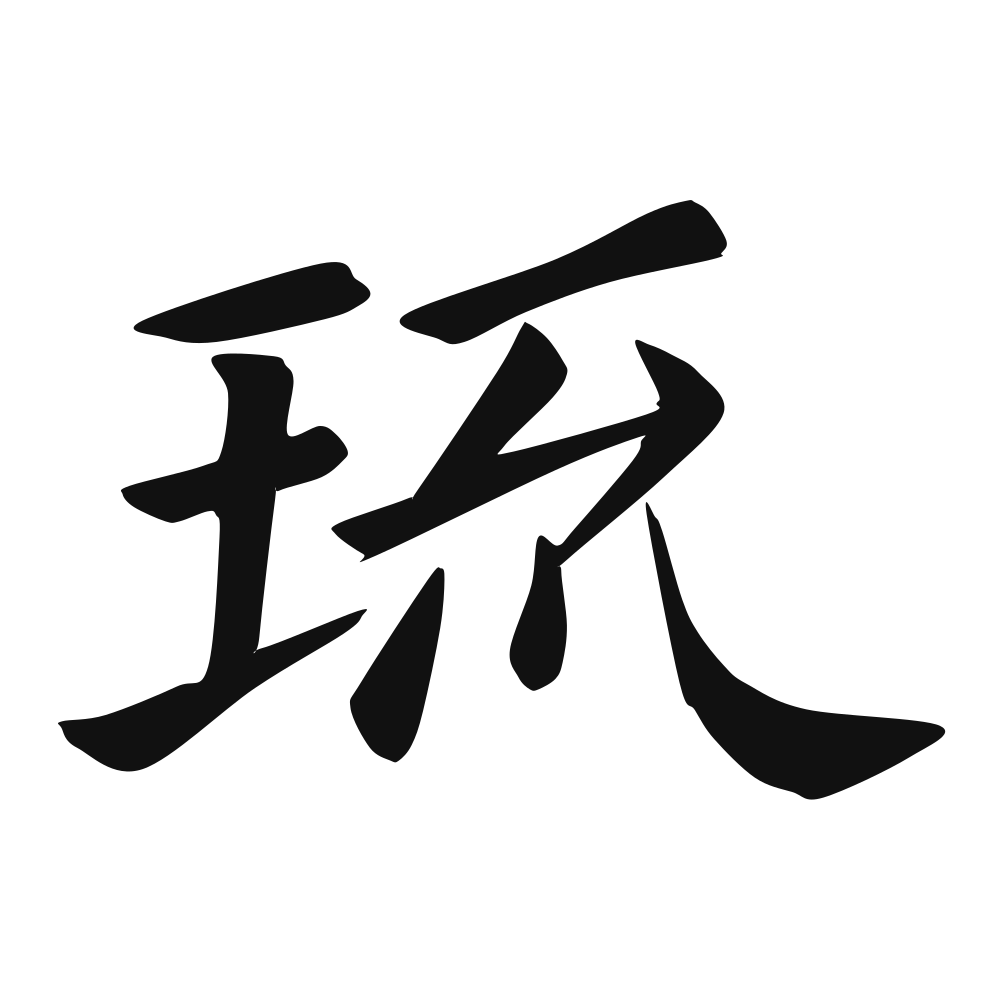
The Calligrapher — Chǔ Suíliáng 褚遂良
Tang chancellor and regular-script master of elegant, balanced strokes.
Tang calligrapher (596–658), master of regular script — Tang master of graceful, tensile regular script favored by the imperial court. Tang dynasty
Cultural Story
琉 is half of 琉璃, colored glaze, a glassy, jewel-toned material used on Tang and Ming roofs. The 說文 era knew related glazes; 琉璃瓦 (glazed tiles) crowned palaces in gold-green, and 琉璃厂 became Beijing's famed antique street of a scholar's wares.
Common words & phrases
- 琉璃 colored glaze
- 琉璃瓦 glazed tile
- 琉璃厂 Liulichang · antique street
Read the story behind the character
Palace roofs glitter with 琉璃瓦 (glazed tiles) in imperial yellow and green, and collectors admire 琉璃 (colored glaze) paperweights. At 琉璃厂 (Liulichang), tourists browse old books and scrolls. The single 琉 only appears with its partner, but glaze still colors temples and craft shops alike.
Why this character belongs on skin
The temple roof catches the low sun and burns, not with fire but with glass, the colored glaze the ancients learned to make from ash and patience. In 琉璃 it is that luminous skin, the lapis-light laid over clay to make the humble seem touched by heaven. It is transformation by surface, the ordinary vessel made to glow. The Buddhists built their paradises from such light; the traveler remembered the pagoda by its shimmer long after the city faded. To ink this character is to claim the glow you can lay over your own plainness. Let it sit where you want to be luminous. The glaze does not change the clay; it changes how the world sees it, and how you see yourself.
Own this character
Purchase delivers the original SVG of this glyph, brushed by Chǔ Suíliáng 褚遂良, ready to place on skin, paper, or screen.