
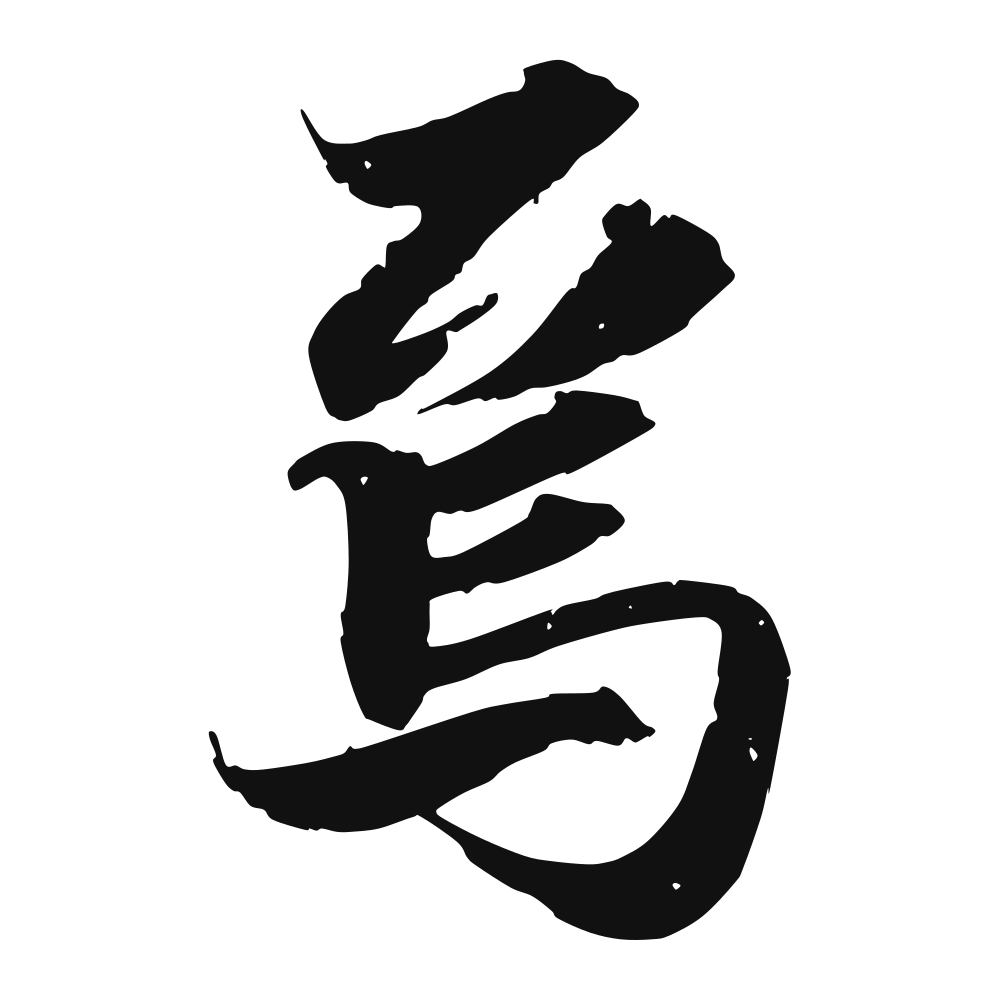
焉
where; how
Closest English meanings
how·where·then·thereby·particle
The Calligrapher — Zhāng Zhī 张芝
Han 'Sage of Cursive', father of the connected-cursive style.
Han calligrapher (?–192), master of cursive script/clerical cursive — Han dynasty 'Cursive Sage' who turned rapid writing into an art form centuries before cursive peaked. Han dynasty
Cultural Story
焉 is an ancient pronoun and particle — 'how,' 'where,' 'thereby' — threading through the 论语, 孟子, and Zhuangzi. Confucius asks 焉知, and the Daoists play with its floating reference. It anchors questions and conclusions in classical prose, a small grammatical hinge on which argument and wonder turned. To read 焉 is to read the rhythm of ancient Chinese thought.
Common words & phrases
- 焉能 how can · how could · how is it · can it
- 焉知 how know · who knows · how to know · where know
- 焉得 how get · how can · where obtain · how gain
- 心不在焉 absent-minded · distracted · preoccupied · inattentive
Read the story behind the character
You meet 焉 mostly in classical quotes: 焉能 without effort, 焉知 how would one know, 焉得 how could one get, and 心不在焉 — the mind wandering elsewhere. Students memorize it for exams, and writers sprinkle it for elegance. It rarely texts, but a well-placed 焉 lends any sentence the gravity and calm of the sages.
Own this character
Purchase delivers the original SVG of this glyph, brushed by Zhāng Zhī 张芝, ready to place on skin, paper, or screen.