
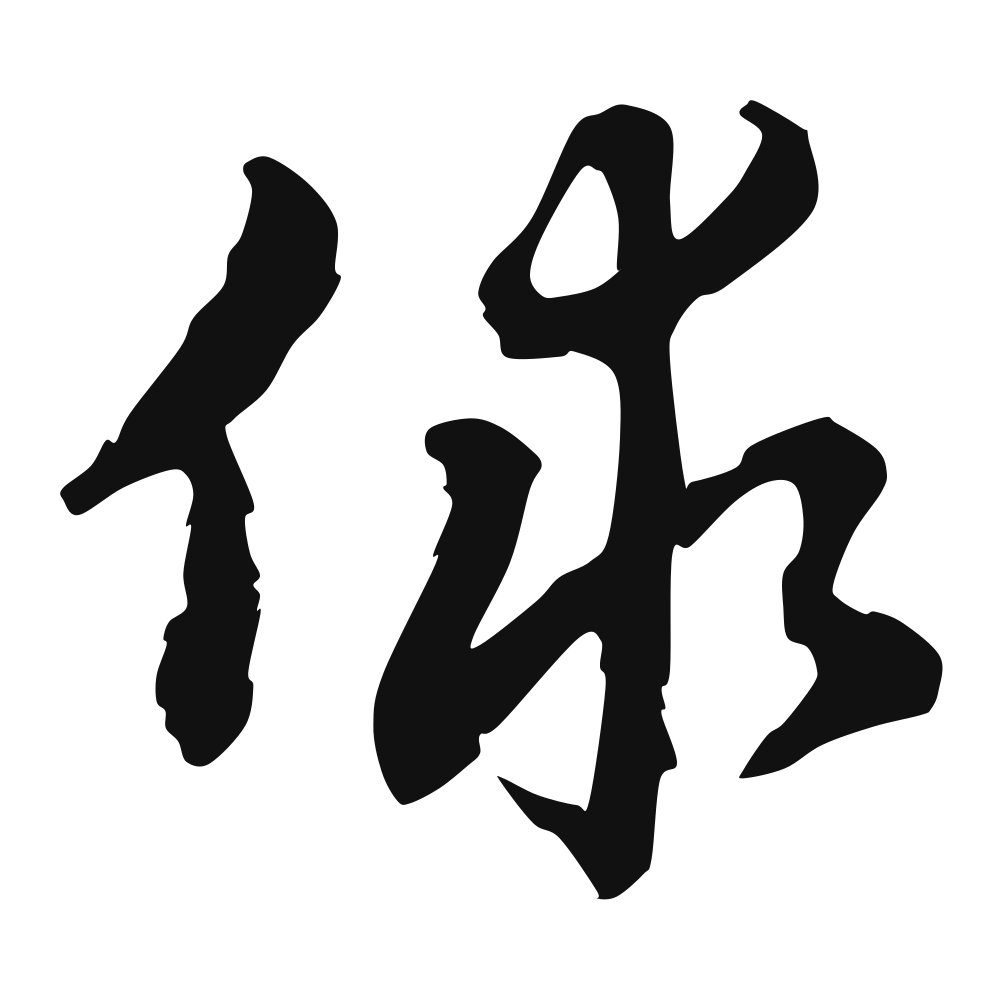
The Calligrapher — Zhào Gòu 赵构
Southern Song emperor and prolific patron of running-script calligraphy.
Song calligrapher (1107–1187), master of regular script/running script — known for 《草书洛神赋》. Song dynasty
Cultural Story
俅 is bright and neat. The 诗经 calls a king 俅俅 in his bordered robes; the 俅人 are a small Tibetan-group people of the southwest. To be 俅 was to be dressed with care and bearing. The character holds both a ruler's trim splendor and a little-known mountain folk.
Common words & phrases
- 俅俅 handsome
- 俅人 Qiu people · Tibetan group
Read the story behind the character
A clan book praises an ancestor 俅俅 in his court dress; an atlas names the 俅人 of the southwestern hills. The word now surfaces mainly in old poems and minority records. A fine appearance and a small mountain people — this quiet character keeps two faint images of order and place alive.
Why this character belongs on skin
There is a pleasure the body takes in being beautifully clothed, and it is older than vanity. Three thousand years ago, in the Book of Songs, dancers at the temple court were praised in a single doubled word—qiu qiu—the way their ceremonial robes hung, ornate and obedient to the wind, dignified without stiffness. The character carries a person beside something sought and given shape, ornament that does not disguise the body but agrees with it. The Daoists understood this: the sage does not add decoration to virtue; the two arrive together, like fit and fabric. Confucius, so stern about extravagance, still insisted the rites be performed with grace, because reverence made clumsy is reverence half-spoken. To wear this character is to make that ancient claim quietly—that you intend to move through the world composed, lustrous at the edges, your plainness and your polish the same gesture. Some marks are mottos. This one is a garment you never take off.
Own this character
Purchase delivers the original SVG of this glyph, brushed by Zhào Gòu 赵构, ready to place on skin, paper, or screen.