
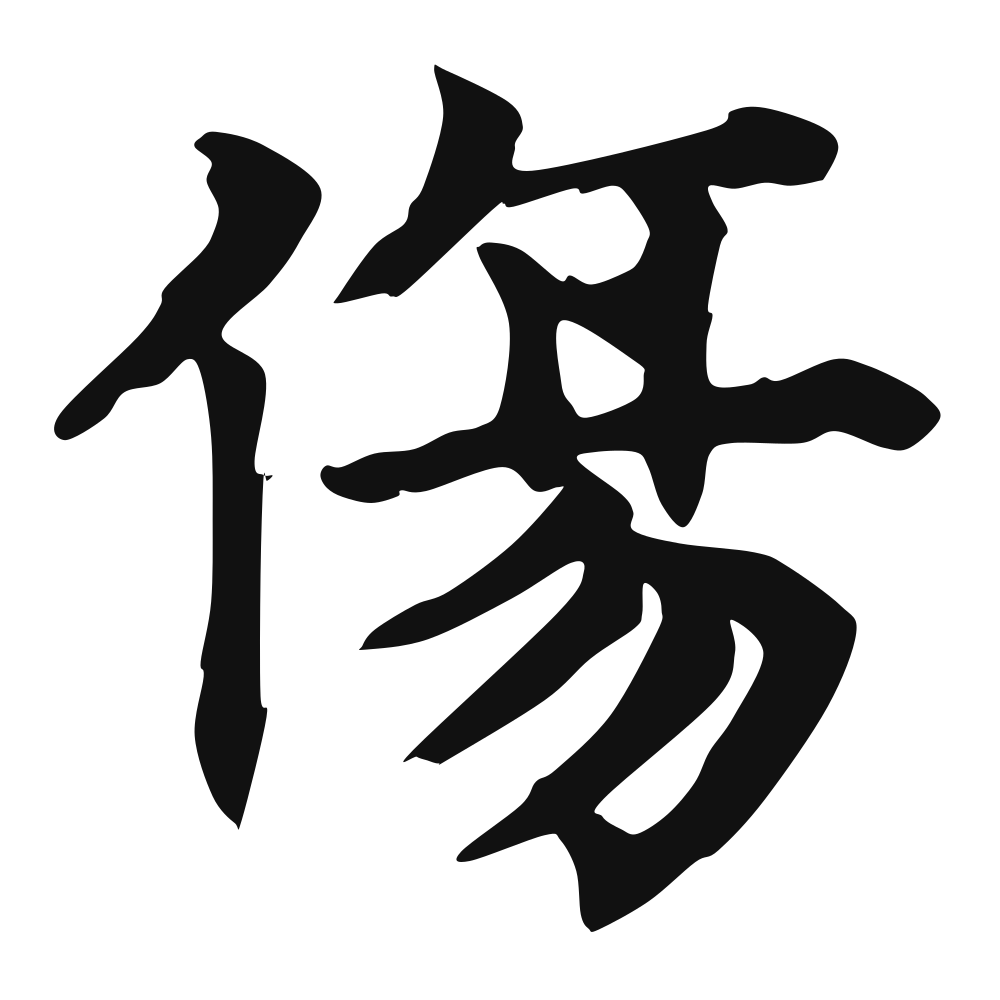
伤
伤 (shāng) — wound, injure, sorrow. Person 亻 + 昜 (sun rising): the hurt one. Classical life: 伤心 — heartbroken; 伤 also appears in 伤逝 (mourning the dead). Grammar: free morpheme — also: to injure; injury; wound
Closest English meanings
wound·injure·sad·harm·grieve
The Calligrapher — Zhào Mèngfǔ 赵孟頫
Yuan master whose elegant regular and running script revived classical tradition.
Yuan calligrapher (1254–1322), master of regular script/running script/cursive script — Yuan reviver of classical elegance who could write any script beautifully and did. Yuan dynasty
Cultural Story
傷 is 人 with 場's echo, a man struck at the altar-ruin, wounded in body or heart. The 說文 reads it as to wound, to grieve. 傷心 is the broken heart of a thousand poems; 傷亡 the dead and maimed the historian tallies. The character is the blow and the ache, the hurt that lands on the flesh and then on the feeling.
Energy Reading
Metal (金)
Comparative symbology, not fortune-telling.
Common words & phrases
- 伤心 sad · heartbroken · grieved · sorrowful
- 受伤 wounded · injured · hurt
- 伤害 harm · hurt · damage · injure
- 悲伤 sad · sorrowful · grieved · mournful
- 伤亡 casualties · killed and wounded · casualties (dead/wounded)
- 创伤 trauma · wound · hurt · scar
Read the story behind the character
伤心 is the song and the breakup; 受伤 the sports clip and the fall. 伤害 is the harm you accuse; 悲伤 the obituary and the gray day. 伤亡 is the crash toll; 创伤 the trauma the therapist names. The character names the wound, physical and emotional, the blow and the scar. It still means the struck place, whether the knee, the heart, or the mind that will not close.
Why this character belongs on skin
A wound is the body's honest sentence, and 傷 — simplified to 伤 — is the character that writes it. The old form set a man beside a vessel of wine, the comfort poured out for the hurt one. We are all, eventually, the wounded and the ones who pour. The tattoo does not glorify the pain. It honors the fact of having been broken and remaining. Christian iconography gave us the wounded side, the stigmata as proof of love carried to the end; the East simply notes the scar and moves on with tenderness. To wear 伤 is to refuse the lie that strength means never having fallen. It means you carry the place that broke, and the place that broke is exactly where the light gets in. A quiet mark for a body that has lived.
Own this character
Purchase delivers the original SVG of this glyph, brushed by Zhào Mèngfǔ 赵孟頫, ready to place on skin, paper, or screen.