
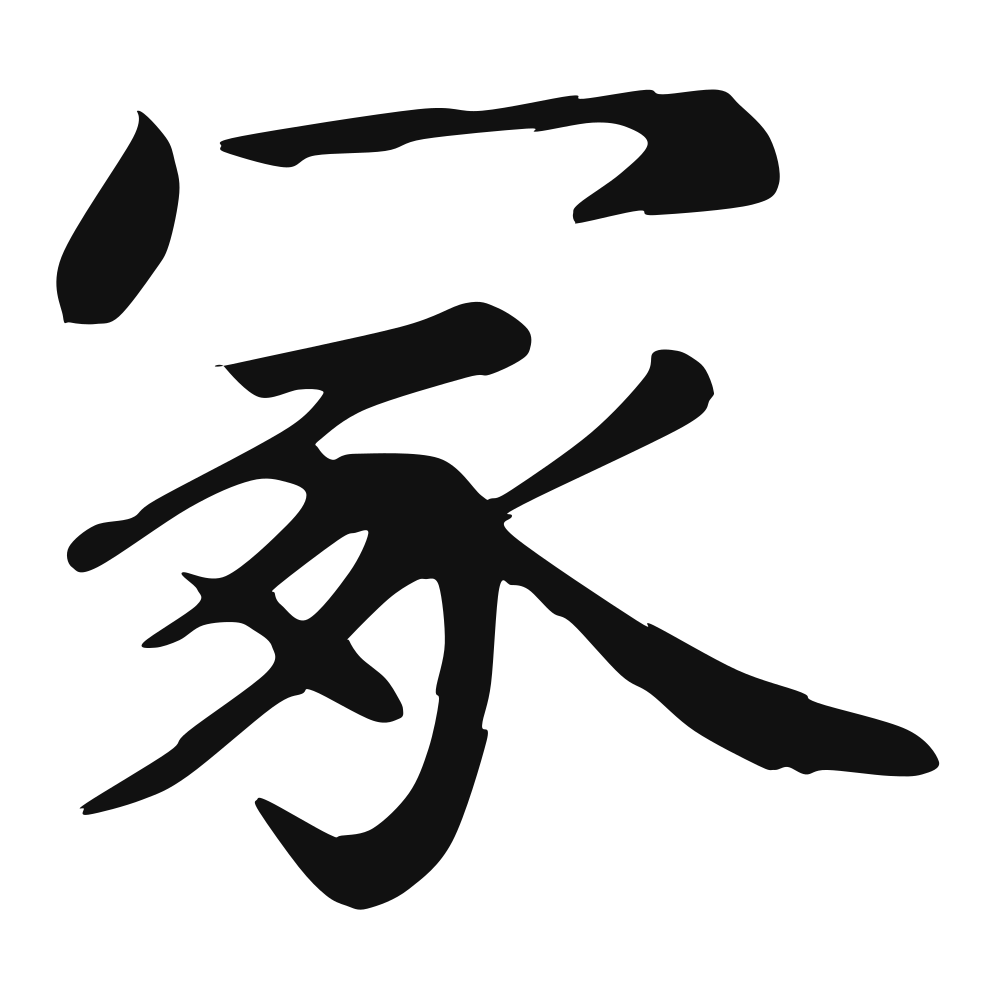
冢
mound; burial mound; senior (i.e. eldest child or senior in rank); burial mound (variant of 冢[zhong3])
Closest English meanings
tomb·mound
The Calligrapher — Zhào Mèngfǔ 赵孟頫
Yuan master whose elegant regular and running script revived classical tradition.
Yuan calligrapher (1254–1322), master of regular script/running script/cursive script — Yuan reviver of classical elegance who could write any script beautifully and did. Yuan dynasty
Cultural Story
The form showed a mound and a cover, 冢, the grave of the great. The histories name 荒冢 where a fallen general lies, grass over the stone. A 衣冠冢 holds only the robes, the body lost to the river. To raise a 冢 was the last honour a house could give its dead.
Common words & phrases
- 荒冢 desolate tomb
- 衣冠冢 cenotaph
- 冢墓 tomb · grave
Read the story behind the character
A 荒冢 leans by the rail line, its stone tilted. The museum labels a 衣冠冢 of a drowned official. The 冢墓 of the kings draw coaches of visitors. A groundskeeper cuts the grass at the 冢 and leaves flowers no one asked him to. The word stays in stone, not speech.
Why this character belongs on skin
A hill of earth raised by hands, over someone who can no longer feel the rain. The character is a mound with a covering — the grave-marker of the ancients, and also the word for what remains after a great fire: a burned husk, a ruin. Buddhism teaches that the body was always borrowed, that the mound is not an ending but an honest accounting. There is a stern beauty in facing that. Poets have always loved the image — grass over heroes, willow shade over emperors and beggars alike. To inscribe death deliberately on living skin is not morbid; it is a vow to spend the borrowed years like a man spending his own gold. The mound waits. Let it wait. You have things yet to do.
Own this character
Purchase delivers the original SVG of this glyph, brushed by Zhào Mèngfǔ 赵孟頫, ready to place on skin, paper, or screen.