
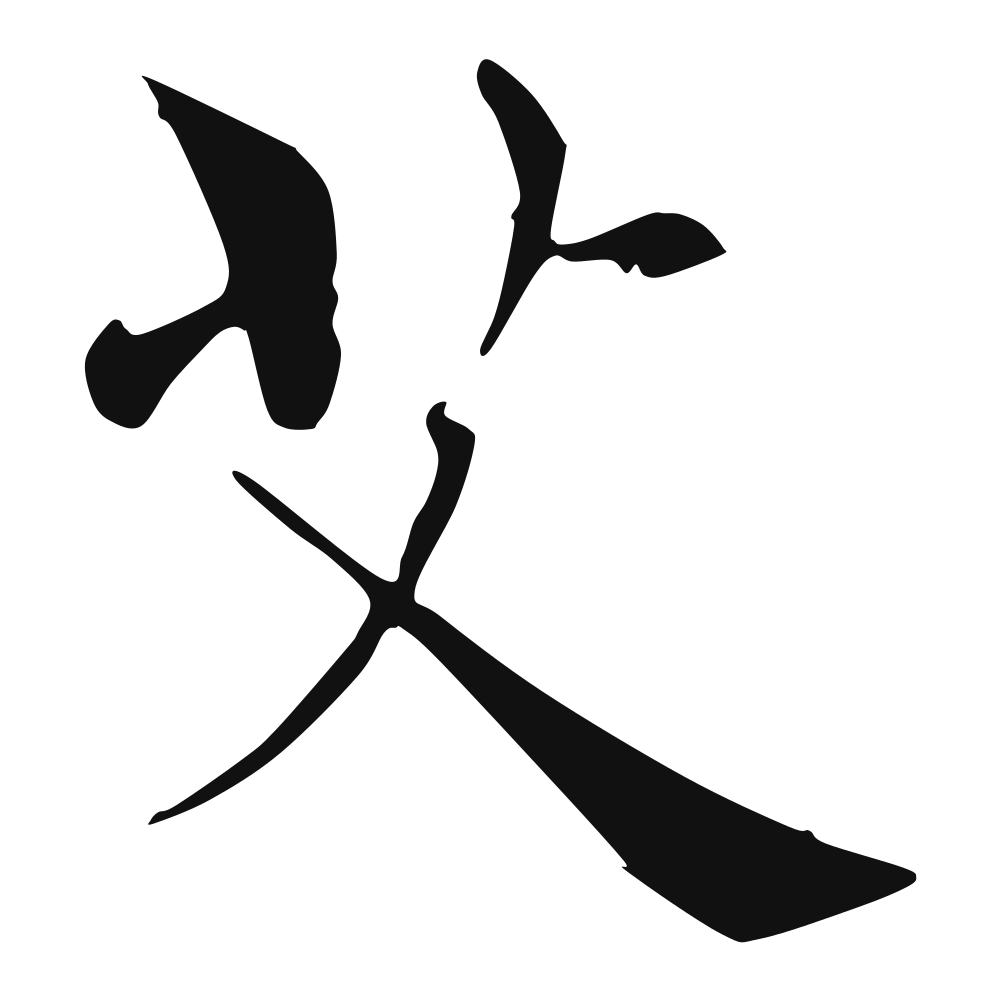
艾
surname Ai; Chinese mugwort (Artemisia); moxa
Closest English meanings
mugwort·artemisia·end
The Calligrapher — Chǔ Suíliáng 褚遂良
Tang chancellor and regular-script master of elegant, balanced strokes.
Tang calligrapher (596–658), master of regular script — Tang master of graceful, tensile regular script favored by the imperial court. Tang dynasty
Etymology & Meaning · 字义溯源
### Soundài — ài (4th tone; also yì when it means 'to govern / to mow'). Free-standing morpheme ### Original meaningÀi (4th tone), with a second reading yì. The Shuowen Jiezi 【卷一】【艸部】 defines it as 「艾,冰臺也。从艸乂聲」 — 'the ice-terrace', grass radical with 乂 as phonetic. The name is a piece of old physics rather than botany: 《博物志》 explains 「削冰令圓,舉以向日,以艾承其影得火,故號冰臺」 — cut a lump of ice into a lens, hold it to the sun, let the mugwort catch the focused spot, and it takes fire. 《急就篇》 notes it is also called 醫草, 'the physician's herb', and 《本草》 注 adds 灸草, because burning it is the whole practice of moxibustion (艾灸). It is one of the most cited plants in early Chinese: 《詩·王風·采葛》 「彼采艾兮,一日不見,如三歲兮」 (she gathers mugwort; a day without her is three years), 《孟子》 「猶七年之病,求三年之艾也」 (like a seven-year illness hunting for three-year-old moxa), and 《離騷》 turning it against itself — 「何昔日之芳草兮,今直為此蕭艾也」 (why has the fragrant herb of old become nothing but rank mugwort?). Then the word does something unusual: it also means age and stopping. 《禮記·曲禮》 「五十曰艾,服官政」 with Zheng Xuan's gloss 「艾,老也」; 《左傳·哀二年》 「憂未艾也」 — the trouble has not STOPPED — which is why the modern phrase 方興未艾 means 'rising and not yet ending'. And 《孟子》 「知好色則慕少艾」 gives it yet another turn: 少艾, youthful beauty. ### The structure (形聲 · 从艸,乂聲 — grass (艸) for the category + 乂 (yì) for the sound; note that the phonetic also carries 'to cut / to govern', which probably helped 艾 pick up its yì-reading for reaping and setting in order)①艸cǎograss / herbthe radical: it is a plant, nothing more mystical②乂yìto mow / to set in orderphonetic; the same element supplies the yì reading 'to reap, to govern'③冰臺bīng táiice terrace說文's definition — the herb named for taking fire through a lens of ice④艾àimugwort / old age / to ceaseone plant, three semantic lives, all attested in the classics ### In use todayItemReading / meaningNoteReadingài (4th tone); yì for 'to mow / govern'two readings with genuinely different sensesCore sensemugwort; moxa; also age and ceasingthe 'old' and 'cease' senses are classical, not inventions of later dictionariesGrammarfree morpheme + surname艾草 mugwort · 艾灸 moxibustion · 方兴未艾 not yet ended · 少艾 youthful beautyTattoo fityes-standalone — the strongest character in this batchgentle, curative, seasonal (端午), with real poetry behind it ### Closest words in English — and what each misses - Fire — 火 holds fire outright; 艾 merely takes fire — its classical name for that is a story from 《博物志》, not the word's plain meaning - Heal / Cure — 醫/療 hold healing; 艾灸 is one specific therapy, not the general idea - Eternal / Foreve
Cultural Story
Mugwort hung over doors at the Dragon Boat Festival to repel pests and ill luck, and moxibustion doctors aged the leaves like tea; the Mengzi remarks that to cure a seven-year illness you must seek mugwort gathered three years earlier, patience being part of the cure. Later idiom made the phrase not yet ended the standard way to say a movement still burns.
Where a Western reader can stand: 艾 is mugwort - the herb whose dried leaf is moxa for cautery, a warmth that heals with heat and smoke. By extension it means old age and 'to cease' (方興未艾, 'not yet ended'). It is several words in one shape, so a lone character reads as 'moxa' or 'old', never as 'eternity'. As a tattoo it is healing warmth and a thing not yet spent; wear it as the herb, not as 'forever'. Chu Suiliang's warm script fits.
Common words & phrases
- 艾草 mugwort
- 艾灸 moxibustion
- 少艾 young beauty
- 方興未艾 in the ascendant
Read the story behind the character
At Duanwu a market stall sells bundles of mugwort to tie on doorframes, the grandmother rolls moxa sticks for the family's sore shoulders, an aunt jokes about her youth admiring young beauties, and a trending hashtag declares the hanfu revival is still gaining steam, borrowing a sentence first written about a humble roadside weed.
Why this character belongs on skin
艾 is mugwort, the bitter herb that smolders in moxibustion, its smoke drawn down into the skin to warm what is cold and stir what is stalled. The healers burned it at the meridians; the old songs called a vigorous young man 艾, green and unbroken. And the phrase 方兴未艾 means not yet ended, still rising — so the plant carries both the stop and the surge. To wear 艾 is to honor the smoke that heals, the green that will not quit. Place it where something in you went cold. Let it mean the fire is lit again, that what was finished has found a second growing. The herb is humble. Its warmth is not. You are still rising.
Own this character
Purchase delivers the original SVG of this glyph, brushed by Chǔ Suíliáng 褚遂良, ready to place on skin, paper, or screen.