
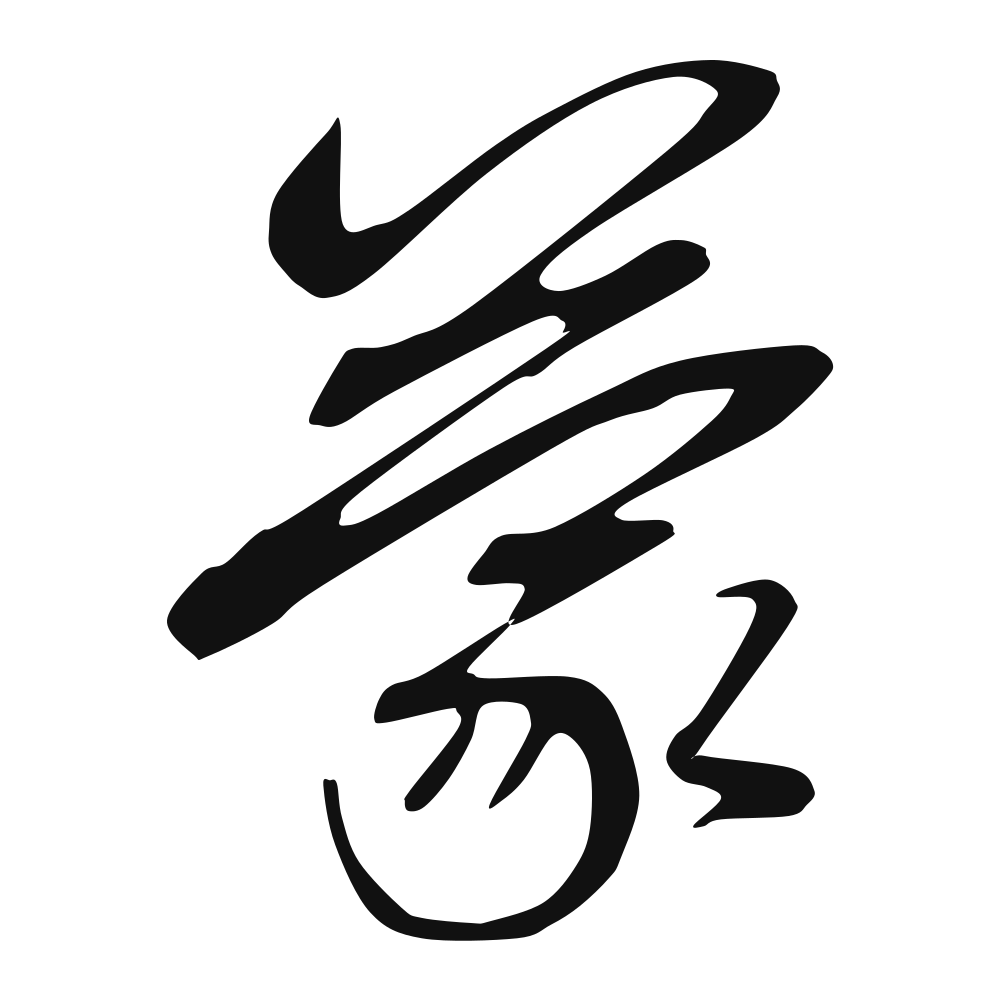
蒙
(literary) sincere; honest; genuine; drizzle; mist; to deceive; to cheat; to hoodwink; to make a wild guess; blind; dim-sighted; surname Meng; Mongol ethnic group; Taiwan pr. [Meng2]; (knocked) unconscious; dazed; stunned; to cover; ignorant; to suffer (misfortune); to receive (a favor)
Closest English meanings
cover·deceive·ignorant·Mongol
The Calligrapher — Zhào Mèngfǔ 赵孟頫
Yuan master whose elegant regular and running script revived classical tradition.
Yuan calligrapher (1254–1322), master of regular script/running script/cursive script — Yuan reviver of classical elegance who could write any script beautifully and did. Yuan dynasty
Cultural Story
蒙 is a cloth thrown over something: to cover, to veil, and then to deceive — 蒙蔽, to hoodwink, 蒙混, to slip deception past a gate. The 《易经》 even has a hexagram 蒙, youthful ignorance awaiting instruction, which is why 启蒙, to remove the covering, means enlightenment — the teacher lifting the cloth from a child's mind. History added the steppe: 蒙古, Mongolia, its horsemen and khanates. And polite letters kept 承蒙, to receive a favor under another's shelter, in every formal thank-you.
Common words & phrases
- 蒙蔽 deceive · hoodwink · blind
- 启蒙 enlighten · initiate · teach
- 蒙古 Mongolia · Mongol
- 蒙混 deceive · muddle through · bluff
- 承蒙 receive (favor) · be indebted
Read the story behind the character
蒙 shades from cover-up to gratitude. A scammer tries to 蒙蔽, deceive, retirees with fake investment apps; a smuggler fails to 蒙混, slip past, customs with a mislabeled box. A first-grade teacher loves 启蒙, enlightenment, readers — the books that lift the veil. A vlogger rides the grasslands of 蒙古, Mongolia, and an intern emails 承蒙, receiving your favor,关照 to the mentor who took a chance on her.
Why this character belongs on skin
This character lives a double life, and both lives are about what covers us. 蒙 first means covered, hooded, in the dark—the fog on the mountain, the ignorance Buddhism says we are all born wrapped in, the grass radical standing over everything like a blindfold. But it also means to receive, graciously: 蒙恩, to have received grace; 蒙教, to have been taught. The ancients saw no contradiction. To be open-handed toward heaven and hooded in unknowing is the human condition—light arrives through the same eyes that cannot see far. The I Ching even gives a hexagram called Meng, the young and unlearned, whose counsel is not shame but teachability: the veil is an invitation. There is tenderness in admitting you cannot see everything, and dignity in accepting what is given anyway. This is ink for someone mid-unfolding, honest about the fog, still reaching. One day the covering thins. Until then, the character says: I receive, I learn, I do not pretend.
Own this character
Purchase delivers the original SVG of this glyph, brushed by Zhào Mèngfǔ 赵孟頫, ready to place on skin, paper, or screen.