
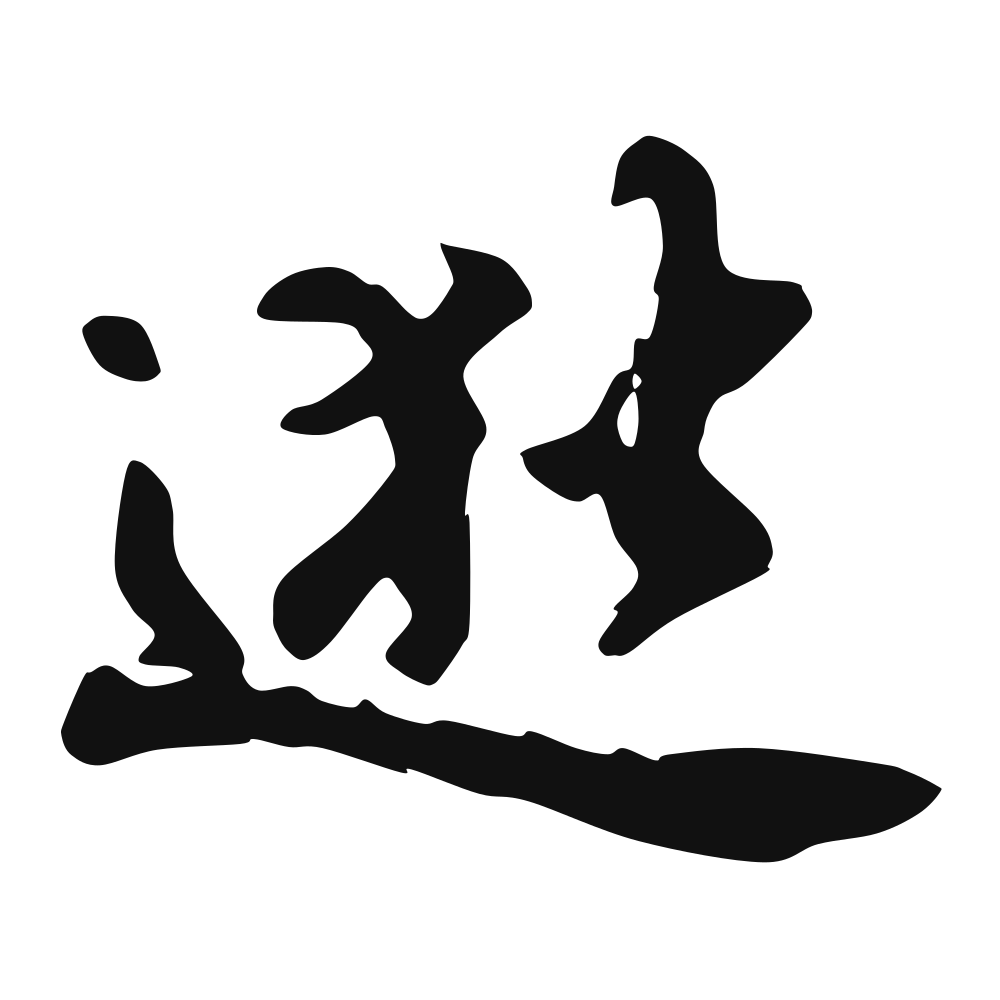
逖
(literary) remote; far away
Closest English meanings
distant·far
The Calligrapher — Zhào Mèngfǔ 赵孟頫
Yuan master whose elegant regular and running script revived classical tradition.
Yuan calligrapher (1254–1322), master of regular script/running script/cursive script — Yuan reviver of classical elegance who could write any script beautifully and did. Yuan dynasty
Cultural Story
Ti is far — far enough to strain the ear. The Book of Documents opens the speech at Muzan with 'far away, you men of the western lands,' addressing soldiers summoned across half the realm, and ti has kept that sense of distance out past hearing.
Common words & phrases
- 逖听 listen from afar
- 逖远 far · distant
Read the story behind the character
Today ti survives only in the most literary corners: titting (listen from afar) in ceremonial prose greeting guests from overseas, tiyuan (far) in a translation's footnotes. A character most Chinese will never write by hand still stands guard over the long road in classical readers.
Why this character belongs on skin
Distance has always been both wound and medicine. 逖 means far—the walking radical 辶 carrying 兆, an old sound that also means omen, sign—so the character reads like distance itself giving a sign from down the road. In the classics it appears in 逖矣,西土之人—far away are you, people of the western lands—an old call across mountains, recognition hurled at strangers through space. The Daoists made distance a discipline: the sage keeps his distance, 疏, and precisely thereby preserves what he loves. Crowding kills; the hunter knows the prey, the lover knows the beloved, the bonsai master knows the pine, all by keeping the space in which the thing can be itself. Even grief is a form of 逖—the far-awayness of the dead, which the heart slowly learns to carry as horizon rather than hole. Ink it along the inner forearm or the length of the shin, the long bones, the traveled lines of you. Let it read like a road sign: far, and still signaling.
Own this character
Purchase delivers the original SVG of this glyph, brushed by Zhào Mèngfǔ 赵孟頫, ready to place on skin, paper, or screen.