
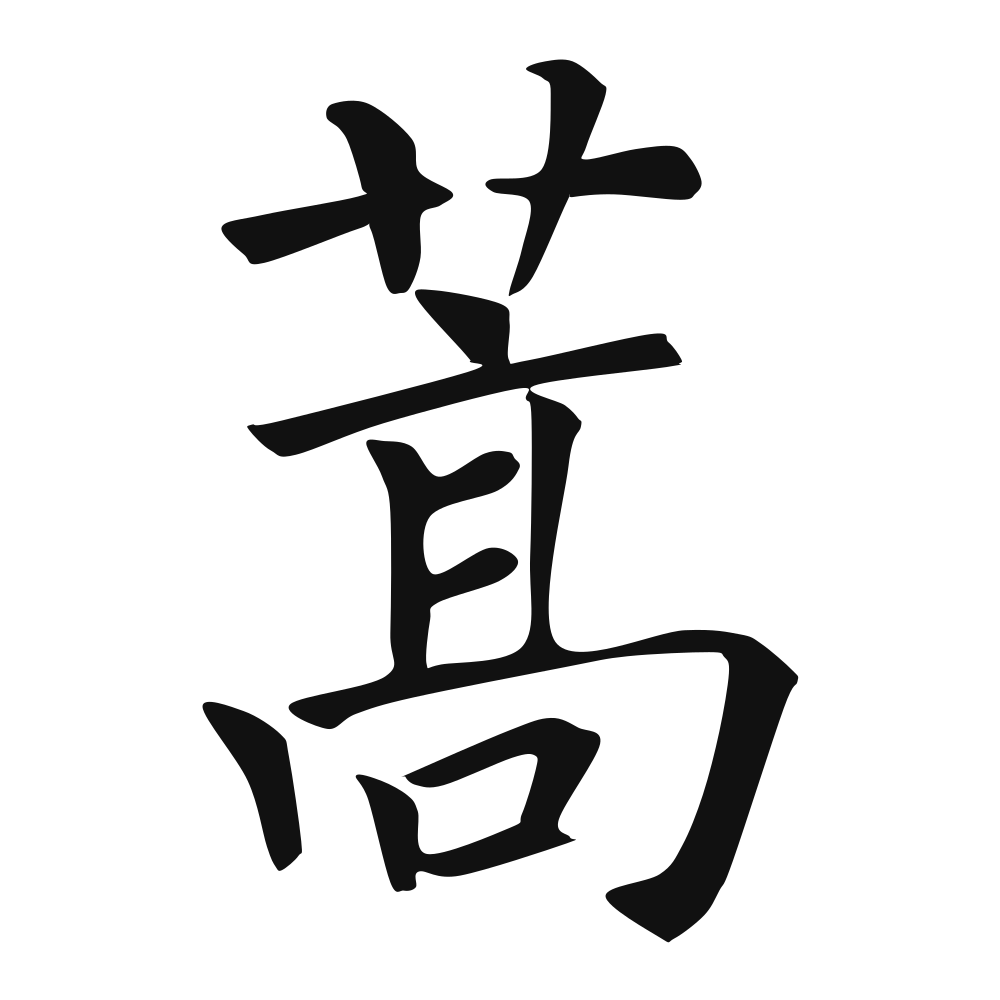
蒿
celery wormwood (Artemisia carvifolia); to give off; to weed
Closest English meanings
wormwood·artemisia·mugwort
The Calligrapher — Chǔ Suíliáng 褚遂良
Tang chancellor and regular-script master of elegant, balanced strokes.
Tang calligrapher (596–658), master of regular script — Tang master of graceful, tensile regular script favored by the imperial court. Tang dynasty
Cultural Story
蒿 is wormwood and artemisia, the gray-green weeds of waste ground and grave mounds. Classical poets set it among the desolate: abandoned capitals where 蒿草, wormwood, grew through palace thresholds. Yet the weed saved lives — 青蒿, sweet wormwood, appears in the Ge Hong's fourth-century recipes for fevers, and in our own century Tu Youyou drew artemisinin, the antimalarial, from exactly that plant, winning a Nobel Prize. 蓬蒿, fleabane and wormwood, became shorthand for humble, weedy obscurity.
Common words & phrases
- 青蒿 sweet wormwood · Artemisia annua
- 蒿草 wormwood · weeds
- 蓬蒿 weeds · humble dwelling
Read the story behind the character
蒿 turned from weed to world-saver. A pharmacy displays 青蒿, sweet wormwood, extract after news of Tu Youyou's Nobel for artemisinin; a biology class presses 蒿草, wormwood, specimens on a field trip. A poet calls the vacant lot 蓬蒿, weeds, waiting for the bulldozers; a farmer burns wild artemisia in the courtyard, the smoke said to keep mosquitoes — and older ghosts — away from the door.
Why this character belongs on skin
Artemisia: the bitter herb, the moon's own plant. Hāo grows wild along graves and field edges in China, and the ancients both mourned with it and healed with it—mugwort was burned on the skin in moxibustion, its smoke working into sore bodies for two thousand years. The Book of Songs already has it, cut and gathered, ordinary as grief. The West gave its name to Artemis, untamed goddess of the hunt, and to absinthe, the green fairy that undid French poets. One plant, the whole range: mourning, medicine, madness, moonlight. That is the honest complexity hāo carries. Bitterness, the herbals teach, is not a flaw in a flavor but a function—it opens the appetite, clears what stagnates. If you have been called bitter, you know it was usually because you were useful. This is your botanical signature: wild, silver-leaved, slightly dangerous, unmistakably alive. Small enough for the inner arm. Bitter enough to be true.
Own this character
Purchase delivers the original SVG of this glyph, brushed by Chǔ Suíliáng 褚遂良, ready to place on skin, paper, or screen.