
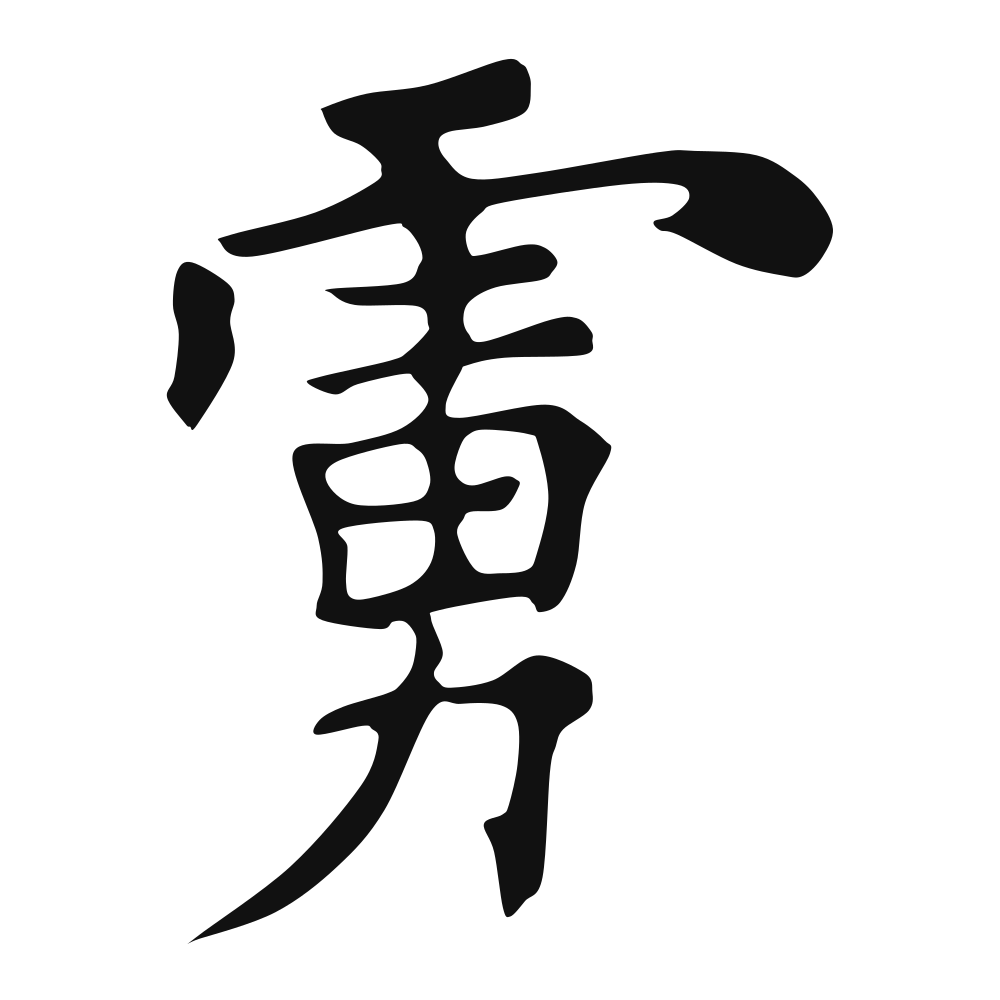
虏
prisoner of war; to capture; to take prisoner; (old) northern barbarian; slave
Closest English meanings
captive·prisoner·capture
The Calligrapher — Chǔ Suíliáng 褚遂良
Tang chancellor and regular-script master of elegant, balanced strokes.
Tang calligrapher (596–658), master of regular script — Tang master of graceful, tensile regular script favored by the imperial court. Tang dynasty
Etymology & Meaning · 字义溯源
### Soundlǔ — lǔ (3rd tone). Often a bound morpheme — needs a partner word ### Original meaningLǔ (3rd tone). The Shuowen Jiezi defines it in one word: 「虜,獲也。从毌从力,虍聲」 (卷七·毌部) — 'to take', built from 毌 (to thread, i.e. a rope run through) and 力 (force), with 虍 as phonetic. It is the graph of captives strung on a rope. Duan Yucai's commentary supplies the logic: 「公羊傳:爾虜焉。故凡虜囚亦曰纍臣,謂拘之以索也。於毌義相近,故从毌」 and 「左傳曰:武夫力而拘諸原」 — a soldier's strength and a cord: that is the whole picture. The Han lawyers kept the distinction: 《漢書》 晉灼注 「生得曰虜,斬首曰獲」 — taken alive is 虜, beheaded is 獲. The texts use it plainly: 《史記·項羽本紀》「吾屬今為之虜矣」 ('we are all his prisoners now'), 《禮記·曲禮》「獻民虜者操右袂」 (on presenting captives, hold them by the right sleeve), 《鹽鐵論·誅秦》「斬首捕虜十餘萬」, 《史記·韓長孺列傳》「匈奴虜略千餘人及畜產而去」 (here 虜 is looting). And a third sense the buyer must be told about: 虜 is the old Chinese slur for the northern peoples — 'the captured ones', then 'the enemy Other'. Honest disclosure: 虏 means captive, prisoner, to seize — and in usage it is also an ethnic insult. There is no reading of it that is romantic. ### The structure (會意兼形聲 · 从毌从力,虍聲 — thread/rope (毌) + force (力), with 虍 giving the sound; Duan Yucai reads it as 'strung by a cord, taken by strength')①虍hūtiger-head (phonetic)the top element, source of the fierce reading②毌guànto thread / a cordcaptives run through on a rope③力lìforcethe strength that takes them④獲huòto take (by killing)the paired legal term: 生得曰虜,斬首曰獲 ### In use todayItemReading / meaningNoteReadinglǔ (3rd tone)single syllableCore sensecaptive; to capture; to loot虜,獲也 in the ShuowenGrammarverb and noun俘虏 captive; 虏掠 to loot; historical ethnic slurTattoo fitno — the word for a prisoner and a sluruse 武 / 勇 / 力 instead ### Closest words in English — and what each misses - Warrior — 武/勇 hold the fighting man; 虜 is what the fighting man takes home in chains - Strength — 力 is the strength in this character's own make-up; 虜 is strength applied to someone who cannot resist - Conquer / Victory — 克/勝 hold winning; 虜 is the object of the winning, not the winning - Capture (romantic) — English 'capture' can mean to charm; 虜 never does — it is seizure by force, and looting besidesAn honest note on grammar. Verb and noun: to capture, to loot; the person captured; also the old derogatory term for northern non-Han peoples. Simplified as 虏 (虜 is the traditional form)Where a Western reader can stand: 虏 (lǔ) means 'captive' — the person taken in war. The Shuowen builds it from a rope (毌) and force (力): people strung together and driven off. Han law distinguished 虜 (taken alive) from 獲 (beheaded),
Cultural Story
虏 began as a blunt verb — to seize by force — and hardened into a noun for captives. Han historians wrote of campaigns against the Xiongnu in which tens of thousands were seized, and frontier poetry reversed it, vowing not to let one rider cross the passes. To be taken 虏 was to lose family, name, and homeland in a single raid.
Where a Western reader can stand: 虏 means 'to capture' or 'a captive' - and in historical Chinese it is a slur for the northern non-Han peoples, a word applied to human beings by those who took them. There is no auspicious or 'strength' reading to recover; it is a person at the end of a rope. I advise against wearing it. Chu Suiliang's elegance cannot change what the character says.
Common words & phrases
- 俘虜 captive · prisoner
- 擄掠 plunder · loot
- 虜獲 capture
Read the story behind the character
The character now belongs mostly to museums and war films. Textbooks explain 俘虜 (captive, prisoner) taken on both fronts of twentieth-century wars; epics depict raiders who 虜獲 (capture) villages whole, dragging off grain and cattle. Historians describing steppe armies that 擄掠 (plunder, loot) borderlands remind readers that for centuries the character recorded real terror at the edges of empire.
Why this character belongs on skin
War is the oldest teacher of freedom, and its first lesson is the cage. 虏 was the bound prisoner dragged from a fallen city, the body taken, the spirit contested. The warrior ethos does not pity the captive—it asks what he does inside the wall. To be seized is not to be lost; the bow is strung only under tension, the muscle remembers the hand that held it. Christian tradition speaks of captivity led captive, of chains that become the very instrument of release. Carry this character and you name the part of you that was once owned by fear, by another, by a younger self who did not know better. The mark is not shame. It is the record of a siege survived, the quiet pride of the man who was taken and then, somehow, took himself back.
Own this character
Purchase delivers the original SVG of this glyph, brushed by Chǔ Suíliáng 褚遂良, ready to place on skin, paper, or screen.