
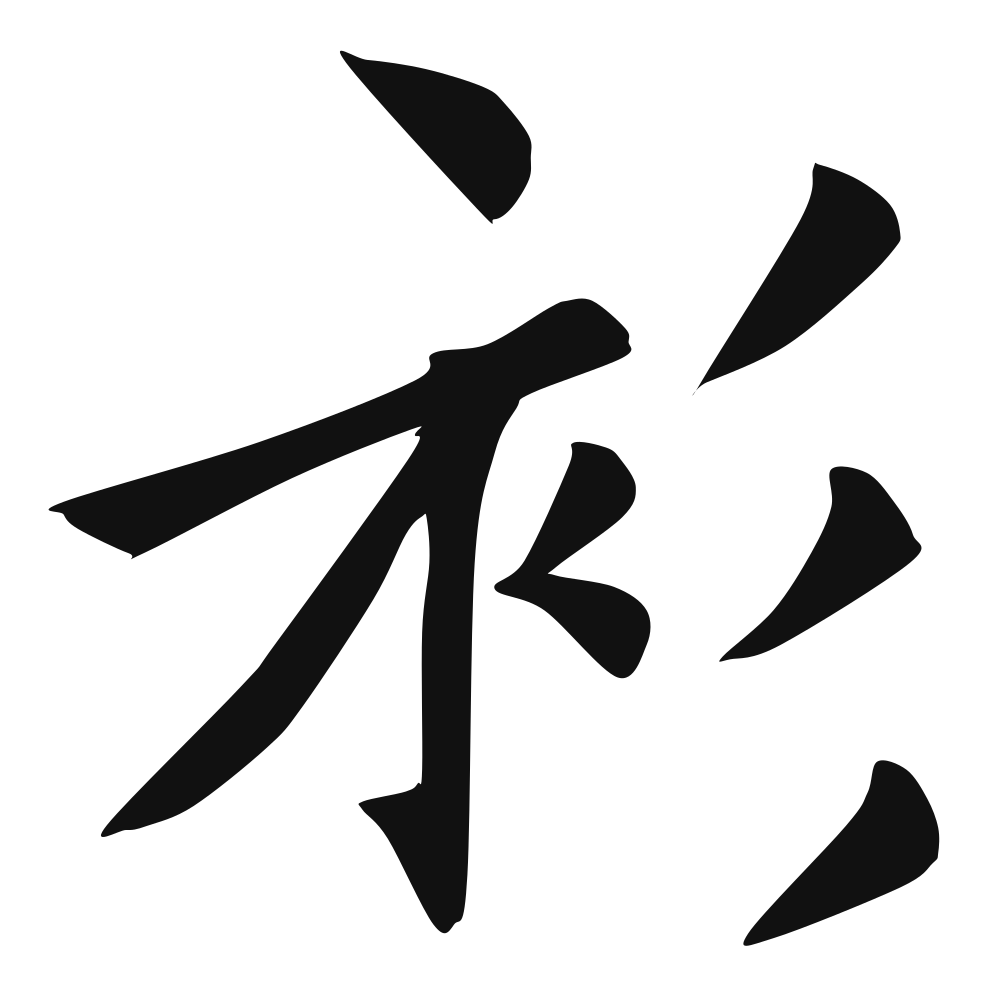
衫
garment; jacket with open slits in place of sleeves
Closest English meanings
shirt·clothing
The Calligrapher — Chǔ Suíliáng 褚遂良
Tang chancellor and regular-script master of elegant, balanced strokes.
Tang calligrapher (596–658), master of regular script — Tang master of graceful, tensile regular script favored by the imperial court. Tang dynasty
Cultural Story
Bai Juyi's Song of the Pipa ends with the line that the colonel of Jiangzhou wets his blue-black shan with tears, qing shan shi, the low official's gown stained by feeling he could not hide. The humble shirt of office became the poem's final image of shared, unmanly grief. The character carries that quiet dignity of plain cloth.
Common words & phrases
- 衬衫 shirt · blouse
- 汗衫 undershirt · T-shirt
- 长衫 long gown
- 衣衫 clothing · clothes
Read the story behind the character
An office worker irons a chanshan shirt before the meeting, peels off a sweat-soaked hanshan undershirt after the gym, and keeps a changshan long gown for the festival. The word yishan names clothes worn thin by use. From the collar-and-tie to the ancestor's robe, the character covers the body's daily and ceremonial dress.
Why this character belongs on skin
The cloth radical clothes 衫, the simple robe, the shirt against the skin — humble garment, the everyday armor of the body. Poets wore 衫 of plain linen and called it freedom; a scholar's 青衫 was the color of an unbought conscience. To carry 衫 is to remember that what touches you closest need not be fine to be true. It is the tattoo of the one who finds dignity in the ordinary, who meets the morning in something soft. Let this mark rest where cloth would fall. The ink is a garment that never comes off, a robe you chose to wear into every room, plainly, and without apology — the kind of freedom that asks for nothing but the skin it's on.
Own this character
Purchase delivers the original SVG of this glyph, brushed by Chǔ Suíliáng 褚遂良, ready to place on skin, paper, or screen.