
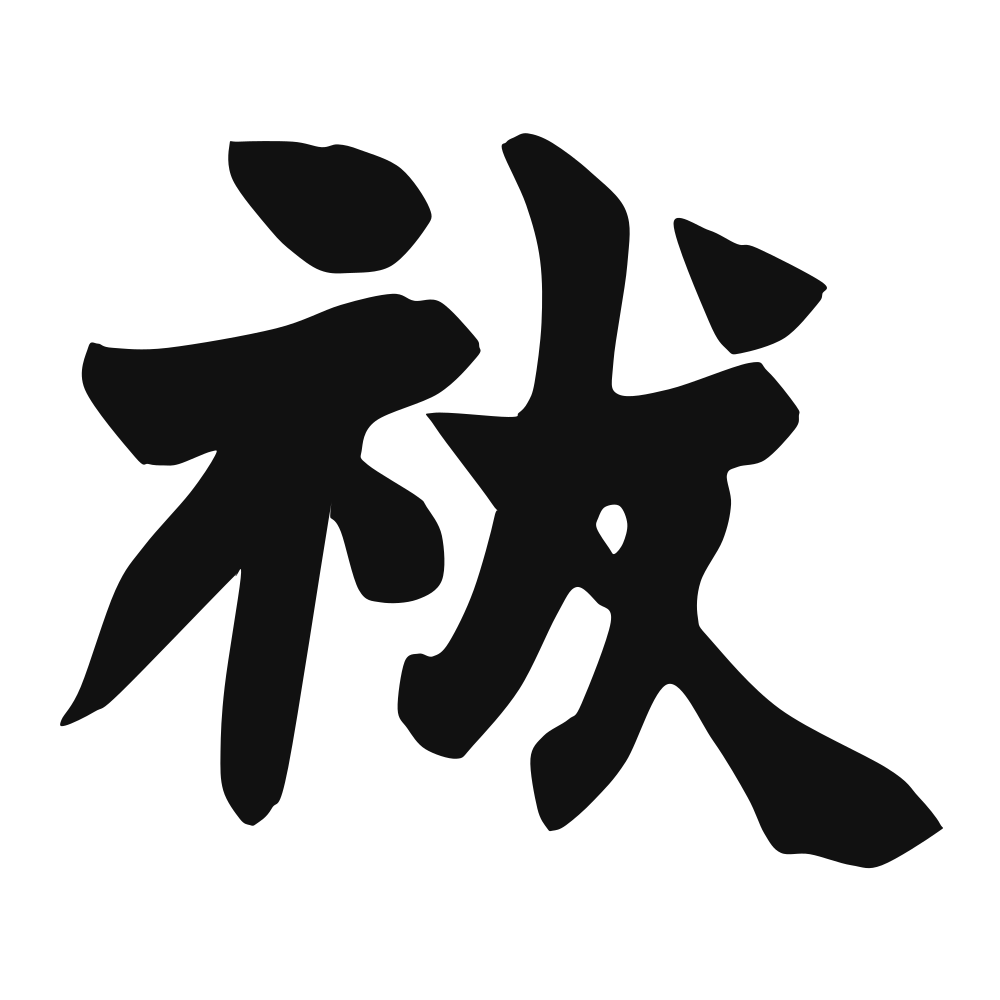
祓
to cleanse; to remove evil; ritual for seeking good fortune and avoiding disaster
Closest English meanings
exorcise·purify
The Calligrapher — Zhào Zhīqiān 赵之谦
Qing pioneer who fused seal-script vigor into every style.
Qing calligrapher (), master of 篆隶/running script — Qing eclectic who fused seal, clerical and painting sensibilities into one bold hand. Qing dynasty
Cultural Story
祓 was washing misfortune away with water. On the third day of the third month people went riverside for 祓禊, rites of purification; Wang Xizhi’s Orchid Pavilion gathering of 353 began as exactly such a spring cleansing by the stream.
Common words & phrases
- 祓除 exorcise · purify
- 祓禊 purification rite (in spring)
Read the story behind the character
The rite is history, but 祓 returns in culture: hanfu societies revive 祓除, purification, ceremonies by streams each Shangsi festival; historical dramas show priests waving herbs to 祓, cleanse, a haunted room. Otherwise it dozes in dictionaries, fragrant with old water.
Why this character belongs on skin
It begins at the water's edge on the third day of the third month, the whole court gathered riverside, washing away the old year's misfortune. 祓 is that rite— purification by water, the ceremony the ancients called 祓禊, when people bathed in the spring current and let the river carry off grief, illness, blame. Wang Xizhi wrote the most famous calligraphy in Chinese history at such a gathering, wine cups drifting downstream, the air rinsed and new. The character puts the spirit radical beside a word that means to strike away— cleansing as an act, not a mood. Every tradition knows it: baptism, the mikvah, the pilgrim's river. What would you let the current take? This is ink for the moment after— when the old weight is gone and the skin, finally, feels like yours.
Own this character
Purchase delivers the original SVG of this glyph, brushed by Zhào Zhīqiān 赵之谦, ready to place on skin, paper, or screen.