
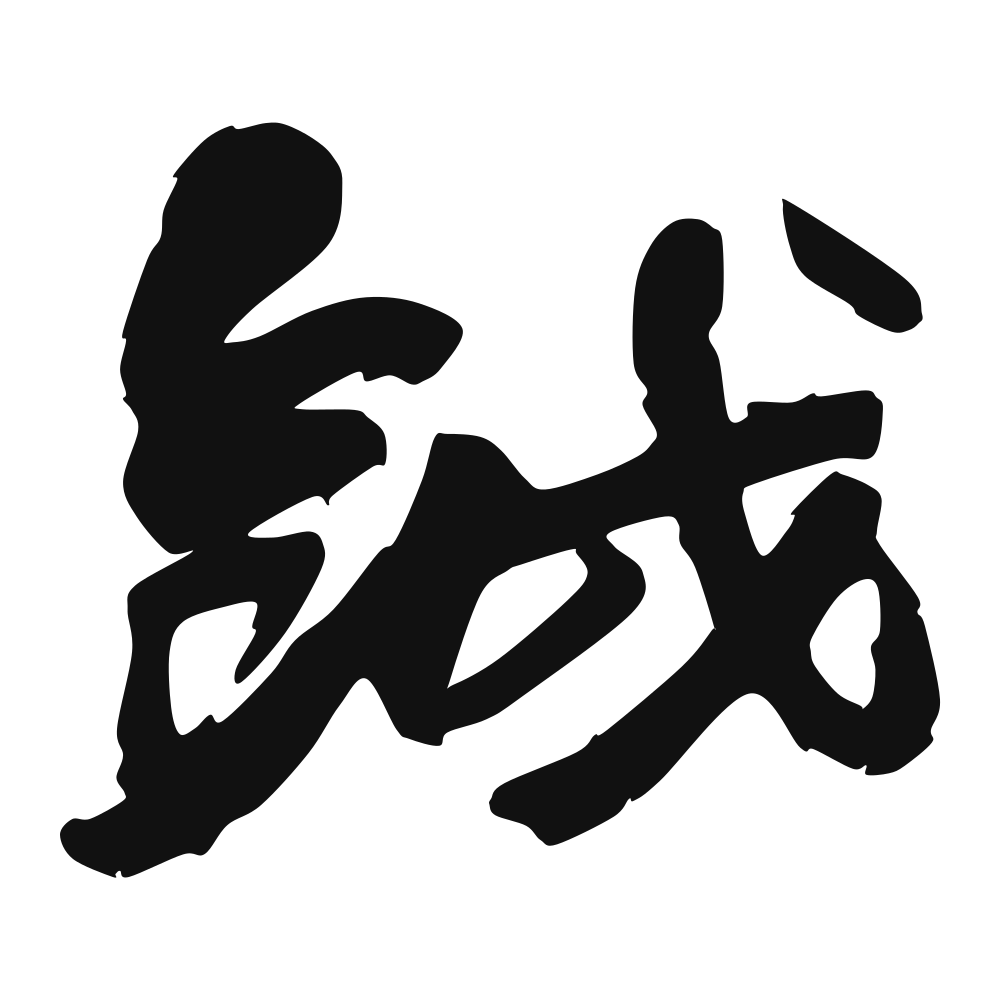
钺
battle-ax
Closest English meanings
axe·battle-ax·halberd·broadaxe·weapon
The Calligrapher — Zhào Zhīqiān 赵之谦
Qing pioneer who fused seal-script vigor into every style.
Qing calligrapher (), master of 篆隶/running script — Qing eclectic who fused seal, clerical and painting sensibilities into one bold hand. Qing dynasty
Cultural Story
钺 was the great ceremonial axe, badge of command: kings granted a general the yellow 黄钺, licensing him to execute in the ruler's name, and Shang kings were buried with jade and bronze 钺 that spoke of life-and-death power. 持钺 was not merely fighting — it was holding the state's authority in both hands.
Common words & phrases
- 斧钺 axe and battle-ax · punishment · weapons
- 钺斧 battle-ax · broadaxe
- 黄钺 imperial axe · yellow battle-ax
- 金钺 golden axe · ceremonial axe
- 持钺 hold the axe · wield authority
Read the story behind the character
The axe now rules display cases: the国家博物馆's jade and bronze 钺 anchor galleries on early kingship, replica 黄钺 appear in historical dramas when the emperor dispatches a general, and martial arts schools demonstrate the heavy 斧钺 forms. Its power survives as image — the weapon that meant permission to command.
Why this character belongs on skin
Bronze Age kings did not sign their power; they held it. 钺 is the great ceremonial axe—a broad crescent blade on a long haft—buried in the tombs of Shang queens like Fu Hao, who led ten thousand soldiers and took the axe with her into the earth. It was less weapon than throne, the object that authorized life and death, justice and war in a single arc of metal. Every tradition has such a blade: the Roman fasces, the sword in the stone. To wear 钺 is to claim that lineage quietly—the right to decide, to cut away what must be cut, to lead. Not cruelty. Command. The axe does not hate the tree; it simply clears the ground for what comes next.
Own this character
Purchase delivers the original SVG of this glyph, brushed by Zhào Zhīqiān 赵之谦, ready to place on skin, paper, or screen.