
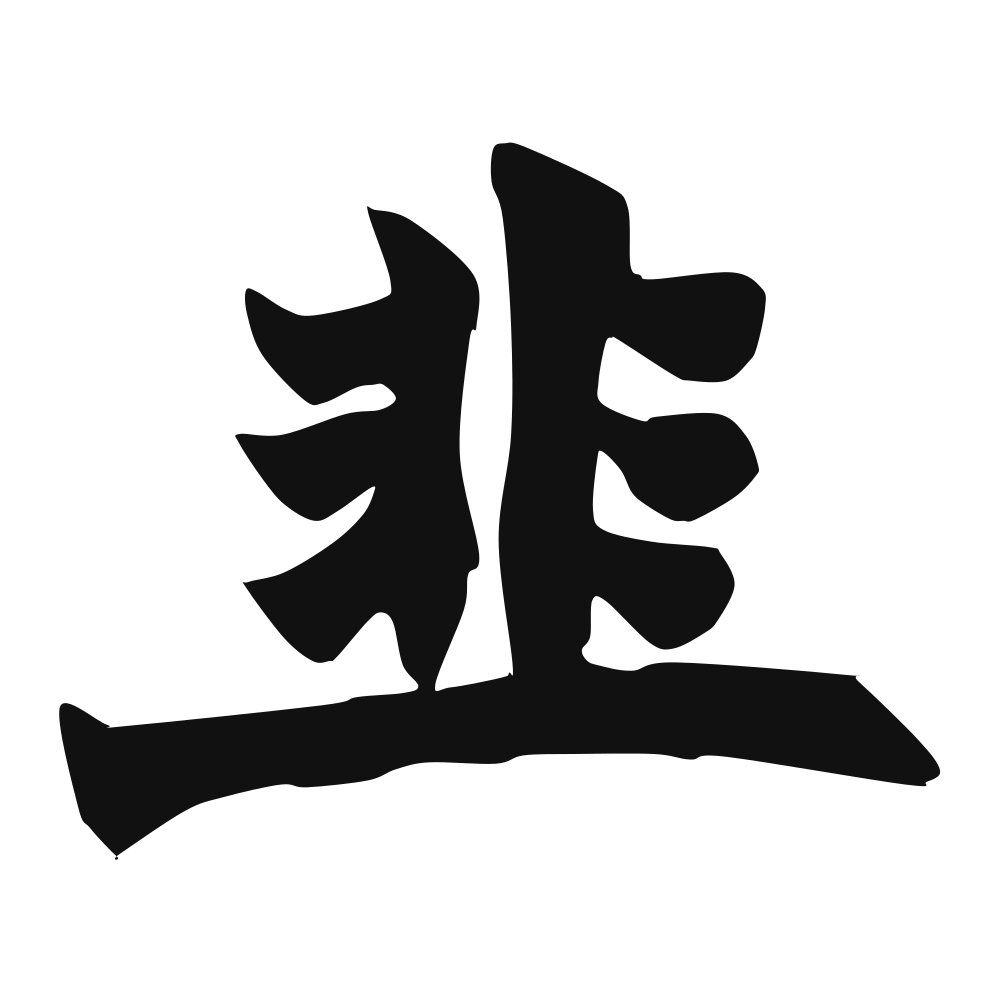
The Calligrapher — Zhào Zhīqiān 赵之谦
Qing pioneer who fused seal-script vigor into every style.
Qing calligrapher (), master of 篆隶/running script — Qing eclectic who fused seal, clerical and painting sensibilities into one bold hand. Qing dynasty
Cultural Story
The 'Book of Songs' lists the early spring rite of offering a lamb and presenting 韭, the chives laid before the altar as the first green the cold earth gave up. The 韭菜 that grew by the well and the blanched 韭黄 of the warm bed both came from that same humble, eager root. To set 韭 on the table was to mark the turning of the year toward warmth, the smallest herald of spring.
Common words & phrases
- 韭菜 Chinese chives · leek
- 韭黄 hotbed chives
Read the story behind the character
A market stall piles 韭菜 beside the 韭黄 grown in the dark bed, the pale stems dearer than the green. The hotpot table orders both, the 韭菜 cut fine for the broth and the 韭黄 rolled into the first bite. A gardener thins the 韭菜 row and bags the thinnings, the 韭黄 he reserves for the restaurant that pays by the bundle each morning.
Why this character belongs on skin
Cut it at the root and it returns. 韭 is the chive, the humble green that farmers have trusted for three thousand years because it refuses to stay dead — reap it once and the earth sends it up again, greener, thinner, undefeated. The character itself grows from the soil-mark under a single sprout, a picture of persistence drawn by peasants. In the city now they call the easily-cut masses 韭菜, but the root meaning is older and kinder: renewal without asking permission. To carry 韭 is to confess a quiet faith in your own return. Scars close. Seasons turn. You will be cut and you will stand again. Let this unassuming word lie along your wrist like a field that never surrenders. The leek does not announce its resilience. It simply grows back. So will you, marked for life.
Own this character
Purchase delivers the original SVG of this glyph, brushed by Zhào Zhīqiān 赵之谦, ready to place on skin, paper, or screen.