
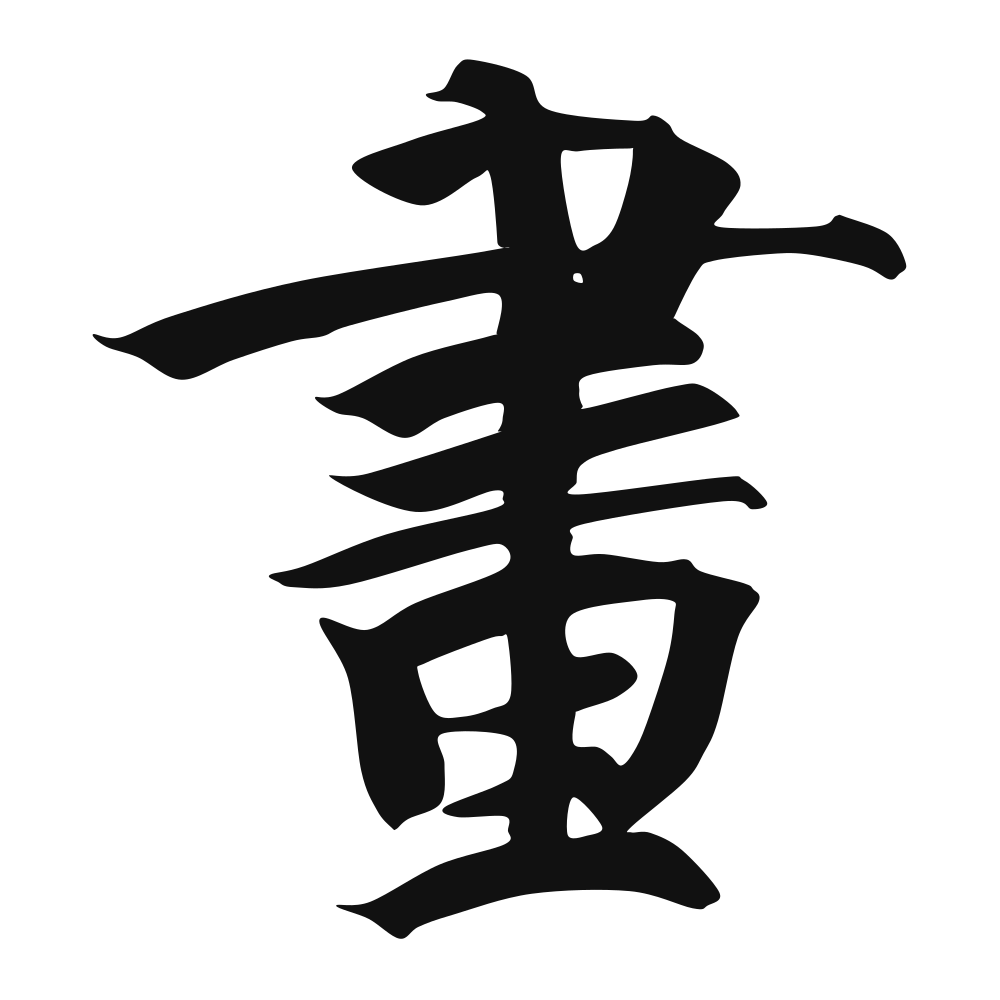
书
书 (shū) — book; to write. Pictograph of a hand holding a brush over marks. Classical life: 书法 — calligraphy, literally 'the method of writing'; 书 is the scholar's root. Grammar: free morpheme — also: book; letter; document; to write
Closest English meanings
book·write·letter·document
The Calligrapher — Zhì Yǒng 智永
Sui monk who spread Wang Xizhi's art via his 'Thousand Characters'.
Sui calligrapher (生卒年不详(陈/隋)), master of regular script/cursive script — monk and seventh-generation descendant of Wang Xizhi who wrote a thousand copies of the Thousand Character Classic to pass the family hand down. Sui dynasty
Cultural Story
書 showed a hand with a brush marking the tally or the petition, to write, to record. The 史記 was 書; Confucius 述而不作, transmitted but did not author, yet his name rides on the books that followed. 書法, the way of the brush, turned writing into the highest art. The character is the mark made to outlast the mouth, the letter, the record, the leaf that remembers.
Energy Reading
Metal (金)
Comparative symbology, not fortune-telling.
Common words & phrases
- 书本 book · books · volumes
- 读书 read · study · attend school
- 书法 calligraphy · penmanship · handwriting
- 书店 bookstore · bookshop · book shop
- 书信 letter · correspondence · epistle
- 看书 read a book · read books · do reading
Read the story behind the character
书本 is the textbook and the novel; 读书 the child at the lamp and the degree you chase. 书法 is the hobby and the framed scroll; 书店 the shrinking storefront. 书信 is nearly extinct, killed by the app; 看书 the thing you do instead of sleeping. The brush has become the screen, but the character still means the written word and the act of taking it in, the page, the letter, the hand that once held the brush.
Why this character belongs on skin
书 is the act of writing and the thing written — a letter, a book, the slow drag of ink that turns a thought into a thing that outlives the thinker. The classical root is "to record," to fix the fleeting in strokes. Before printing, a book was a body: bound, carried, worn close. To put 书 on your skin is to become the page yourself — to say that your life is worth the telling, that you are not a passing noise but a sentence with weight. Writers have always known the charged silence of the written word, the way a private line can outlast empires. Carry it where only you will read it, or where strangers will. Either way it means: I am still being written. The story is not finished. Pick up the brush.
Own this character
Purchase delivers the original SVG of this glyph, brushed by Zhì Yǒng 智永, ready to place on skin, paper, or screen.