
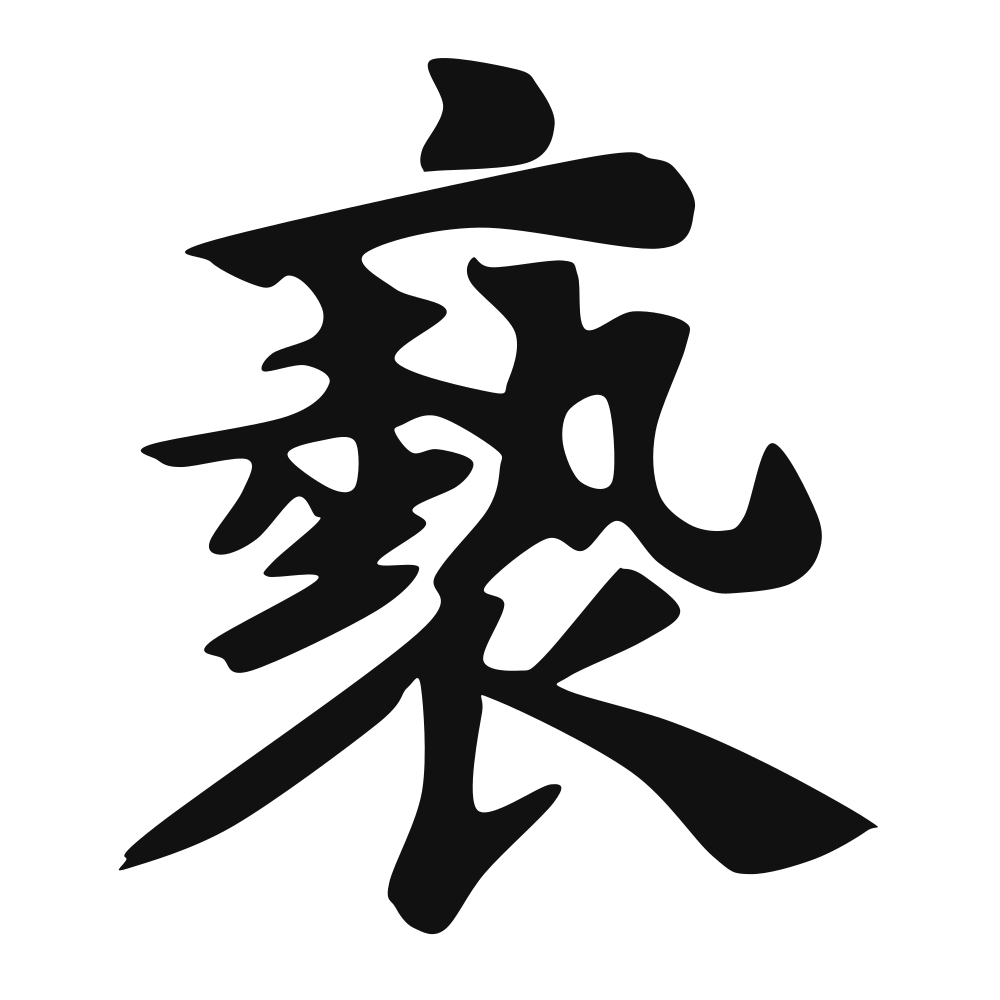
亵
obscene; disrespectful
Closest English meanings
to slight·obscene·to disrespect·to profane
The Calligrapher — Zhì Yǒng 智永
Sui monk who spread Wang Xizhi's art via his 'Thousand Characters'.
Sui calligrapher (生卒年不详(陈/隋)), master of regular script/cursive script — monk and seventh-generation descendant of Wang Xizhi who wrote a thousand copies of the Thousand Character Classic to pass the family hand down. Sui dynasty
Cultural Story
褻 showed a hand at the inner robe, the intimate garment, and from it, the act of treating the sacred casually. The 論語 warns against 褻, treating the spirits without reverence. 褻衣 was the undershirt, the cloth you should not display. The character is the boundary crossed between inside and holy, the familiar that becomes the disrespectful, the robe lifted where it should not be.
Common words & phrases
- 亵渎 to blaspheme · to profane
- 猥亵 to assault indecently · obscene
- 亵衣 underwear · underclothes
Read the story behind the character
亵渎 is the outrage, desecrating a grave, mocking a belief. 猥亵 is the charge in the courtroom, the hands that should not. 亵衣 is the archaic word for underwear, the intimate the old etiquette hid. The character now lives in law and outrage, the word for crossing the line into the sacred or the private. You meet it in indictments and op-eds, the breach of a boundary the ancients drew at the inner robe.
Why this character belongs on skin
There is a warmth that only the near and unguarded know—the looseness of a robe worn at midnight, the private slang of lovers. That is the old heart of this character: close clothing, intimate touch, the everyday sacred of skin against skin. Confucian ritual drew a hard line around such things, calling them too personal for ceremony, too tender for public view—and so the word drifted toward the profane, the defiled. But pull the meanings back together and you get something truer: what is profane is simply what is close enough to touch. Every sacred thing begins as an intimate one. To wear this stroke is to keep a small secret against your body, a reminder that the holiest temples are private ones, and that some violations matter because some sanctity is real. Let the ink sit where only the chosen few ever see it.
Own this character
Purchase delivers the original SVG of this glyph, brushed by Zhì Yǒng 智永, ready to place on skin, paper, or screen.