
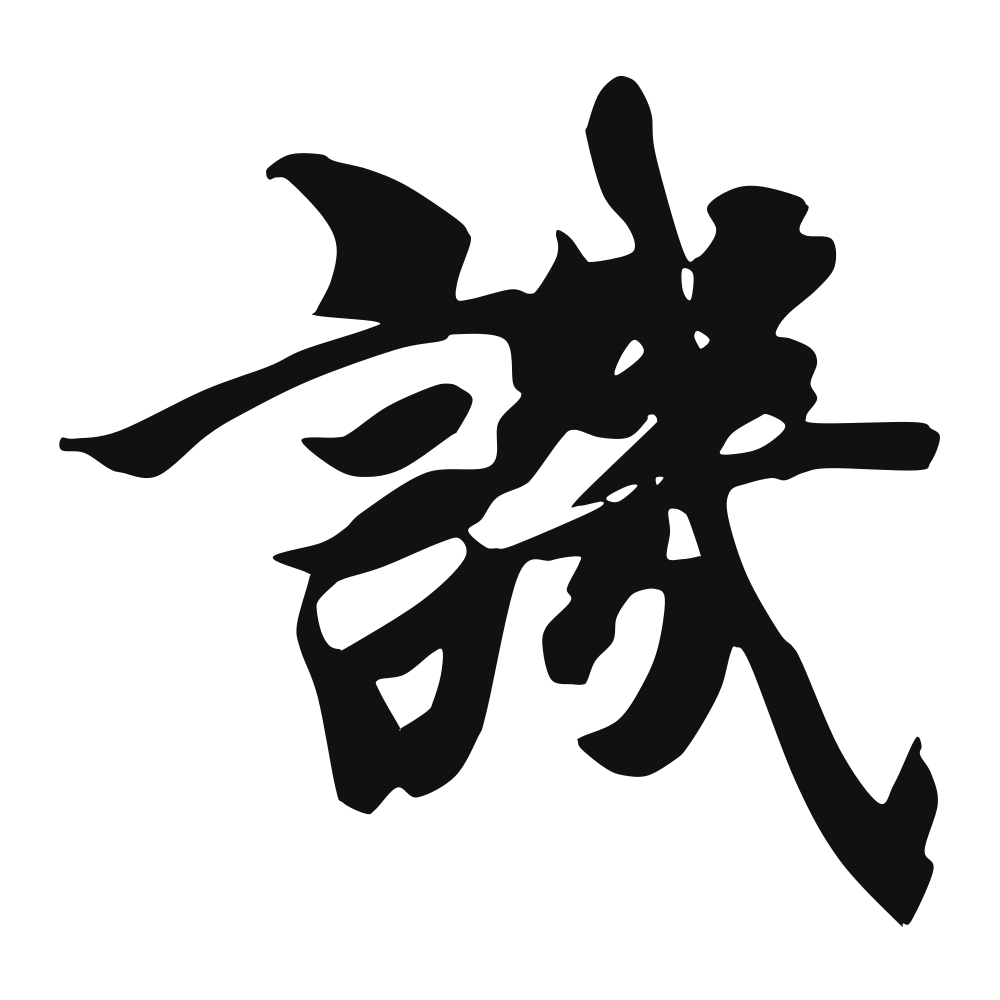
识
to know; knowledge; Taiwan pr. [shi4]; to record; to write a footnote
Closest English meanings
to know·knowledge·to recognize
The Calligrapher — Zhì Yǒng 智永
Sui monk who spread Wang Xizhi's art via his 'Thousand Characters'.
Sui calligrapher (生卒年不详(陈/隋)), master of regular script/cursive script — monk and seventh-generation descendant of Wang Xizhi who wrote a thousand copies of the Thousand Character Classic to pass the family hand down. Sui dynasty
Cultural Story
Confucius described his own method with quiet precision: 'Silently I commit it to memory, I learn without wearying', mo er shi zhi. The phrase makes shi, to know and to retain, the disciple's first labor, the act of taking in so deeply the lesson stays without being written. The character joins words to a token, the mark that lets you tell one thing from another. To shi was to carry knowledge in the chest, ready and unlost.
Common words & phrases
- 知识 knowledge
- 认识 to know · to recognize · understanding
- 识别 to recognize · to distinguish · identification
- 见识 experience · knowledge · insight
- 识货 to know what is good · to have good taste
- 常识 common sense · general knowledge
Read the story behind the character
A student gains zhi shi, knowledge; a stranger ren shi, recognizes, an old classmate; a phone shi bie, identifies, a face at the lock; a traveler shows jian shi, experience, of many cities; a buyer shi huo, knows good goods, at the market; a citizen learns chang shi, common sense. The character runs from the diploma to the fingerprint, every act of telling what is what, the quiet competence of a person who can name the world without being told twice.
Why this character belongs on skin
To see and to name—that is 识, knowledge as recognition, the moment the mind meets the thing and says yes, I know you. The character joins speech to discernment, the separating of one from many. The Buddhists prized right 识, the awakened perception that sees things as they are, not as desire paints them. There is an intimacy in true recognition, the way a lover knows a face in a crowd, the way the scholar knows a forgery by a single wrong stroke. To wear 识 is to claim the disciplined eye, the refusal to be fooled by surfaces. Some people mistake opinion for knowledge. This mark is the clear seeing you trained, the recognition that cuts through noise. Let it sit where your discernment lives, the knowing that needs no proof. Not information—wisdom. The world shows its face; you answer that you have seen it. That, kept on skin, is its own quiet authority.
Own this character
Purchase delivers the original SVG of this glyph, brushed by Zhì Yǒng 智永, ready to place on skin, paper, or screen.