
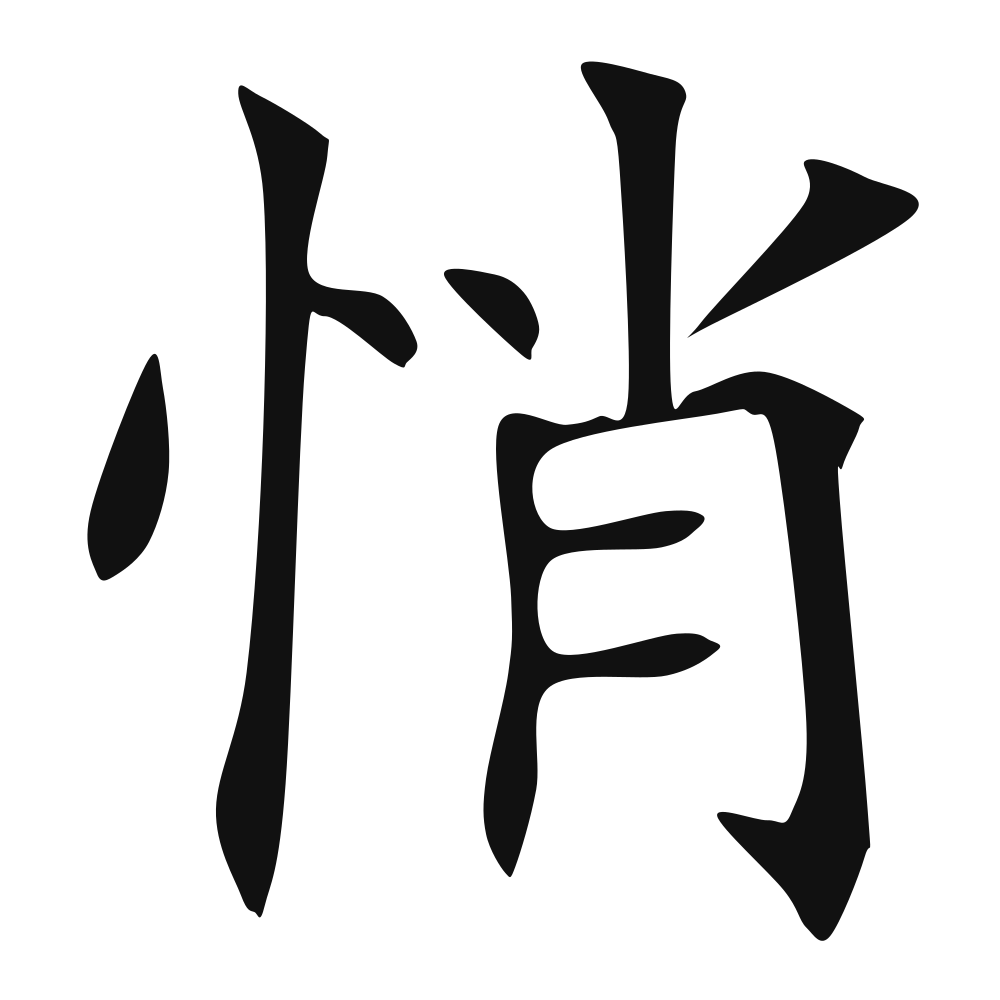
The Calligrapher — Zhōng Shàojīng 钟绍京
Tang calligrapher famed for the regular-script Lingfei Jing.
Tang calligrapher (), master of regular script — known for 《灵飞经》. Tang dynasty
Cultural Story
悄 is old and attentive. The 詩經 opens a poem with 悄悄 moments of private worry — 忧心悄悄, a heart quietly weighed down — and the Book of Songs uses it for the kind of sorrow that makes no sound. The heart with 肖, small or like, gives a feeling that shrinks itself to fit the room.
Common words & phrases
- 悄悄 quietly · stealthily
- 悄然 quietly · silent
- 悄声 in a low voice
Read the story behind the character
悄 survives in the soft adverbs of daily stealth: 悄悄地 slip out so as not to wake the child, 悄然 a company folds without a press release. 悄声 is the stage whisper of a library. It is the opposite of drama; it marks the things people do on purpose so that no one else has to notice.
Why this character belongs on skin
The room holds its breath. A door shuts three houses down, a moth turns at the lamp, and you realize the world was never loud—you were. 悄 is that hush, the soft approach, the thing that happens when no one performs. The Daoists prized this stealth of being, the way water enters unseen and the sage moves without announcement. In love it is the hand that finds yours under the table, saying nothing and meaning everything. To ink this is to claim the power of the unloud life, the strength that needs no audience. It is a温柔 rebellion against a shouting age. Wear it where only cloth or shadow will brush it, a private pact that your deepest movements are your own, and that the most dangerous thing you ever do may be the thing no one notices at all.
Own this character
Purchase delivers the original SVG of this glyph, brushed by Zhōng Shàojīng 钟绍京, ready to place on skin, paper, or screen.