
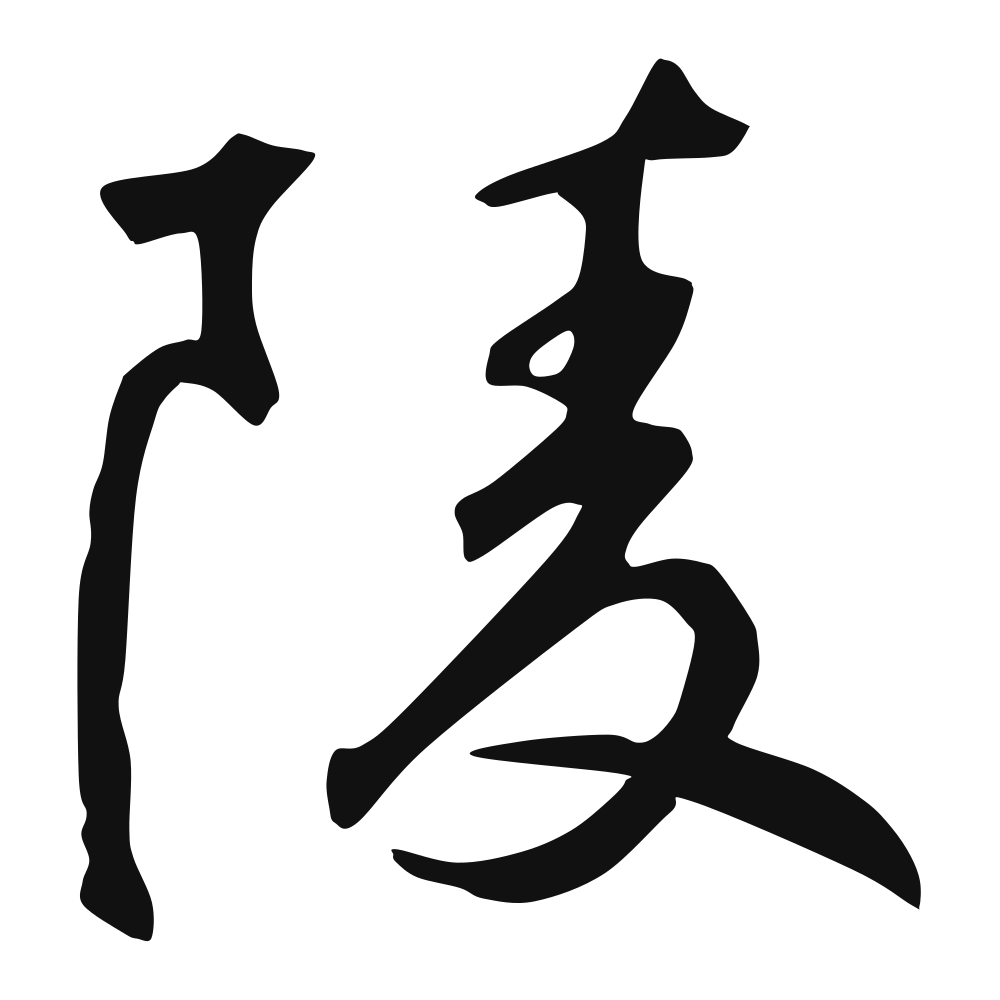
陵
mound; tomb; hill; mountain
Closest English meanings
mound·tomb·hill
The Calligrapher — Zhōng Shàojīng 钟绍京
Tang calligrapher famed for the regular-script Lingfei Jing.
Tang calligrapher (), master of regular script — known for 《灵飞经》. Tang dynasty
Cultural Story
陵 pairs the hill radical 阝 with 夌. The Shuowen defines it as a great mound or rising hill. It came to mean the tumulus over a rulers grave, imperial 陵墓. The Shijing contrasts 丘陵 (rolling hills) with flat plains, terrain that swells upward.
Common words & phrases
- 丘陵 hills · rolling hills
- 陵墓 mausoleum · tomb
- 陵园 cemetery · memorial park
- 山陵 mausoleum · mountain
Read the story behind the character
Tourists climb 丘陵 (rolling hills) and visit the 陵墓 (mausoleum) of emperors. A 陵园 (memorial park) honors the dead, and 山陵 names both mountains and tombs. The character links gentle slopes to the grand resting places of history.
Why this character belongs on skin
The great earth is piled into a hill, and under it the founder sleeps, his name heavier than the soil above him. This character 陵 raises the mound radical beside a sound of ascent, the tomb that is also the height — power both buried and exalted. The emperors built their ling to outlast their breath; the Daoist sighs that the mound returns to field in time. To encroach is to press upon another as the hill presses the plain. To wear this mark is to reckon with legacy, the question of what you will leave piled and what will be leveled. Let it rest where weight settles, a quiet meditation on ambition and dust. The ink is the tomb made portable, proof you have looked at your own ending and asked what was worth the raising, and that you intend to be a hill worth the remembering, or at least an honest field when the mound is gone.
Own this character
Purchase delivers the original SVG of this glyph, brushed by Zhōng Shàojīng 钟绍京, ready to place on skin, paper, or screen.